In the grand tapestry of economic activities, the division between primary, secondary, and tertiary sectors offers a remarkable lens through which to scrutinize human ingenuity and industriousness. Each sector plays a pivotal role in shaping the economic landscape and influencing societal dynamics. Among these classifications, secondary economic activities not only exemplify human creativity but also demonstrate a fascinating interplay of resources, skills, and technology that drives modern progress.
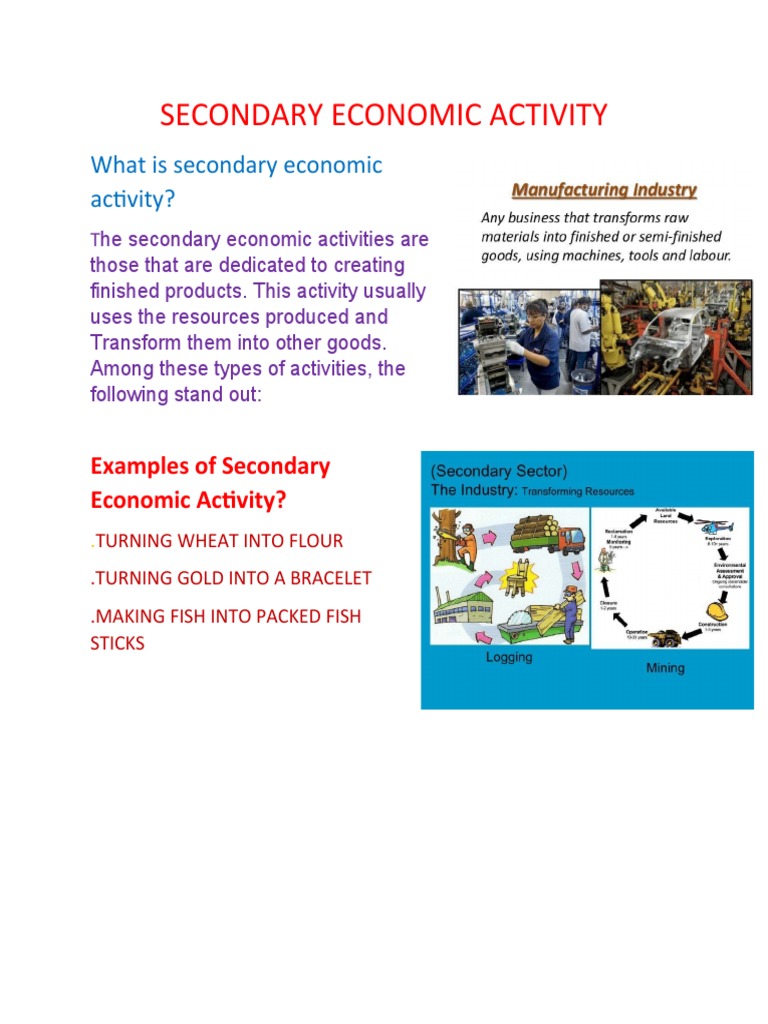
Secondary economic activity primarily encompasses the transformation of raw materials into finished goods. This sector of the economy is often seen as a bastion of industrialization, innovation, and development. A quintessential example of a secondary economic activity is the automobile manufacturing industry, a sector that not only fuels economic growth but also encapsulates a multitude of intricate processes and technologies. The automobile industry is an embodiment of multifaceted dynamics that range from resource extraction to advanced engineering, ultimately transforming mere materials into symbols of freedom, mobility, and status.
One cannot help but marvel at the complexity embedded within the automobile manufacturing process. It commences with the extraction of raw materials such as iron ore, aluminum, and petroleum, often sourced from extensive mining operations globally. The significance of these raw materials in the production line is monumental. Iron and steel are forged into frames and structural components, while various other materials contribute to multiple facets of vehicle design, from ergonomic interiors to efficient fuel systems.
Once raw materials are harvested, they journey through a labyrinthine supply chain, where they undergo various processes including smelting, crafting, and assembly. Different components are manufactured separately before being converged in factories to form the final product. This remarkable sequence underscores a critical observation: the phenomenon of globalization. The components of an automobile may originate from diverse countries, with each nation contributing its unique expertise to the assembly line. This transnational collaboration not only enhances efficiency but also amplifies economic interdependence, fostering a complex web of relationships between nations.
The actual manufacturing process is a testament to human innovation. Utilizing assembly lines pioneered by titans like Henry Ford, modern automobile factories are equipped with cutting-edge robotics and automated systems, streamlining production and reducing human error. The juxtaposition of human craftsmanship with advanced machinery illustrates a profound transformation within secondary economic activities. Workers today are not only assemblers but also overseers of sophisticated technologies, ensuring that each vehicle adheres to safety and quality standards. This shift highlights a deeper societal trend where human roles are evolving, emphasizing the necessity for continuous learning and adaptation in the workforce.
Moreover, the automobile industry encapsulates environmental considerations that cannot be overlooked. As global consciousness shifts towards sustainability, secondary economic activities, including automobile manufacturing, are undergoing a significant metamorphosis. Car manufacturers are exploring electric vehicles (EVs) and hybrid technologies, prompted by a growing inquiry into climate change impacts and resource depletion. This evolution within the sector points to an exciting horizon in which traditional practices harmonize with ecological mindfulness, creating a narrative of hope and responsibility.
Furthermore, the automobile manufacturing sector invites discussion on wider economic implications. The employment generated by this industry is substantial, fostering job creation across various skill levels. From skilled engineers and designers to assembly line workers and quality assurance professionals, the sector bolsters local economies and provides livelihoods to millions. The ripple effect extends beyond the factories, affecting ancillary industries such as logistics, advertising, and retail, thereby embedding the automobile within the very fabric of societal infrastructure.
The socio-cultural dimensions of automobile manufacturing reveal another layer of attraction. Cars have evolved from simple means of transportation to cultural icons, embodying personal expression and lifestyle choices. The automobile industry not only produces vehicles but also influences societal trends, fashion, and consumer behavior. Car shows, racing events, and brand loyalty epitomize the fervor that surrounds automobiles, bridging communities and igniting passion among enthusiasts. This cultural significance establishes an undeniable emotional resonance with consumers, leading to fervent brand loyalty and community building around various automobile marques.
As we delve deeper into the significance of secondary economic activities, the need to address the challenges posed by rapid technological advancements becomes acute. The automobile industry stands at the crossroads of innovation and accountability. With the rise of autonomous vehicles and artificial intelligence, ethical considerations surrounding employment, safety, and data privacy emerge as critical discussions. The transformation within this sector illustrates a quiet revolution—a reassessment of values and priorities in an increasingly interconnected world.
In conclusion, the automobile manufacturing industry serves as an exemplary model of secondary economic activity, intertwining human creativity, technological prowess, and cultural significance. This sector is not merely an assembly of machines but a dynamic ecosystem that influences societies, shapes economies, and addresses contemporary challenges. From the spark of creativity that ignites the design process to the complexity of global supply chains, the automobile industry offers an intricate narrative that captivates the imagination. As we continue to navigate the ever-evolving landscape of secondary economic activities, the allure of human innovation and resilience remains a steadfast beacon, inspiring future generations to traverse new frontiers toward sustainable development and economic prosperity.