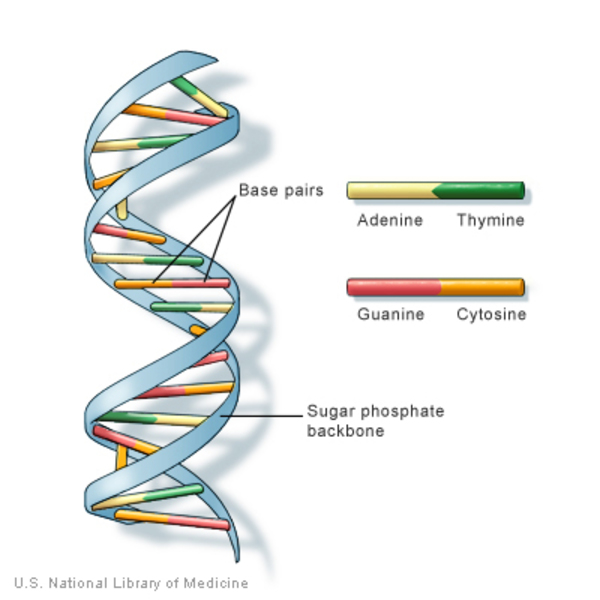
Deoxyribonucleic acid (DNA) is not merely a quintessential component of biological organisms, but it stands as an extraordinary emblem of the intricate choreography of life—a biological blueprint that governs the phenomena of inheritance and variation. In the vast panorama of macromolecules, DNA emerges not just as a structure but as the very essence of life itself. Its allure lies not only in its scientific significance but also in its metaphorical capacity to reflect the complexities of existence.
The Architecture of Life
At the most fundamental level, DNA is a macromolecule, a term reflecting its grandeur and complexity. Like an intricate tapestry woven with threads of nucleotides—adenine, thymine, cytosine, and guanine—it constructs a double helix that spirals gracefully, akin to a magnificent staircase leading toward the heavens. This structure does not merely captivate the eye; it invites a profound understanding of life’s intricacies. Each turn of the helix reveals a story, a sequence, a stipulation of what life may become.
The Codex of Existence
In the realm of molecular biology, DNA is often likened to a code, or rather, a codex of existence—a library of instructions inscribed with unprecedented precision. This codification elucidates countless traits and characteristics, orchestrating everything from the color of a person’s eyes to the molecular machinery of cellular processes. Each sequence of nucleotides serves as a signifier, an element in a grand narrative that bridges the past, present, and future of living organisms. It is this innate programming that enables the transmission of genetic information from one generation to the next, anchoring the very foundation of biological inheritance.
The Dichotomy of Stability and Change
DNA presents a fascinating dichotomy: it embodies both stability and dynamism. The relatively stable nature of its double helix structure provides a reliable framework for storing genetic information. However, it also engages in a constant dance of mutation, a symphony of change that fuels evolution. While the fidelity of DNA replication ensures that species can maintain their identities, it is the occasional variations—mutations—that introduce novelty and adaptability. This inherent tension between conservation and transformation epitomizes the duality of existence; it mirrors the perennial struggle between our desires for safety and the inevitable march toward change.
The Role of Epigenetics: Beyond the Sequence
Further complicating the narrative of DNA is the burgeoning field of epigenetics, which explores how external factors can influence gene expression without altering the underlying DNA sequence. Herein lies a metaphorical garden, wherein environmental stimuli—diet, stress, and experiences—act as gardeners, nurturing or stifling the growth of specific traits. Thus, DNA doesn’t merely dictate destiny; it interacts dynamically with its environment, illustrating the malleable nature of life. This interaction invites contemplation over free will and determinism, challenging our preconceptions of heredity and identity.
The Metaphysical Reflection of DNA
From a philosophical vantage point, one can view DNA as a mirror reflecting the human condition. It encapsulates the intricate dance of existence, reminding us of our connections to our ancestors while framing our aspirations for the future. As humanity progresses into an age dominated by genetics and biotechnology, the ethical implications surrounding DNA manipulation emerge, raising questions about identity, ownership, and the essence of what it means to be alive. Will we, as custodians of this potent macromolecule, navigate the waters of responsibility and innovation wisely? The very act of altering DNA resonates with themes of creation and destruction, playing out in the grand theater of scientific exploration.
The Artistic Expression of Life
In the end, DNA is not merely a scientific entity but a profound artistic expression of life itself. Each strand, each twist, holds not just scientific information, but a narrative—a story that spans eons. It evokes imagery of interconnectedness, each organism a chapter in the grand book of life, penned through the eons of natural selection and environmental adaptation. The symphony of nucleotides resonates through generations, each note representing the shared ancestry of diverse forms, echoing the universality of life’s blueprint.
Conclusion: The Power of Understanding
The journey through the dynamic realm of DNA reveals a macrocosm teeming with life and potential. Understanding this intricate macromolecule transcends the boundaries of biology; it encapsulates the very essence of existence, blending science, philosophy, and art. As we unravel the mysteries encoded within the DNA helix, we gain not only insight into the workings of life but also a deeper appreciation for the intricate web that connects all living things. Embracing this understanding enhances our capacity to navigate the ethical labyrinth of genetic manipulation, forging a path toward a future that honors the delicate balance of life, heritage, and innovation.