Imagine yourself in a bustling marketplace. Vendors showcase their wares, while customers haggle over prices, creating a symphony of economic activity. Now, picture a skilled artisan who specializes in crafting handmade shoes. Business has always been good, yet suddenly, a new trend emerges: sneakers dominate the footwear industry, overshadowing the artisan’s once-coveted creations. As demand dwindles for the artisanal shoes he meticulously handcrafts, our skilled worker faces an existential dilemma. Is this example merely a quirky anecdote, or does it represent a larger, looming question in today’s economy? Welcome to the world of structural unemployment—where skill mismatches and shifts in demand spell trouble for even the most proficient workers.
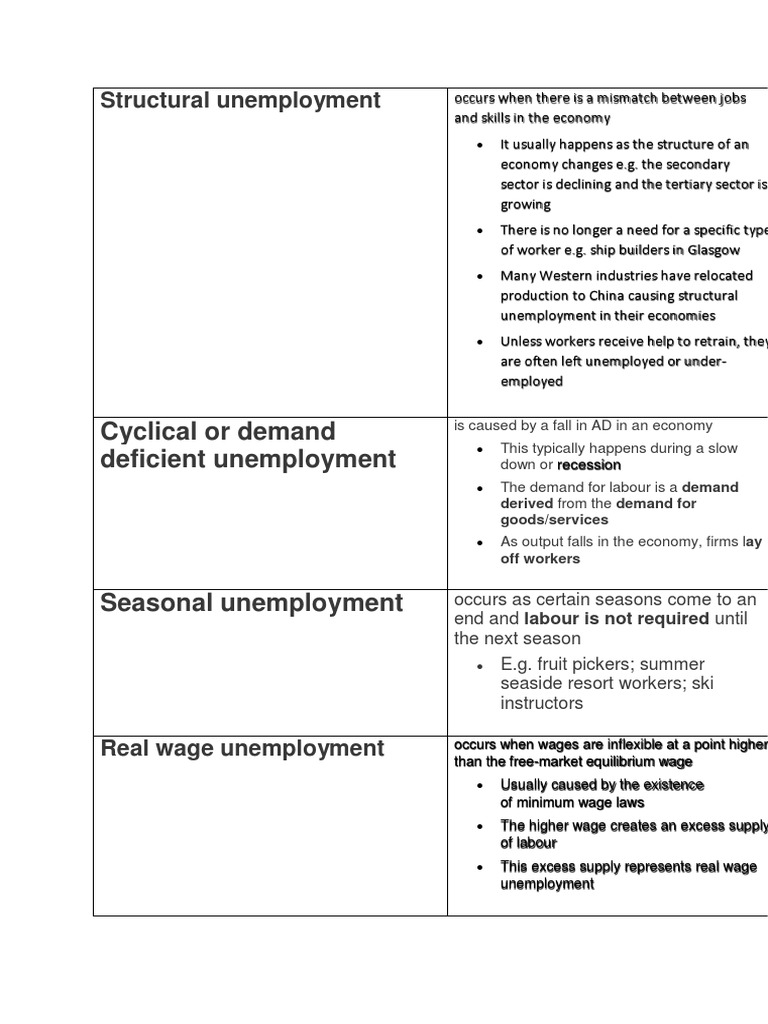
Structural unemployment is an intricate, yet crucial concept in understanding the labor market. Unlike seasonal or cyclical unemployment, which can fluctuate substantially with seasons or economic cycles, structural unemployment persists due to profound changes in the economy itself. So, what exactly are its hallmarks, and how can we identify its manifestations in our everyday lives?
To grasp the essence of structural unemployment, it’s essential to first consider its characteristics. This type of unemployment is primarily driven by technological advancements, economic globalization, and changes in consumer preferences. A vivid example can be witnessed in industries like manufacturing, where automation and robotics increasingly replace manual labor. The artisan might feel a jarring impact as machines take on tasks he used to perform, leaving him stranded with his exquisite craftsmanship that no longer resonates with the market. Could he pivot his skills to adapt? Perhaps—but it’s not that simple.
Then we have industries experiencing dramatic shifts in consumer interest. Consider the rise of plant-based diets, rendering traditional livestock farming less viable. Farmers specializing in raising cattle may find themselves grappling with obsolescence—facing a glaring question: How do they transition their skills and livelihoods in a world that has pivoted toward a different dietary paradigm? This scenario raises broader implications, compelling stakeholders to rethink educational curricula and vocational training to ensure adaptability in the job market.
Another striking instance arises from the growth of e-commerce. Bricks-and-mortar retailers find themselves ensnared in a web of evolving consumer habits. Picture a local bookstore grappling against the steady rise of online giants. While the bookstore’s staff may have expertise in customer service and literature, their charm cannot compete with the convenience offered by digital platforms. Suddenly, the very essence of their employment hangs in the balance—exemplifying how structural unemployment, fervently masquerading as an invisible force, can wreak havoc on traditional professions.
This all begs another question: What can be done to combat the pervasive nature of structural unemployment? Addressing this issue requires a multifaceted approach, including an emphasis on lifelong learning and retraining initiatives. Imagine a warehousing worker who possesses only basic skills; as warehouse management transitions to robotics and automation, the worker risks obsolescence. The solution? Providing opportunities for skills training that encompasses digital literacy, data analysis, and even AI familiarity can empower individuals to adapt.
Moreover, industries pivotal to our economy must actively engage in workforce development. Customizing training programs to align with future employment trends ensures that workers are not merely categorized as obsolete; instead, they become champions of evolution. Engaged businesses could incentivize collaboration with educational institutes, thereby creating seamless pathways for workers to transition smoothly and thrive.
Envision a technology-focused community that fosters innovation and encourages the emergence of entrepreneurs. In such an environment, structural unemployment can lead to new opportunities, where individuals harness their creativity and pivot their expertise toward nascent industries. Consider the artisan who, witnessing the shift toward sustainable fashion, decides to transform his skills into crafting biodegradable footwear. By redefining his niche, he contributes to both the environment and the economy, exemplifying resilience amidst turmoil.
Yet, while we envision solutions, it’s critical to address the societal implications of structural unemployment. Traditionally marginalized groups, including minorities and low-income individuals, often disproportionately bear the brunt of job displacement. The challenge lies in constructing inclusive policies that level the playing field, ensuring that everyone has access to educational resources and employment opportunities. Collectively, the community must advocate for fair labor practices and champion diversity within various industries, ultimately creating a more robust and equitable labor market.
As we unravel the intricacies of structural unemployment, it becomes evident that adaptation is the mantra of survival. Just as our artisan must navigate the shifting tides of consumer preferences, all workers must embrace change with tenacity. Awareness is the first step toward combating this nuanced phenomenon—educating individuals about potential repercussions while encouraging proactive engagement with emerging market trends.
In conclusion, with each transition in the economy, structural unemployment presents a challenge that necessitates both individual and collective resilience. As we ponder the artisan’s fate, we recognize the importance of versatility and innovation within our workforce. By equipping ourselves with the tools to adapt, forge new paths, and champion inclusivity, we can transform the specter of structural unemployment from a daunting hindrance into a catalyst for positive change. So, are you ready to engage in this dynamic dance of evolution, or will you allow the winds of change to sweep you away?