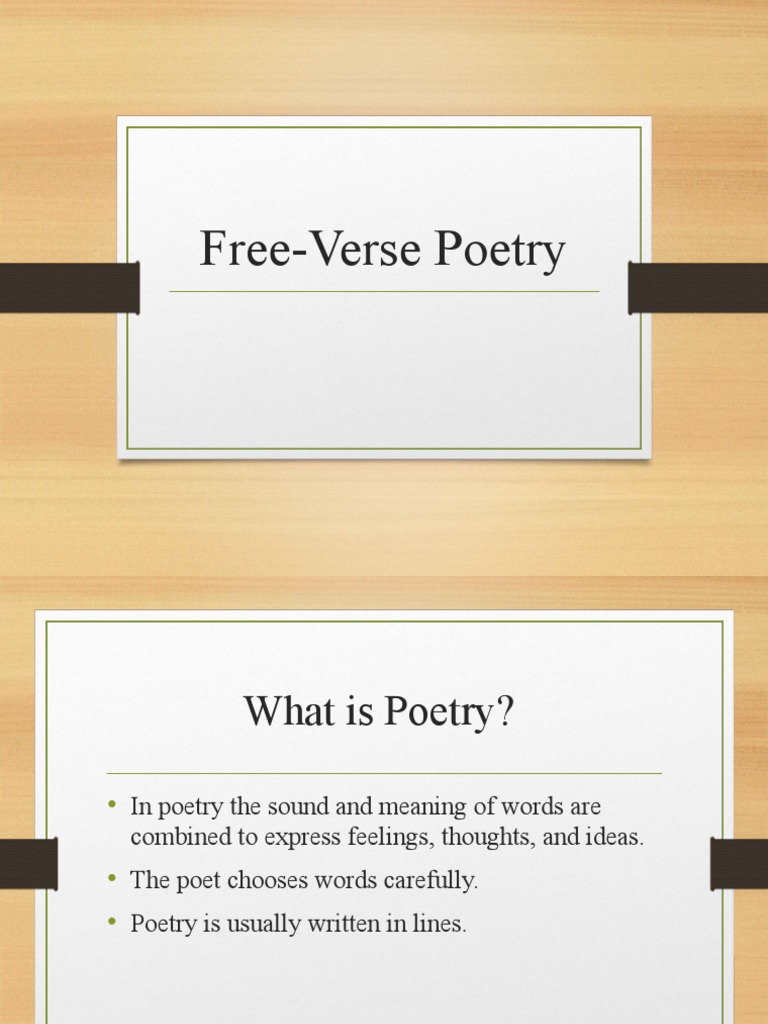
Free verse poetry, often drifting away from the confines of traditional meter and rhyme, celebrates the organic expression of the poet’s voice. This poetic form allows for an extensive exploration of emotions, ideas, and aesthetics, leading to a rich tapestry of language that resonates with authenticity. In this piece, we will delve into the myriad facets of free verse poetry, examine renowned examples, and explore the diverse types of content that captivate both the literary connoisseur and the casual reader.
One of the quintessential characteristics of free verse poetry is its lack of a rigid structure or prescribed rhyme scheme. Unlike sonnets or villanelles, free verse allows poets the liberty to compose without traditional constraints. This fluidity can enable a raw, conversational tone, inviting readers into the poet’s inner world. Consider, for instance, the works of Walt Whitman—a pioneer of free verse—whose sprawling lines in “Leaves of Grass” defy conventional boundaries, mirroring the expansiveness of the American spirit.
Whitman’s “Song of Myself” illustrates this technique beautifully. The poem flows seamlessly, weaving together various themes such as identity, nature, and the collective human experience. Whitman’s use of enjambment, where sentences spill over from one line to the next, drives the momentum of the poem, evoking a sense of urgency and intimacy. This style engages the reader on a visceral level, as if they are participating in a dialogue with the poet.
Another notable example of free verse can be found in the poignant works of contemporary poet Mary Oliver. Through her evocative imagery of nature and reflective observations, Oliver captivates readers with her simplicity layered with profound insights. In “Wild Geese,” she employs free verse to deliver a powerful message about belonging and self-acceptance. Her lines flow with grace, resonating with those who seek solace and affirmation within the ebb and flow of existence.
Free verse allows for a multitude of content types, which can range from personal reflections and societal critiques to vivid imagery and philosophical musings. One such intriguing aspect of free verse is its ability to incorporate various forms of sensory imagery. Poets can paint a detailed picture using language that engages not only the visual sense but also sound, taste, touch, and smell. This multisensory approach invites readers to immerse themselves in the poem’s landscape, creating a rich and engaging experience.
Take the works of Langston Hughes, for instance. Hughes masterfully interweaves musicality into his free verse, channeling the rhythms of jazz and blues to express the African American experience. In “The Weary Blues,” he captures the essence of a blues performance through stark, vivid language. The auditory elements are palpable, as readers can almost hear the mournful strains of a piano and the heartfelt voice of the singer. Such intermingling of sensory experiences within free verse allows poets to transcend mere words, crafting an emotional and atmospheric resonance that lingers long after reading.
Furthermore, free verse poetry often embraces unconventional themes, interrogating societal norms and challenging conventions. Many free verse poets grapple with complex issues such as identity, race, gender, and mental health. For example, Claudia Rankine’s “Citizen: An American Lyric” employs a free verse format to navigate themes of racism and modern-day microaggressions experienced by people of color. Through her incisive observations and poignant anecdotes, Rankine creates a striking, disquieting meter that compels readers to confront uncomfortable truths, challenging them to reflect on their own perceptions and beliefs.
In addition to thematic richness, free verse poetry frequently experiments with form and layout to enhance meaning. The visual presentation of lines on a page can be instrumental in conveying emotion. Poets may utilize varying line lengths, stanza breaks, and spatial arrangements to underscore particular sentiments or to create tension. The interplay between visual form and textual content offers a dynamic reading experience, demanding readers’ attention in ways that traditional structures may not.
Additionally, the juxtaposition of disparate images or ideas is a hallmark of free verse, creating surprising and often thought-provoking connections. Poets can shift subjects abruptly or intersperse unrelated observations to evoke a sense of disorientation or epiphany. This technique invites readers to engage with the text actively, piecing together the intended meaning or emotional undertone amidst the apparent chaos. This layer of complexity can lead to multiple interpretations, making each reading of a free verse poem a unique experience.
While free verse champions individual expression, it also fosters a sense of community among poets, encouraging them to share their diverse perspectives. This inclusivity reflects the evolution of contemporary poetry, where diverse voices and experiences are amplified. Writers like Ocean Vuong and Ada Limón illustrate this trend, harnessing the power of free verse to articulate their identities and experiences as Asian Americans. Such contributions enrich the poetic landscape, ensuring a multitude of narratives are represented.
In conclusion, free verse poetry is an expansive and flexible art form that engenders creativity and personal expression. Its lack of rigid structure offers poets the freedom to explore a broad spectrum of themes and emotions while employing various literary techniques to enhance their messages. From the profound musings of Whitman to the poignant reflections of contemporary poets, free verse serves as a canvas for exploring the complexities of human experience. As more voices embrace this form, the world of poetry continues to flourish, inviting readers to journey through the kaleidoscope of life’s myriad expressions.