Language serves as a powerful tool for communication, encompassing a spectrum that ranges from the casual familiarity of conversational vernacular to the precision and rigor found in formal language. Exploring the differences between these styles not only broadens one’s linguistic capabilities but also cultivates a more discerning approach to the nuances of human expression. In this article, we delve into the intricate world of formal language, placing a spotlight on its characteristics, applications, and a critical examination of pertinent examples.
Understanding Formal Language
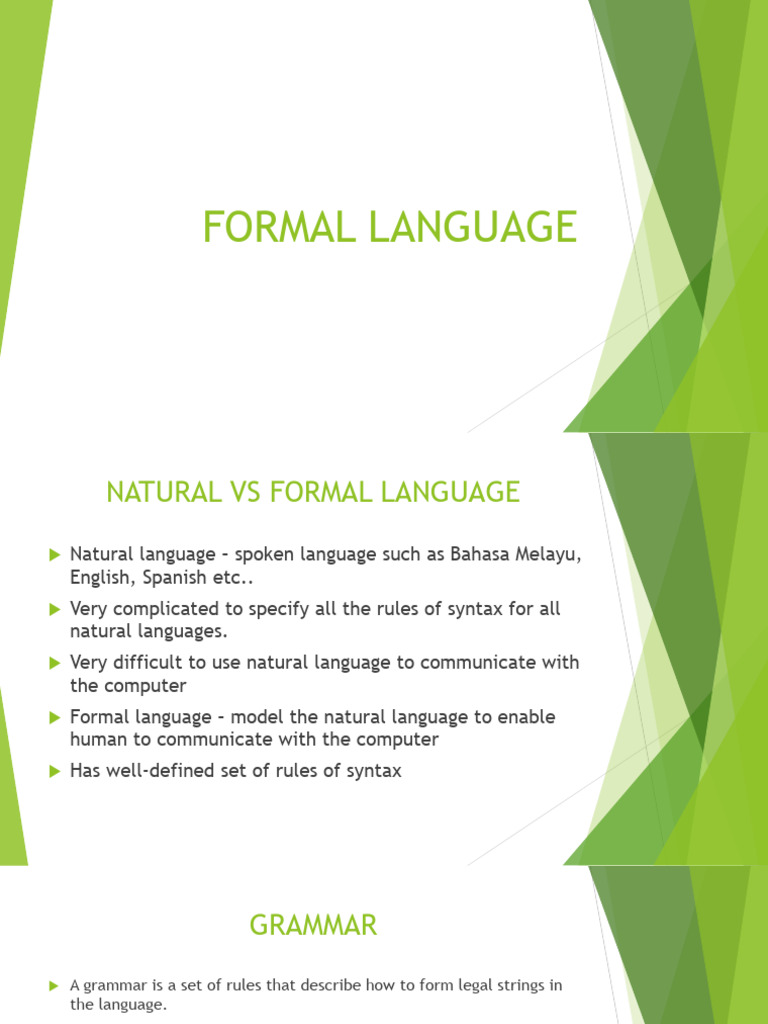
At its core, formal language is characterized by its structured, precise nature. Typically employed in scholarly, scientific, or professional contexts, formal language demands adherence to established conventions. It prioritizes clarity, objective analysis, and unambiguous meanings. The distinction between formal and informal language is crucial; where informal language might indulge in idiomatic expressions and emotional undertones, formal language opts instead for specificity and calculated structure.
This linguistic modality serves various purposes, including the articulation of complex ideas, the formulation of arguments, and the conveyance of information devoid of personal bias. Thus, understanding formal language equips individuals with a skill set that enhances their ability to engage in serious discourse.
Key Characteristics of Formal Language
There are several hallmark traits that define formal language:
- Precision: Formal language favors exact wording over vague expressions. This precision facilitates clearer understanding by avoiding ambiguity.
- Complex Sentence Structures: Utilization of sophisticated syntax often marks formal writing. This complexity allows for layered meanings and a more nuanced discussion of ideas.
- Technical Vocabulary: A formal register often employs specialized jargon or terminology pertinent to a specific field, enhancing the credibility of the discourse.
- Impersonal Tone: Unlike informal language that may incorporate first-person narratives, formal language generally maintains an objective stance, centering on the subject matter rather than the speaker.
By embracing these characteristics, individuals can effectively navigate academic and professional landscapes, making their arguments more compelling and their presentations more authoritative.
Examples of Formal Language
To illustrate the essence of formal language, consider the following sentences and analyze their structure:
- “The study conducted by Smith (2023) elucidates the critical impacts of climate change on marine biodiversity.”
- “The committee has resolved to advance the proposal following comprehensive deliberation.”
- “In light of recent findings, the hypothesis must be revised to reflect the newly acquired data.”
Each example manifests a hallmark of formal language through precise vocabulary, complex structures, and an impersonal tone. The sentences convey significant information while maintaining a degree of detachment that is emblematic of formal communication.
Furthermore, a pivotal sentence that captures the quintessence of formal language can be stated as:
“It is imperative that stakeholders engage in a thorough analysis of the economic implications stemming from policy modifications.”
This sentence compellingly illustrates several facets of formal language: the necessity for engagement (“imperative”), the specificity of the audience (“stakeholders”), and the gravity of the subject matter (“economic implications” and “policy modifications”). This resonance enhances the clarity and authority of the discourse, inviting readers to reflect deeply on the ramifications of the topic.
Contextual Applications of Formal Language
Understanding when to employ formal language is essential. Academic papers, legal documents, technical manuals, and professional presentations necessitate a formal tone to convey authority and foster comprehension. Conversely, informal contexts—such as casual conversations or personal blogs—call for a more relaxed, personal engagement.
Consider academia; researchers are expected to articulate their findings in formal language to ensure that their conclusions are taken seriously. Formal language constructs not only elevate the discourse but also ensure that the research is accessible and comprehensible to scholars across diverse fields.
Legal settings exemplify another critical area where formal language reigns supreme. Legal documents—such as contracts, briefs, and motions—employ formal language to elicit clarity and enforceability. Ambiguity in such documents can lead to significant disputes; thus, the precision of formal language becomes paramount.
Shifting Perspectives through Formal Language
Embracing formal language can significantly alter one’s perspective on communication and comprehension. It encourages a more analytical approach to language, promoting critical thinking and self-reflection. Engaging with formal language empowers individuals to articulate complex ideas succinctly and cogently, positioning them as informed participants in discourse.
Imagine navigating a multidisciplinary conference where each participant hails from different fields. Utilizing formal language unlocks the capacity to bridge gaps between diverse bodies of knowledge, ensuring that ideas transcend disciplinary silos and sparks intellectual curiosity. Such discourse fosters collaboration, enthusiasm, and innovation that drive progress in myriad domains.
Conclusion
The exploration of formal language reveals its indispensable role in elevating discourse across various contexts. By understanding its characteristics, applications, and potential, individuals can harness the power of formal language to enhance their communication skills and engage thoughtfully with complex topics. The examples provided illuminate the significance of structure, precision, and clarity—hallmarks that can transform how we perceive and practice language.
Are you ready to elevate your own linguistic prowess? Engage with formal language and watch as it enriches your conversations, debates, and written expressions—paving the way for a deeper understanding of the world around you.