Portmanteau words are a fascinating linguistic phenomenon that effortlessly capture the imagination of language enthusiasts and casual speakers alike. These unique blends combine the sounds and meanings of two distinct words, resulting in a new term that conveys the essence of both original words. One of the most engaging aspects of portmanteau words is their ability to succinctly express complex ideas or concepts, thereby enhancing communication in diverse contexts.
The term “portmanteau” itself offers a glimpse into the interplay between language and meaning. Originally used to describe a suitcase with two compartments, the word has since been appropriated to represent linguistic blends. This transformation hints at our inherent desire to compress and simplify our expressions, especially in an increasingly fast-paced world where brevity is valued.
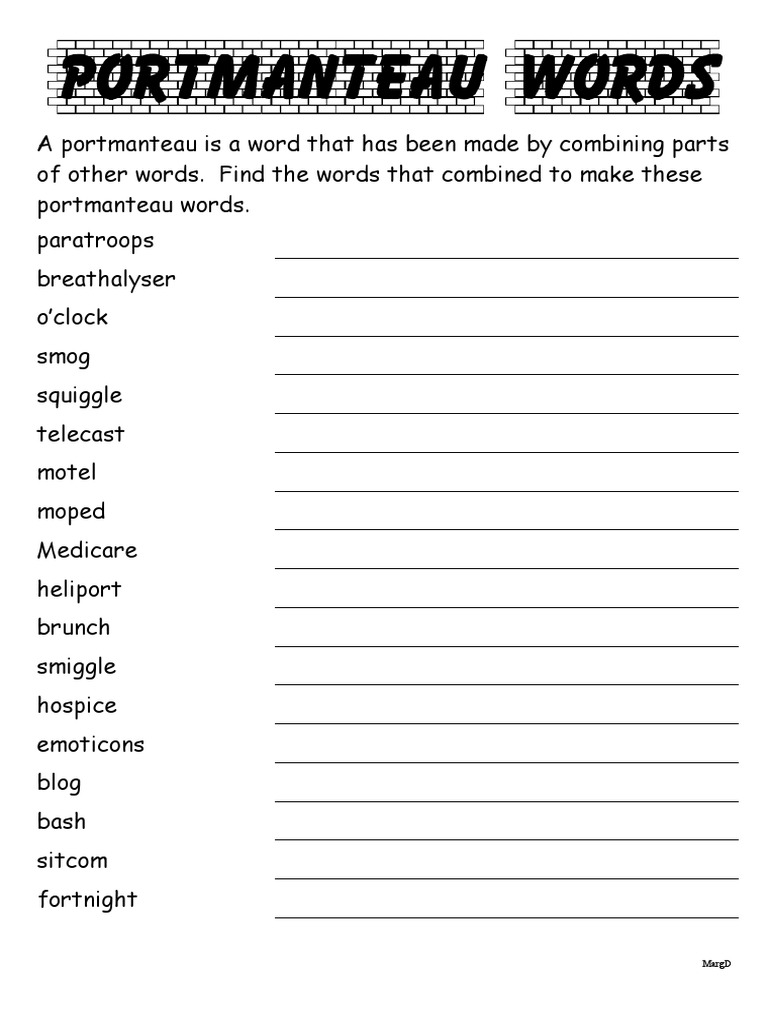
Consider the word “brunch,” a delightful combination of “breakfast” and “lunch.” This term arose out of a social need—those leisurely weekend gatherings where traditional breakfast timings are eschewed in favor of a mid-morning feast that bridges the gap between two meals. Thus, the very existence of “brunch” reflects cultural shifts towards more flexible meal times and the growing trend of casual dining experiences. As people continue to evolve their social customs, the language surrounding these customs follows suit.
Another compelling example is “smog,” a portmanteau of “smoke” and “fog.” This term emerged during the industrial revolution, encapsulating the unfortunate marriage of pollution and damp weather conditions. The synthesis of these two concepts in one word not only illustrates the environmental dilemmas faced by urban areas but also serves as a stark reminder of the consequences of industrialization. The term evokes a sense of urgency regarding air quality and raises awareness about the ecological impact of human activity.
Moreover, “motel,” derived from “motor” and “hotel,” signifies the evolution of travel in the automobile age. As cars became the primary mode of transportation, the hospitality industry adapted by providing lodging tailored to the needs of motorists. This blend exemplifies how language morphs with technological advancements, effectively mirroring societal shifts. The word has become so ubiquitous that it often goes unnoticed, yet it tacitly underscores our dependency on automobiles and the drive towards convenience in travel.
In the realm of popular culture, “frenemy” is a contemporary portmanteau that merges “friend” and “enemy.” This term captures the complexity of relationships in modern society, revealing the intricacies of human interactions where rivalry and loyalty can coexist. The existence of frenemies highlights a deeper psychological phenomenon—the blurring of boundaries in social dynamics, particularly in competitive environments. Such nuanced relationships resonate with the realities of a world increasingly governed by social media, where perception and rivalry can easily intertwine.
Furthermore, “ginormous,” a verb that blends “gigantic” and “enormous,” provides a humorous twist to the expression of size. Its playful nature brings levity to conversations, allowing speakers to emphasize the immensity of an object or idea in an engaging manner. This linguistic playfulness speaks to a broader human inclination toward creativity and whimsy in language, enriching our communicative experience.
Merging functionality with creativity, portmanteau words serve as effective linguistic shortcuts while enriching the vernacular. As they gain traction, they often reflect cultural zeitgeists, indicating shifts in social norms or technological advancements. The evolution of “staycation,” for example, combines “stay” and “vacation,” emerging as a response to economic constraints and changing travel preferences, wherein individuals opt to take time off without venturing far from home. This term encapsulates a trend towards localized leisure and adaptation, further emphasizing the connection between language and lifestyle.
The fascination with portmanteau words extends beyond mere linguistic interest; they serve as gateways into the social consciousness. Each blended word presents an opportunity to explore the catalysts of change within society, shedding light on collective priorities, struggles, and values. Language not only transmits information but also captures the essence of shared experiences, encapsulating the zeitgeist within a single term.
Portmanteaus have also permeated brand and product naming, as marketing teams strive for catchy and memorable terms that embody the essence of their offerings. “Infomercial,” a blend of “information” and “commercial,” is a prime example. These advertising formats have become a fixture of the television landscape, combining entertainment with salesmanship to engage potential customers. Such terms illuminate the innovative ways in which language is harnessed to convey commercial ideas succinctly.
In the academic realm, portmanteau words can serve as a tool for investigation and analysis. Linguists and sociologists alike have delved into their utility and prevalence, exploring how these fused words can illustrate changing social behaviors, technological innovation, and even shifts in cultural identity. The study of portmanteaus not only enriches our understanding of language dynamics but also provides insights into the evolution of thought and communication itself.
Ultimately, the allure of portmanteau words lies in their transformative power. They serve as a testament to humanity’s capacity for creativity, adaptability, and ingenuity in the face of an ever-changing world. As society continues to evolve, it is likely that new portmanteaus will emerge, reflecting fresh ideas, cultural shifts, and the ongoing dialogue of human experience. In this regard, language remains a living, breathing entity—one that invites us to embrace its complexity and celebrate its beauty.