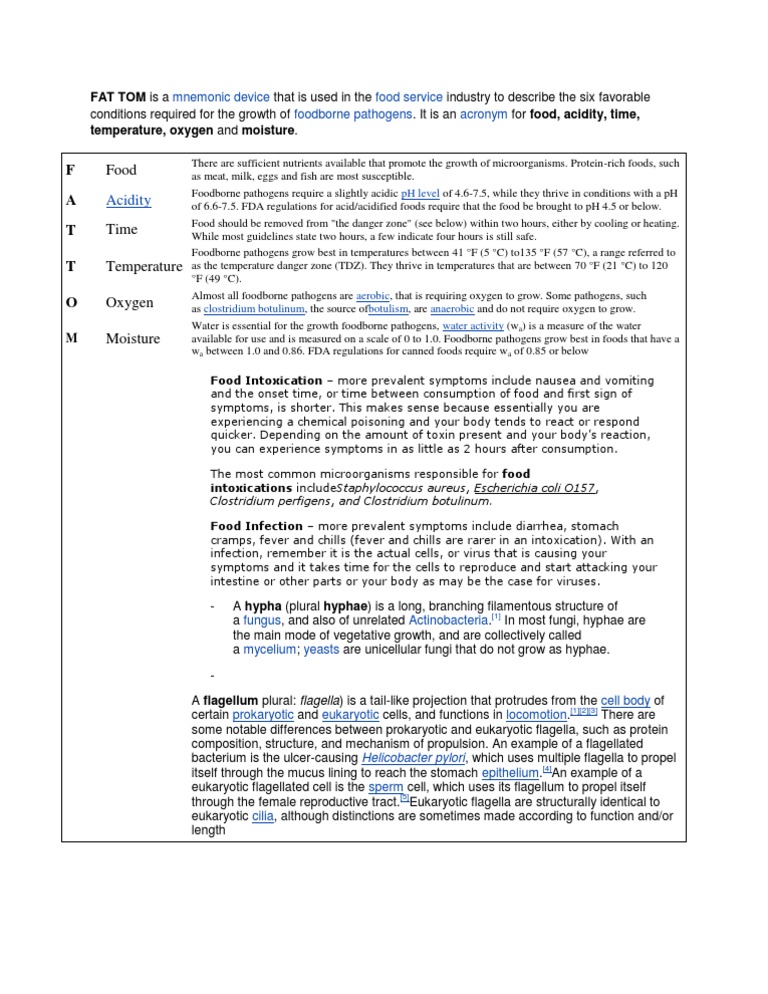
In the culinary world, the term “Fat Tom” serves as an intriguing gateway to understanding the delicate balance of factors that affect food safety and preservation. Each letter in “Fat Tom” corresponds to a crucial element that can be the difference between a delectably prepared dish and a potential health hazard. This acronym encapsulates the essence of food safety, aiming to educate and provide insights that elevate your culinary expertise. The five components are Food, Acidity, Time, Temperature, and Oxygen. Exploring these facets not only emphasizes the importance of safe food handling but also helps to cultivate a deeper appreciation for the art of cooking.
First and foremost, let’s delve into the aspect of Food. Every ingredient we choose dons a colorful mantle, inviting us to create delightful edible masterpieces. Yet, with the creative freedom that comes with diversity in ingredients lurks the responsibility of understanding which foods are more susceptible to pathogen growth. Raw meats and dairy products, for instance, are proverbial breeding grounds for bacteria, while highly processed or acidic foods serve as formidable barriers against microbial activity. When concocting a charming Italian risotto, one must select fresh, high-quality arborio rice and keep in mind that the accompanying chicken stock, if improperly stored, could turn an otherwise divine dish into a culinary tragedy.
Transitioning to Acidity, we find another layer in the Fat Tom tapestry. The acidity level of various foods plays an essential role in microbe proliferation. Low-acid foods, like vegetables and meats, thrive in more neutral pH levels, making them prime targets for harmful bacteria. On the other hand, high-acid foods, such as tomatoes and citrus fruits, act like a shield—thwarting the growth of pathogens. As one crafts a citrus-infused dressing or a salsa with a lively splash of lime, it is the acidity that not only tantalizes the palate but also preserves the integrity of the dish, ensuring a refreshing experience without undue risk.
Next, we confront the undeniable significance of Time. “Time is of the essence,” they say, and in the cooking sphere, this adage takes on a new meaning. The temporal aspect of food safety cannot be overlooked. Perishable items, if left unattended for too long, may plunge into the depths of danger. As you prepare to marinate chicken overnight, it is paramount to ensure that the time spent in the danger zone—between 40°F and 140°F—remains minimal. It’s not merely about the flavor infusion; it’s about striking a delicate balance between culinary creativity and safety.
As we journey onward, we encounter the formidable foe termed Temperature. The thermometer becomes a chef’s trusted ally, guiding the way to perfectly cooked dishes that are both safe and sumptuous. The magic numbers—165°F for poultry, 145°F for pork—are not arbitrary; they are precise measurements that ensure that every morsel is void of harmful bacteria. Consider the wondrous roast—a whole chicken, golden and crispy on the outside, succulent within. The heartwarming aroma fills the kitchen, but it is the diligent watch over temperature that transforms an ordinary meal into a safe celebration.
Finally, we arrive at the element of Oxygen. It is often a hidden passageway, lurking in the background of our culinary pursuits. Oxygen facilitates the growth of many microorganisms, and thus, it becomes vital to consider how we store our foods. Vacuum sealing, for instance, acts as a guardian against the perils of oxidation and spoilage. As you tuck away homemade soups or protein-packed meals, preserving them in airtight containers becomes an elegant strategy to extend their shelf life, allowing you to relish a taste of today’s cooking on another day. It’s an art form, ensuring that flavors meld harmoniously, while safeguarding against the unseen adversaries that threaten our creations.
In summation, the elements encapsulated within Fat Tom—a repository of understanding in the culinary arts—intertwine like threads in a richly woven tapestry. Each component serves as a crucial player in the grand narrative of food safety, nurturing a culture of mindful cooking. To elevate your gastronomic endeavors, awareness of Food, Acidity, Time, Temperature, and Oxygen becomes paramount. Much like an artist with a palette of colors, the chef equipped with knowledge of Fat Tom is empowered to create, innovate, and flourish while ensuring that every dish is a safe experience.
Peering through the lens of Fat Tom enriches not only our understanding of food safety but also enhances our appreciation of the intricacies of cooking. Each choice we make, from ingredient selection to storage methods, can define the quality of our culinary output. Embracing these principles not only transforms the kitchen into a sanctuary of flavor but also into a bastion of health and safety.