In the intricate tapestry of academic writing, in-text citations weave threads of credibility and intellectual honesty. They not only lend weight to arguments but also pay homage to the diligent researchers whose ideas illuminate the pathway to knowledge. Just as a well-crafted narrative requires a strong plot, a compelling argument necessitates the careful integration of sources. This article explores the nuances of in-text citation, providing vivid examples that dance like fireflies in the twilight of scholarly discourse.
To embark on this journey, one must first grasp the essence of in-text citations. These are not mere footnotes, nor are they an afterthought scattered like autumn leaves; they are deliberate markers that guide readers through the forest of your arguments. By acknowledging the sources of information, writers forge a partnership with intellectual ancestors, creating a dialogue that transcends time and space.
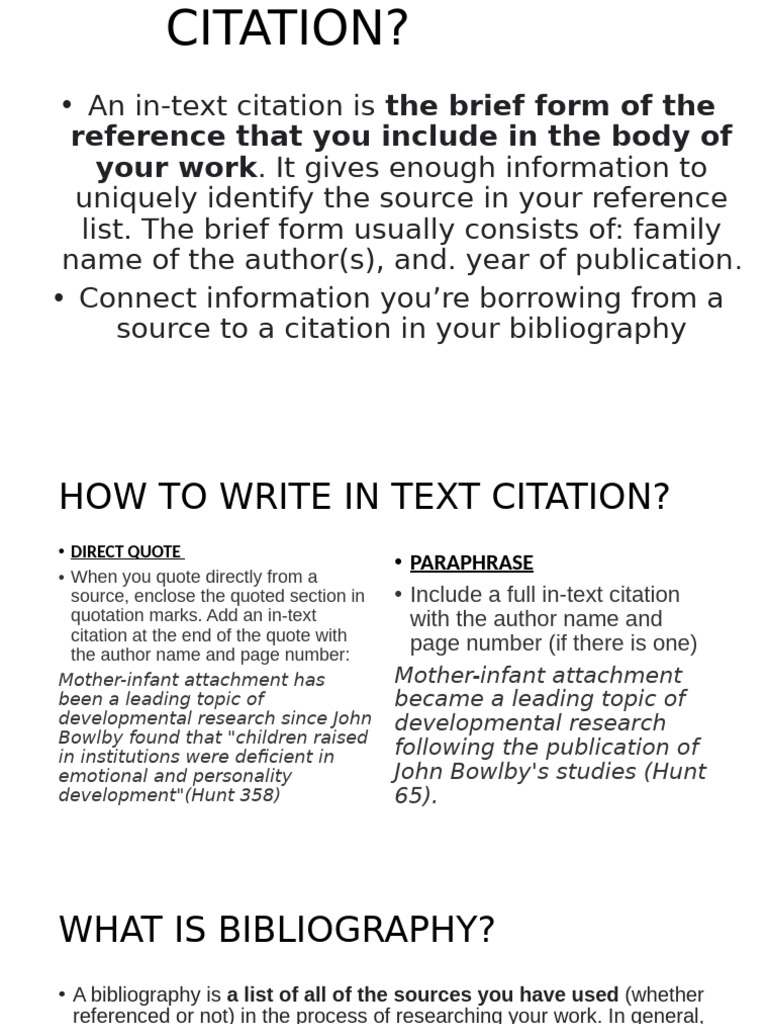
Consider the APA (American Psychological Association) style, one of the most prevalent frameworks for in-text citations, particularly in the social sciences. Imagine a painter whose brush strokes mirror established techniques from masters of the past. In APA style, the author-date citation method serves this purpose with elegance. For instance:
“As Johnson (2020) elucidates, the emotional intelligence quotient significantly enhances interpersonal relationships.”
Here, the citation dances at the very heart of the statement, seamlessly intertwining the source with the claim. This method clarifies not only who is contributing to your argument but also when the contribution was made—creating a temporal context to the intellectual exchange.
Conversely, the MLA (Modern Language Association) style introduces a poetic finesse to in-text citations, especially favored in the realms of humanities and literature. The MLA style revolves around a stylistic formalism that prioritizes authorship without the burden of publication dates. Take the following elegant example:
“Many scholars argue that literary devices enrich narrative depth (Smith 45).”
In this instance, the source is indicated parenthetically, with a mere page number to punctuate the assertion. The beauty of MLA lies in its unobtrusive nature, fostering a fluid reading experience akin to a gentle brook winding its way through a serene landscape.
Transitioning from the formalities of academic citation styles, one encounters the harrowing notion of plagiarism—a formidable specter that haunts the corridors of scholastic integrity. In-text citations serve as both shield and sword against this encroaching menace. As a knight relies on their armor, so too does the writer rely on proper citation to defend the originality of thought. Failing to cite sources is akin to a thief pilfering treasures from a storied past; the ramifications are severe, ranging from academic penalties to a tarnished reputation.
Consider the world of scientific writing, where APA reigns supreme yet again. Here, citations not only bolster credibility but also foster peer review—a hallmark of the scientific method. For instance, one might assert:
“Research indicates a correlation between sleep deprivation and cognitive decline (Anderson & Chen, 2019).”
This citation format elicits a compelling narrative of collaborative knowledge—Anderson and Chen stand as sentinels at the gate of this assertion, lending it weight and authority. Furthermore, it tantalizes the reader to explore the original research, establishing a bridge between curiosity and understanding.
Yet, the realm of in-text citation is not monolithically governed by academic styles. Informal contexts—like blogs or articles in popular media—often adopt a unique approach. Here, brevity and accessibility triumph over formality. Imagine the following instance:
“As Joe Bloggs points out, social media can distort reality.”
While less formal, the essence remains the same—the writer acknowledges a contribution, although the citation lacks the academic rigor of formal styles. This adaptability demonstrates how in-text citations can morph to meet the context without sacrificing authenticity.
Navigating the winding paths of citation also requires mindfulness of direct and indirect quotations. Just as a chef deftly balances flavors, a writer must discern when to integrate direct quotations—an exact replication of the source—to underscore an argument. For example:
“The truth is rarely pure and never simple” (Wilde 13).
In this case, the words of Oscar Wilde resonate with exactitude, enriching the text with their original flair. Conversely, when paraphrasing, the author distills the essence of the idea without clinging too tightly to the source’s phrasing:
“Wilde suggests that complexity is inherent in truthfulness” (Wilde 13).
Such deft paraphrasing reinforces the writer’s voice while still nurturing the roots of intellectual lineage.
Ultimately, in-text citations epitomize the collaborative nature of scholarly writing. They transform solitary musings into a vibrant dialogue, integrate voices from diverse backgrounds, and foster a rich tapestry of knowledge. A writer’s ability to wield citations with skill reflects not simply adherence to academic conventions but an appreciation for the very fabric of understanding itself.
As we traverse the immersion of citations—both their significance and application—the metaphor of marking a path through a dense forest becomes strikingly vivid. Each citation is a compass that guides readers, a lantern illuminating the surrounding wilderness of ideas. In this world, a writer becomes both navigator and cartographer, ever mindful of the landscapes traversed, and the myriad voices echoing in the corridors of human thought.
In conclusion, in-text citations are the vital connections that bind the past to the present, the known to the unknown. By honoring the origin of ideas and facilitating a rich discourse, these citations are not mere annotations—they are the lifeblood of academic credibility, infusing dynamic vitality into every scholarly endeavor.