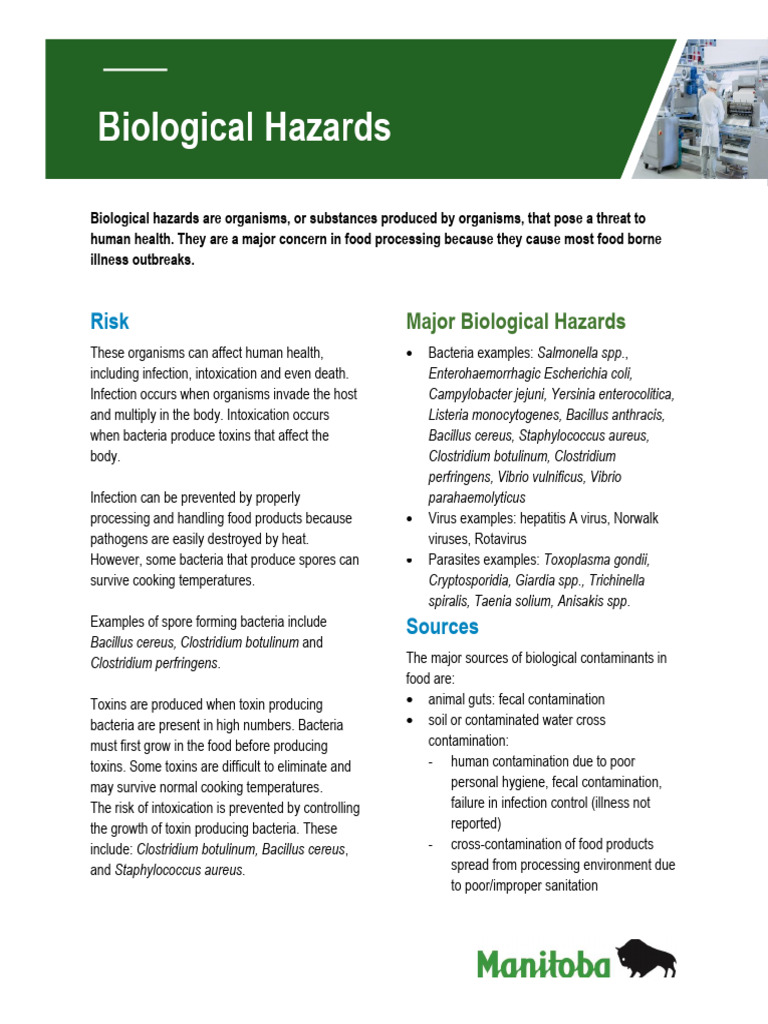
When we walk through the world around us, it’s easy to overlook the microscopic entities that share our environment. Among these, biological hazards pose significant risks to human health and well-being. These hazards encompass a multitude of microorganisms, including bacteria, viruses, fungi, and parasites, each with unique traits that can lead to severe health consequences. A celebrated example of a biological hazard is the pathogen Salmonella, which presents an intriguing blend of commonality and complexity.
First and foremost, Salmonella is a genus of bacteria, infamous for its role in foodborne illness. It serves as a reminder that beneath the surface of our daily meals lies a potential threat. The Centers for Disease Control and Prevention (CDC) reports that millions of instances of salmonellosis occur annually in the United States alone. This high incidence raises a fundamental question: why does something so widespread captivate our attention?
To unravel this fascination, we must explore how Salmonella contaminates food. Typically, contamination occurs through a breakdown in food safety practices. Raw meats, particularly poultry, eggs, and unpasteurized dairy products are often culprits. However, fruits and vegetables can also serve as vectors for this pathogen if contaminated during harvesting or processing. A seemingly benign salad, then, may conceal perilous strains of bacteria—a thought-provoking notion that evokes both curiosity and apprehension.
What draws individuals to explore the implications of biological hazards like Salmonella is not only the visible consequences but the hidden mechanisms at play. Upon consumption of contaminated food, the bacteria adhere to the intestinal lining, evading the immune response. They can invade the epithelial cells, initiating an inflammatory response. Symptoms can emerge 6 hours to 6 days later, including diarrhea, fever, and abdominal cramps. The bewildering array of responses invites us to consider the delicate dance between pathogens and our immune systems.
Moreover, the fascinations extend beyond the immediate effects of infection. They delve into broader public health considerations. The emergence of antibiotic-resistant strains of Salmonella has become a focal point for researchers and health officials alike. Resistance can arise through the overuse of antibiotics in livestock as they are often administered to promote growth rather than combat infection. This scenario delineates one way human practices reverberate back, amplifying biological hazards.
In investigating the broader implications of biological hazards, one cannot ignore the socio-economic factors intertwined with food safety. Vulnerable populations often bear the brunt of foodborne illnesses. Low-income communities may lack access to knowledge about proper food handling practices, exacerbating their risk. This observation unveils a deeper facet of fascination: the intersection of health, culture, and economics is where the impact of biological hazards often materializes.
As research progresses, the scientific community continually seeks strategies to mitigate the risks associated with Salmonella. Implementation of proper food handling practices, such as cooking meats at appropriate temperatures and maintaining hygiene when preparing food, stands as a bulwark against these hazards. Additionally, ongoing studies aim to develop vaccines and innovative detection technologies to enhance food safety protocols and protect public health.
Yet, as we navigate through these preventative measures, it seems prudent to reflect on our external environment. Climate change plays an unexpected role as well. Altered climate conditions can influence the survival and transmission patterns of pathogens, including Salmonella. Warmer temperatures often lead to increased prevalence of foodborne pathogens, presenting complex challenges with regard to risk management.
Engaging with biological hazards such as Salmonella cuts across diverse disciplines, from microbiology and public health to sociology and environmental studies. The study of how these hazards permeate our daily lives inspires questions that extend far beyond simple infection. It beckons us to explore the interplay between human behavior and the invisible world of microbes, fostering a broader understanding of health in our increasingly interconnected societies.
To encapsulate the multifaceted nature of biological hazards, it’s essential to recognize that they are not merely agents of disease; they serve as catalysts for societal reflection and advancement. The story of Salmonella embodies an age-old conundrum: how do we coexist with elements that pose such latent threats? It is through vigilance, education, and awareness that society can minimize the risk while promoting a culture that values health and safety.
In summary, the exploration of Salmonella as a prime example of a biological hazard encourages a broader dialogue about food safety, public health, and the intricate web of relationships that bind humanity to its microbial counterparts. The challenges presented by such pathogens require a concerted effort to mitigate risks and foster a health-conscious society, reinforcing the idea that even the most common observations can unveil deeper layers of significance that warrant our attention.