
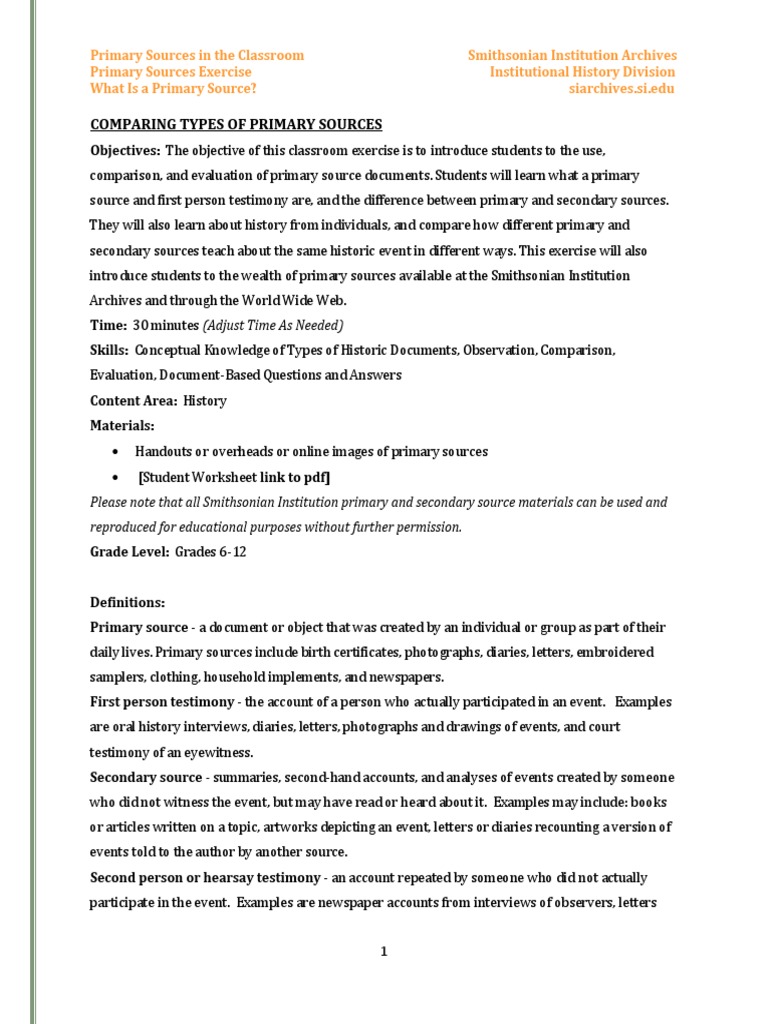
Understanding the concept of primary sources is fundamental in the realm of research and academia. These sources serve as the bedrock of historical inquiry, providing first-hand accounts and direct evidence regarding a particular event or phenomenon. But what, exactly, constitutes a primary source? This article delves into the various examples of primary sources, dissecting their significance, intricacies, and the allure they hold for scholars and enthusiasts alike.
At its core, a primary source is an original document or artifact created during the time under study. It offers an unmediated glimpse into the past, allowing researchers to engage with history on a more intimate level. Let’s explore several categories of primary sources, highlighting distinctive examples that accentuate their invaluable role in the tapestry of historical knowledge.
1. Personal Narratives
Among the most evocative primary sources are personal narratives, which encompass diaries, letters, and memoirs. Take, for instance, the profound insights gleaned from Anne Frank’s diary. Written in the throes of World War II, this poignant account humanizes the statistics of war, revealing the emotional struggles and resilience of a young girl hiding from persecution. Such documents not only narrate events but elicit empathy, drawing readers into the psyche of individuals whose voices were often stifled.
2. Official Documents
Official documents, such as treaties, laws, and birth certificates, are rich in their ability to convey administrative actions and social constructs of their time. Consider the United States Declaration of Independence—this monumental text signifies a critical juncture in history, encapsulating the ideological battlegrounds of liberty, governance, and national identity. The exact words penned by the Founding Fathers provide insights into the political and philosophical motivations that shaped a nation.
3. Artifacts and Objects
In the realm of archaeology, artifacts serve as vital primary sources. Items such as tools, pottery, and mummified remains offer concrete evidence of past cultures and civilizations. The discovery of ancient Mesopotamian cuneiform tablets, for instance, has revolutionized our understanding of early writing systems and societal organization. The tactile and visual aspects of these artifacts provide a direct connection to the lives of people long gone, sparking curiosity about their daily rituals, economies, and beliefs.
4. Photographs and Visual Media
Photographs capture moments in time with unparalleled immediacy, making them one of the most accessible forms of primary source material. The iconic image of the U.S. flag being raised at Iwo Jima resonates as a visceral representation of sacrifice and pride during World War II. This single frame conveys not only the event itself but also the broader sociopolitical climate of the era. Furthermore, visual media, such as films and documentaries produced contemporaneously with events, can serve as primary sources, encapsulating the zeitgeist and cultural sentiments of their time.
5. Oral Histories
Oral histories constitute a vital and often underappreciated category of primary sources. These are recorded interviews with individuals who have lived through specific events or time periods. For instance, testimonials from Holocaust survivors provide a direct lens into the horrors faced during that dark chapter of history. The oral tradition adds layers of narrative that written texts may overlook, allowing for a rich tapestry of perspectives to emerge. It exemplifies how memory, oral storytelling, and personal experience intertwine to preserve history.
6. Creative Works
Literature, music, and art represent unique primary sources that convey the emotional and cultural currents of their times. Consider Shakespeare’s plays—written in the late 16th century, they reflect the societal norms, politics, and everyday lives of Elizabethan England. Through the intricate layering of text, scholars glean insights into human psychology and social dynamics. Similarly, the songs of protest during the Civil Rights Movement encapsulated the fervor for justice and equality, capturing the collective conscience of a generation.
7. Reports and Statistics
While dry at first glance, reports and statistics compiled during pivotal moments serve as critical primary sources. Data released on economic conditions during the Great Depression or the health impacts of the COVID-19 pandemic provide quantitative insights into societal shifts. These documents frame narratives around change, resilience, and adaptation, allowing researchers to analyze patterns and draw connections across time. The impact of these figures can transcend mere numbers, as they weave a narrative of struggle and progress.
The Allure of Primary Sources
The fascination with primary sources lies in their authenticity and the unique window they offer into the human experience. Each artifact tells a story, each letter a whispered secret from the past. Their significance is compounded by the fact that they demand interpretation and critical thinking, often leading to discussions around context and meaning. Whether for academic exploration or personal enrichment, engaging with primary sources invites one to traverse time, cultivating a deeper understanding of history and human nature.
In conclusion, primary sources are the lifeblood of historical research, presenting an array of forms, including personal narratives, official documents, artifacts, photographs, oral histories, creative works, and statistical reports. Each category offers its own set of insights and engages researchers in a nuanced dialogue with the past. The exploration of these sources unveils not only facts and figures but also the rich tapestry of human emotion, culture, and experience that continues to shape our world today.













