In the realm of professional advancement, a letter of recommendation stands as a formidable beacon, illuminating a candidate’s attributes and proclivities. Imagine it as a lighthouse guiding ships through tumultuous waters, allowing them to navigate towards promising shores. This invaluable document not only serves as a testament to an individual’s skills and character but also provides insight into their potential for future endeavors. Within this exploration, we will delve into the intricacies of crafting an exemplary letter of recommendation, illuminating its structure, purpose, and the profound impact it can have on a career trajectory.
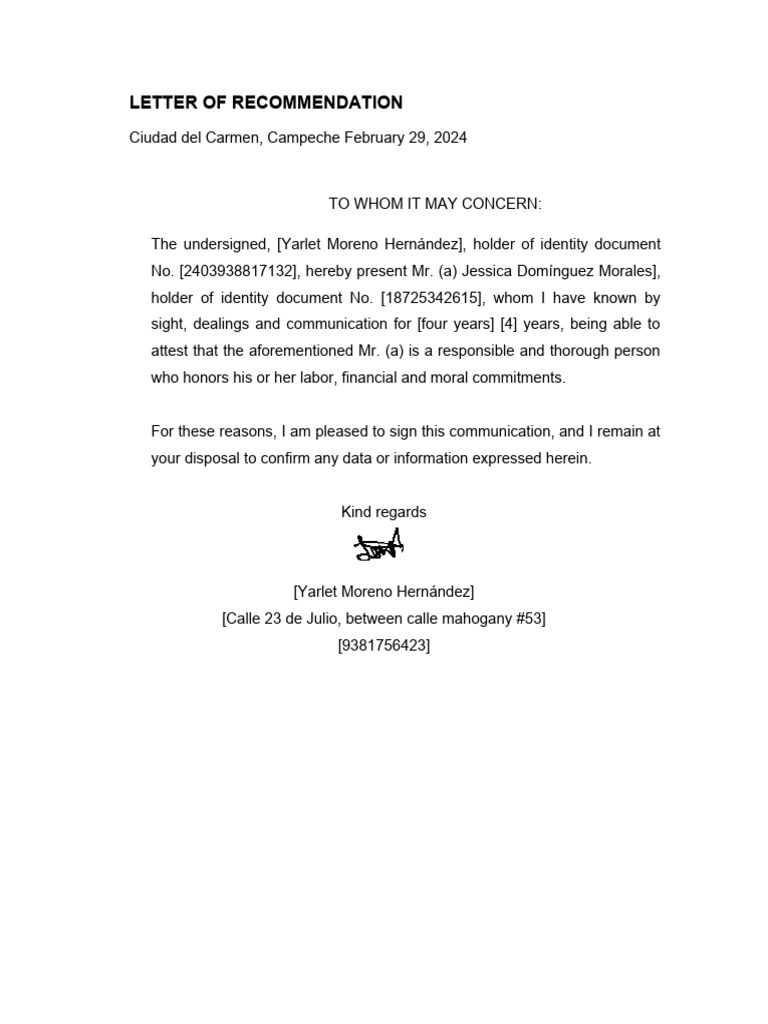
At its essence, a letter of recommendation is a subjective endorsement. It transcends mere words; it encapsulates the very essence of who a person is in a professional context. To construct a compelling letter, one must first comprehend its foundational structure. Typically, it commences with a formal salutation directed toward the recipient. Whether it’s a hiring manager or an admissions committee, addressing the letter appropriately lays the groundwork for a positive reception.
The introductory paragraph serves as a preamble, establishing the relationship between the recommender and the candidate. It is crucial for the author to articulate their connection succinctly, emphasizing how long they have known the individual and in what capacity. This initial touchstone lends credibility to the ensuing assertions, allowing the reader to grasp the weight of the recommendation.
As we transition into the heart of the letter, the body paragraphs emerge as the canvas upon which the candidate’s attributes are illustrated. Here, the author should weave a narrative that combines anecdotes and specific examples, forming a vivid tapestry of the candidate’s competencies. Similar to a painter blending colors, the balance between qualitative and quantitative evidence is essential. If an individual demonstrated remarkable leadership skills during a project, a succinct anecdote of that event can vividly illustrate their capabilities. Elucidating such instances not only embellishes the recommendation but also serves to humanize the candidate, amplifying their appeal.
Additionally, the use of industry-specific terminology can further illuminate the candidate’s expertise. This approach reflects not only the author’s familiarity with the field but also the candidate’s preparedness to enter it. Whether discussing technical proficiencies, interpersonal skills, or visionary thinking, precision becomes an invaluable ally in this endeavor.
Furthermore, incorporating assessments of character traits is paramount. Traits such as integrity, resilience, and enthusiasm contribute to a more holistic view of the candidate, akin to a multifaceted gemstone that gleams differently under varied lights. The author should avoid cliches, opting instead for expressive language that resonates deeply. Describing a candidate as “unstinting in their pursuit of excellence” conveys a powerful image of dedication and ambition. Using metaphors and similes can enhance the emotional resonance of the letter, creating an indelible mark on the reader’s psyche.
The penultimate paragraph should strive to encapsulate the recommendation succinctly while reiterating the candidate’s fitness for the role or program. A resonant closing statement can leave a lasting impression, much like the final chords of a symphony that linger in the air. Here, the author may offer to provide further insight, showcasing their willingness to support the candidate’s endeavors actively.
Lastly, a formal closing, coupled with the author’s signature, solidifies the document’s authenticity. Contact details should also be included, ensuring that the recipient has the means to follow up with any queries. This final touch adds an element of accessibility, inviting further dialogue about the candidate.
Beyond the structural components lies an underlying purpose — to advocate fervently for the individual in question. This advocacy can impact significant life decisions, be it securing an academic position, landing a coveted job, or gaining access to exclusive opportunities. A skillfully penned letter of recommendation serves not just as a document, but as a vessel of hope and promise that can catapult a candidate into unparalleled territories of success.
In essence, the act of writing a letter of recommendation is akin to planting a seed in fertile soil. With nurturing and care, that seed can blossom into a flourishing tree, bearing fruits of success for the candidate. The weight of these letters should not be underestimated; they can be transformational, altering the course of an individual’s professional journey. In a world rife with competition, a powerful recommendation is akin to a secret weapon, bestowing an advantage that can mean the difference between obscurity and distinction.
Ultimately, writing an exemplary letter of recommendation requires a deft touch, a commitment to authenticity, and an understanding of the profound impact it can wield. When crafted with deliberation and care, this document transcends its traditional confines, becoming a powerful endorsement that resonates through the corridors of opportunity and opens doors to new possibilities. Such letters are more than text; they are legacies waiting to be unfolded.