When delving into the world of poetry, one encounters a myriad of forms, styles, and techniques that evoke myriad emotions and depict complex imagery. Among these techniques, meter stands out as a focal point of rhythmic structure that elevates the reading experience, adding a layer of musicality and emotion to the written word. Meter, the measured arrangement of syllables in a line of verse, invites us to contemplate the interplay between rhythm and meaning in poetry. But how does one create a poem that embodies meter effectively? Let’s explore this aspect through a captivating example.
Consider the classic ballad form, which has an inherent rhythm perfect for storytelling. This structure typically follows an ABAB rhyme scheme and can be composed in alternating lines of iambic tetrameter and iambic trimeter. Imagine a poetic challenge: Can you craft a narrative that invokes vivid imagery while adhering to this rhythmic pattern? To illuminate this challenge, here’s an example poem that showcases meter gracefully:
The Enigmatic Harp
In twilight’s glow, the shadows dance, (A)
A figure cloaked in mystery, (B)
With fingers deft, she takes a chance, (A)
To play a song for all to see. (B)
Her harp, a weave of strings and dreams, (A)
Resonates with whispered lore, (B)
Each note a thread of moonlit beams, (A)
Entwining souls as night’s encore. (B)
This poem not only exemplifies the rhythmic intricacies of meter but also encapsulates a story—a mysterious figure who captivates an audience through her music. Each quatrain adheres to the specified meter, creating a pleasing cadence that enhances the emotional weight of the imagery.
Yet, one might wonder: what if the poem deviated from traditional meter? Would it still resonate? Let’s pose a playful question: Can a break in meter spark greater emotional impact or deeper engagement? In exploring this question, we must consider the effects of enjambment or juxtaposition against the established meter. For instance, the use of enjambment allows the poet to convey urgency or evoke surprise, breaking the reader’s expectations while maintaining a thematic continuity.
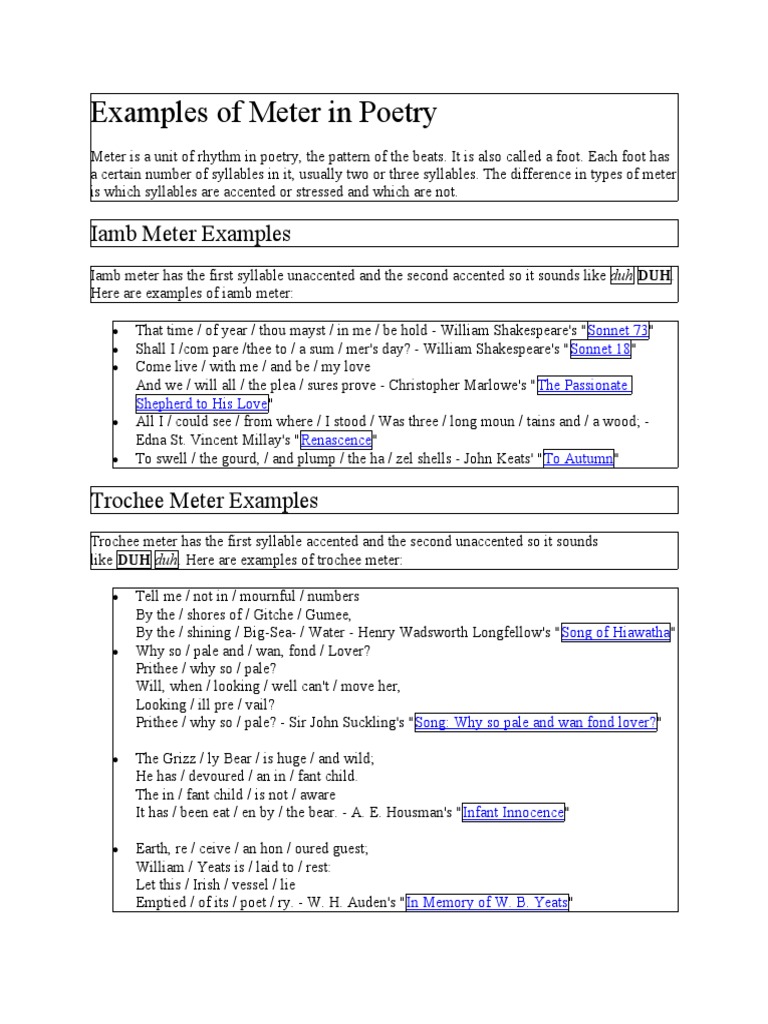
One might also examine the role of iambic pentameter, often celebrated as the ‘heartbeat’ of English poetry. Shakespeare’s sonnets frequently employ this rhythmic foot, presenting the challenge of creating profound meaning within such a familiar framework. Consider the challenge of writing a line that disrupts the natural flow of iambic pentameter to emphasize a critical moment or concept. Such a strategic disruption can reinvigorate the text, reminding the reader of the underlying emotional stakes.
Beyond the technical aspects, meter invites exploration of sound and meaning interrelation. The rhythm set forth by meter does not merely exist for aesthetic purposes—it contributes to the poem’s thematic richness. Meter can evoke specific emotional responses; for instance, a swift meter might instill excitement, while a slower beat can induce contemplation. One must ask: how can varying meter heighten the reader’s emotional journey through the poem?
Moreover, experimenting with the notion of anapestic and dactylic meters—where the foot consists of two unstressed syllables followed by one stressed syllable or vice versa—further expands the rhythmic possibilities. This fluidity encourages poets to play with tempo, perhaps creating a lively verse to capture the whimsical nature of their subject matter or a somber tone that underlines a tragedy.
To illustrate, envision a challenge in crafting an anapestic poem that flutters with energy and mirth, drawing readers into a joyous escapade:
A Dance Beneath the Stars
In the frolicsome night, when the moon casts her light, (A)
Gathered under the glow, where the laughter does flow, (B)
Step lightly, oh friends, let your spirits ascend, (A)
For the dance is our bond, and we’ll never know end. (B)
This piece employs anapestic meter to produce a rhythmic pulse akin to that of joyful dancing, creating an atmosphere of celebration. The challenge here lies in sustaining the momentum and merriment while adhering to a structured metrical form.
As we examine the dance of meter in poetry, we see its capabilities to elevate expressions beyond mere words. The potential to sway emotions, conjure imagery, and weave narratives rests heavily on the poet’s skillful manipulation of rhythm. Thus, the ability to balance emotional integrity with the strictures of metrical form is paramount. As poets and aspiring wordsmiths, the challenge arises: Can one master these forms and simultaneously forge a unique voice that resonates with authenticity?
In conclusion, meter is not merely a technical aspect of poetry; it is an invitation to explore, experiment, and engage with the art of language in profound ways. As each line echoes with purpose and rhythm, the journey through the poem unfolds, beckoning the reader to engage not just with the message but with the heartbeat that drives it forward. Whether through the familiar iambic pulse or the lively sway of anapestic rhythms, the challenge remains: how can meter serve not just as a framework, but as a vessel for emotion and experience? The answer lies within the creative spirit of each poet, ready to embrace the rhythm of their own heartbeat.