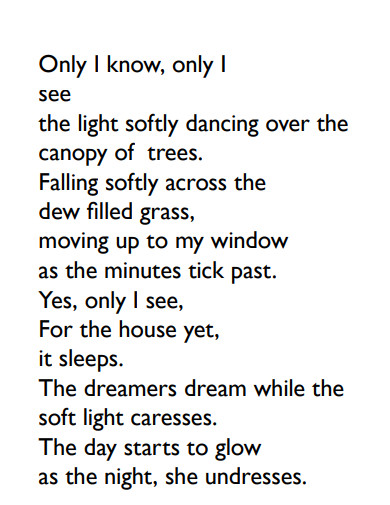
Ode poetry, a distinguished form within the literary canon, possesses its roots in ancient Greece and is characterized by its lofty diction and intricate structure. Typically, an ode is a formal address to an object or entity, allowing poets to express profound emotions, reflections, and philosophical musings. This article delves into the essence of what makes an ode captivating, illustrating its ability to encapsulate everyday experiences while hinting at deeper, often transcendental meanings.
At the core of an ode lies admiration. Poets often choose subjects that inspire them—be it natural phenomena, influential figures, or abstract concepts. An example that readily comes to mind is an ode to the sun, where the poet might extol its resplendent rays that pierce through the morning mist, awakening the world to its vibrant potential. Yet, beyond this surface-level adoration, the sun serves as an emblem of life, warmth, and growth. Its cycles reflect the rhythm of human existence, from dawn’s hopeful beginnings to the twilight of rest. Herein lies the fascination: while the sun is a common observation, its deeper significance sparks myriad contemplations about life, time, and the essence of existence itself.
Odes typically employ a tripartite structure, consisting of the strophe, antistrophe, and epode. The strophe introduces the theme, engaging readers with vivid imagery and emotional resonance. In our ode to the sun, the strophe may paint a picture of morning rays cascading over silken horizons, igniting the world in golden hues. This enthralling image engages the reader’s senses, inviting them to share in the experience. The poet’s crafting of rich descriptions transports the audience to that specific moment, creating a visceral connection.
The subsequent antistrophe often contrasts with or complements the strophe. In reflecting upon the sun’s life-giving properties, one might explore the juxtaposition of its benevolence with the harshness of relentless heat. The poet may delve into how the sun’s unyielding glare can evoke discomfort or desolation, challenging its perceived benevolence. This juxtaposition invites readers to consider the duality of existence—joy and pain, life and death—thus enhancing the emotional depth of the piece.
Lastly, the epode serves to resolve the themes introduced, imparting wisdom or insight gleaned from the human experience. A poet may conclude their ode by contemplating the ephemeral nature of time and how, despite the sun’s constant presence, each day is a fleeting opportunity for reflection and growth. This resolution not only resonates with the initial observations but subtly transitions into broader, universal themes that beckon readers to introspect on their own lives.
Alongside structure, the language of odes is particularly evocative. Poets often employ metaphor and simile, enriching the text with layers of meaning. In an ode to the sun, one might describe its rays as “golden threads weaving warmth into the fabric of dawn.” Such metaphor elevates the sun from a mere celestial body to a vital force that shapes human experience. The imagery creates a tapestry of associations, encouraging readers to contemplate their significance in a broader context.
The emotional resonance of an ode is also amplified by its sound. Poets frequently utilize devices such as alliteration, assonance, and rhyme. The rhythmic quality of an ode allows for a lyrical flow, echoing the natural patterns found within the music of life. As the sun sets, one might hear the soft whispers of evening shadows, a sound that reverberates through both the poem and the reader’s heart, underscoring the intimate relationship between nature and human emotion.
Beyond individual interpretations, odes encapsulate collective sentiments. Throughout history, many poets have turned their gaze towards common elements of nature, infusing them with personal significance. The sun, a universal reference point, becomes a shared symbol that resonates with diverse experiences. An ode to the sun may spark communal reflection, inviting readers to collectively explore the implications of light in their own lives, identifying moments of clarity amidst the complexities of existence.
Experiencing an ode is akin to participating in a dialogue—a shared exploration of the human condition. The reflections that arise from observing the sun’s glow, whether at dawn or dusk, foster a sense of connectivity among those who engage with the poem’s essence. In this way, the ode transcends its form, inviting introspection and camaraderie among its readers.
Critically, the interplay of simplicity and complexity in ode poetry is often what makes it so compelling. On one hand, the nature-centric subject matter—the sun, a common object of admiration—invites literal interpretations. On the other hand, an ode’s underlying philosophical inquiries prompt readers to ponder deeper existential questions. This duality broadens the appeal of odes, allowing individuals from various walks of life to find meaning within the same verses.
Ultimately, the enduring power of an ode lies in its ability to reflect on the familiar while unearthing the extraordinary. An ode to the sun becomes not merely an expression of admiration for a celestial body but a profound meditation on life, growth, and the passage of time. Through rich language, intricate structure, and compelling imagery, poetry in the form of an ode celebrates the ordinary while unveiling its remarkable complexities, reminding us of the beauty that exists in our everyday experiences.
In conclusion, ode poetry invites us to engage deeply with our world, encouraging reflections that resonate well beyond the written word. Each phrase is a vessel, carrying emotion, wisdom, and a hint of the ineffable. As we pause to appreciate the simplicity of the sun’s shine, we are reminded that even the most mundane things possess an extraordinary narrative—waiting to be discovered by those willing to listen.