In the complex tapestry of professional life, the moment arrives when an employee must untangle themselves from a current role, often leading to feelings of uncertainty and anticipation. Crafting a resignation letter, although seemingly a mere formality, serves as a pivotal document that encapsulates an individual’s departure. It is not only about announcing one’s intent to leave but doing so with grace, professionalism, and foresight. This article delves into the intricacies of resignation letter templates, offering a comprehensive overview, insightful tips, and an illustrative example to guide anyone in this transformative process.
First and foremost, understanding the significance of a resignation letter is crucial. This document is not only the keystone of your exit strategy but also a reflection of your professional ethos. A well-articulated resignation letter forges a lasting impression, preserving relationships and possibly paving the way for future opportunities. Employers value candidates who exhibit professionalism even at the end of their tenure, viewing it as a testament to their character.
Now, let us explore the anatomy of an exemplary resignation letter. Generally, a robust resignation letter will include several key components:
- Header: This section includes the sender’s address, the date, and the recipient’s address. Though often considered trivial, including this information showcases attention to detail and formal etiquette.
- Opening Salutation: A respectful salutation sets a positive tone. Simple greetings such as “Dear [Manager’s Name],” reestablish a connection amid the transition.
- Statement of Resignation: Succinctly state your intent to resign, including your last working day. Clarity is paramount here; ambiguity can lead to misunderstandings.
- Expression of Gratitude: A poignant acknowledgment of the experiences gained during your tenure softens the blow of departure. Expressing gratitude can encourage goodwill, which may benefit you later in your career.
- Offer of Assistance: This section can be mindfully framed as an offer to help with the transition, sharing knowledge to ease the burden on your team and successor.
- Closing: A warm and respectful closing, coupled with your signature, completes the document on a courteous note.
Before diving into an example, one might ponder how to weave personal sentiments into a structurally sound letter. It is essential to balance honesty with professionalism; hence, articulating your reasons for leaving should be approached with caution. Negative remarks about the workplace or colleagues can diminish the credibility of your message.
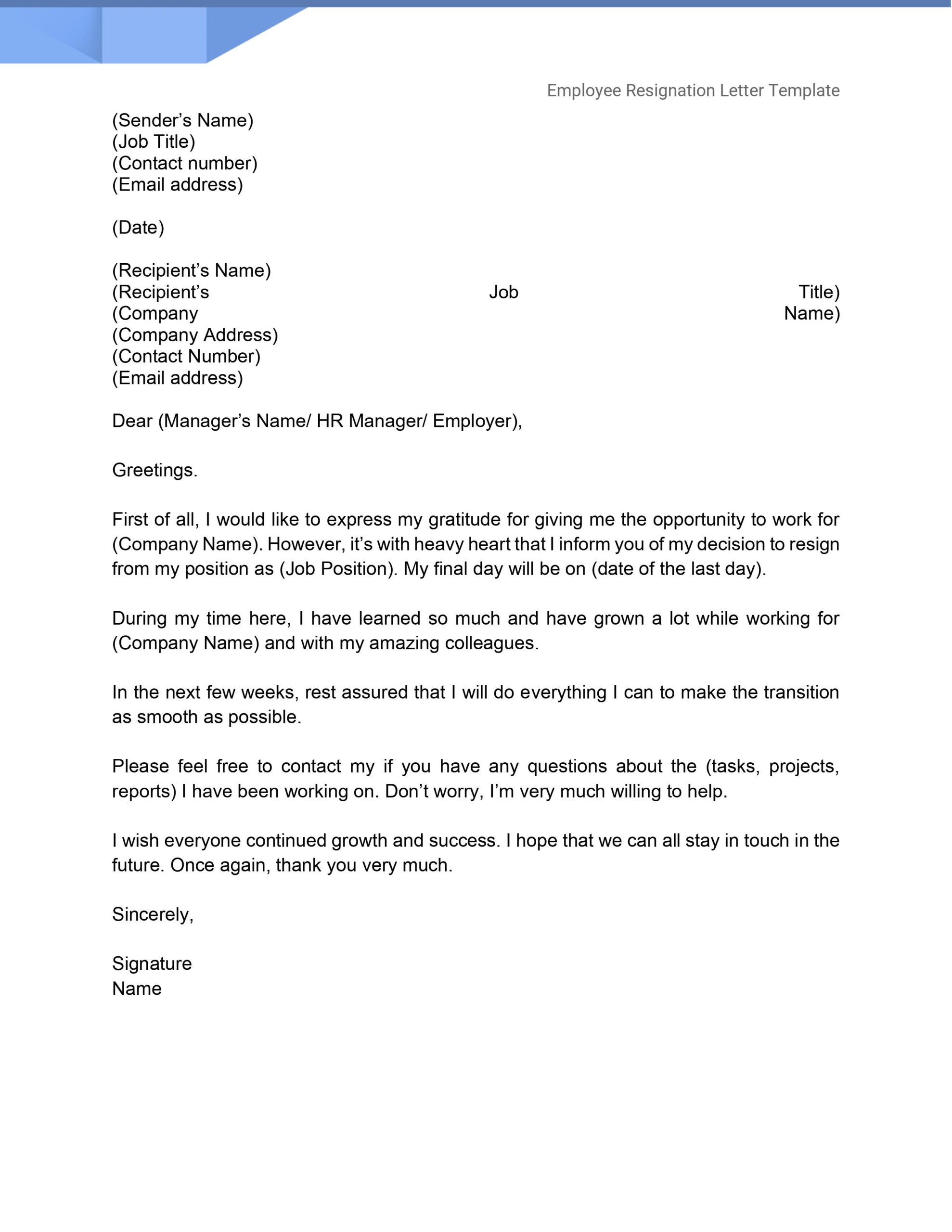
Now, let us examine a detailed example of a resignation letter template:
[Your Name]
[Your Address]
[City, State, Zip Code]
[Email Address]
[Phone Number]
[Date]

[Manager's Name]
[Company’s Name]
[Company’s Address]
[City, State, Zip Code]

Dear [Manager's Name],

I am writing to formally announce my resignation from [Your Position] at [Company's Name], effective [Last Working Day, typically two weeks from the date above]. This decision was not made lightly, as my time at [Company's Name] has been incredibly rewarding, offering invaluable experiences and fostering professional growth.

I would like to extend my heartfelt gratitude for the opportunities afforded to me during my tenure. The support and guidance from you and my colleagues have played a significant role in my development, and for that, I am truly thankful.

In the next few weeks, I am committed to ensuring a smooth transition. I am more than willing to assist in training my replacement or completing any outstanding projects that may require my attention. I hope my departure will cause minimal disruption and I leave behind a legacy of diligence and dedication.

Thank you once again for your understanding. While I am eager to pursue new avenues, I will fondly remember my time at [Company's Name]. Please do not hesitate to reach out if I can be of any help during this transition.

Warm regards,

[Your Signature (if submitting a hard copy)]
[Your Typed Name]
This template provides a structured approach while allowing the author’s voice to emerge. The next step is to customize this framework, integrating personalized reflections and specific details relevant to your own experience. Keep in mind, vacancies leave after your departure; a strong letter may leave doors open for return or referrals.
Moreover, consider the timing of your resignation letter. Ideally, it should coincide with your resignation announcement to your manager. This simultaneity ensures transparency, enabling open conversations about your exit strategy. Such discussions may unveil adjustments or amendments that could affect your decision, providing an opportunity to pivot gracefully.
Lastly, as you conclude your professional chapter, remember that your resignation letter serves not just as a goodbye; it represents your narrative, conclusion, and the potential for new beginnings. Bearing that in mind nurtures an attitude of optimism—look forward with confidence, knowing that each step taken is a stride towards your brighter future.
In summary, the act of resigning can be a source of both stress and excitement, but it is ultimately a step toward transformative change. Embrace the opportunity to reflect on your journey, express gratitude, and maintain professionalism. In doing so, you transform what traditionally is a mundane process into a memorable transition, aiding in your personal and professional evolution.