In the journey of one’s professional life, there comes a time when the decision to resign becomes inevitable. Writing a resignation letter can often be an arduous task, requiring not only the articulation of your next steps but also an expression of gratitude and professionalism. This article delves into the intricacies of crafting a resignation letter that not only communicates your departure but also reflects your position and perspective as you transition into a new phase of your career.
Before advancing to the specifics, it’s essential to understand the significance of a resignation letter. This document is your final communication with the employer and serves as a formal declaration of your intent to leave the organization. Beyond serving as a notification, it encapsulates your journey and experiences, offering a thoughtful closure to your tenure.
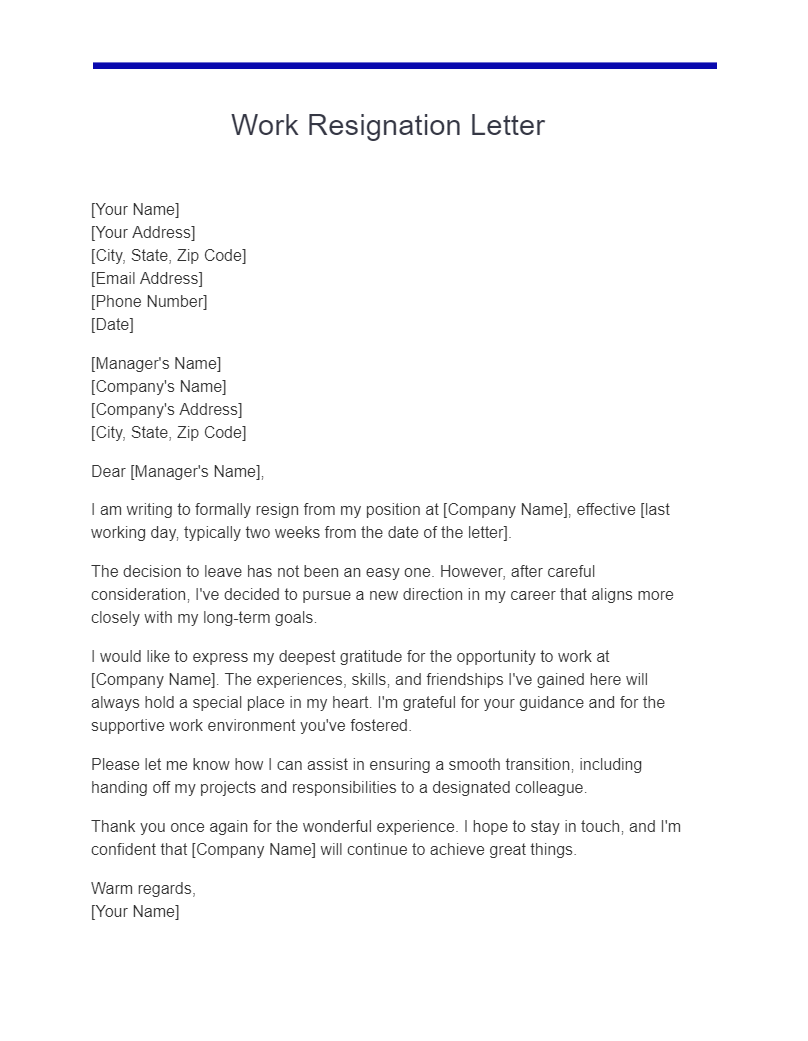
First and foremost, it’s prudent to begin your resignation letter with a clear and concise statement of resignation. This definitive declaration avoids ambiguity, ensuring that your employer understands your intention unequivocally. For instance, you might start with:
“I am writing to formally resign from my position at [Company Name], effective [Last Working Day].”
The introduction not only sets the stage but also primes the reader for the content that follows. Transitioning smoothly into the body of the letter, it is often beneficial to express gratitude. Reflecting on your contributions, relationships, and experiences can soften the impact of your departure. Acknowledging your employer’s support can also illuminate a sense of professionalism and respect. You might consider stating something akin to:
“I am immensely grateful for the opportunities for growth and development that I have received during my time here. The support and guidance from my colleagues and management have been invaluable.”
Next, it is essential to emphasize your reasons for leaving, albeit with a tactful touch. Honesty is crucial, but tact is equally paramount. While you may want to highlight your motivations for departure—be it for new opportunities, personal challenges, or career advancement—it is vital to maintain a positive tone. A possible phrasing could be:
“After careful consideration, I have chosen to pursue a new opportunity that aligns more closely with my career aspirations.”
However, some may wonder about the necessity of detailing reasons for leaving. While it depends on individual circumstances, providing a rationale could lay the groundwork for understanding and goodwill as you transition. Furthermore, knowledge that employees value transparency may incite curiosity from your employer about your next steps, fostering a culture of open conversation.
As you draft your letter, it’s also wise to mention your willingness to assist during the transition period. This reinforces a sense of responsibility and commitment, ensuring that your departure is not abrupt and disruptive. You might write:
“I am committed to ensuring a seamless transition and will do everything in my power to hand over my responsibilities effectively before my departure.”
In terms of structure, a resignation letter should adhere to a formal layout. Begin with your name and address at the top, followed by the date, and then your employer’s name and address. Maintain a professional salutation such as “Dear [Manager’s Name],” to establish a respectful tone. As you meander through the contents of your letter, feel free to include a sense of nostalgia, reflecting on memorable moments—this can add an emotional nuance that helps convey your sentiment.
Upon reaching the conclusion of your letter, ensure you revisit your gratitude. Ending with a cordial farewell is an effective closure, setting a positive tone as you foray into new adventures. A classic closing could be:
“Thank you once again for everything. I hope to stay in touch, and I wish the company continued success.”
Finally, sign off formally with “Sincerely,” followed by your name. It encapsulates the professionalism with which you have approached your resignation process.
After composing the letter, consider the delivery method. The impact of a resignation letter can be magnified when delivered personally, allowing for a discussion about your departure. However, should personal meetings be challenging to facilitate, electronic delivery through email can still convey your message effectively. No matter the delivery method, a well-crafted letter leaves a lasting impression, fostering respect and understanding.
The act of resigning, while often emotional, can be reframed as a pivotal opportunity. The submission of a resignation letter signifies not only the conclusion of a chapter but the commencement of new endeavors. This shift in perspective is crucial as it allows you to approach the future with enthusiasm rather than dwelling on sentiments of loss.
In conclusion, a resignation letter should not merely serve as a notification; it ought to reflect your journey, acknowledge your growth, and express a sense of gratitude towards the organization that has shaped your professional persona. It is a pivotal moment, a powerful intersection of appreciation and aspiration, teeming with possibilities. As you draft your letter, take a moment to contemplate the weight of your words and the legacy you leave behind, inviting curiosity about your future whilst anchoring the present with grace and professionalism.