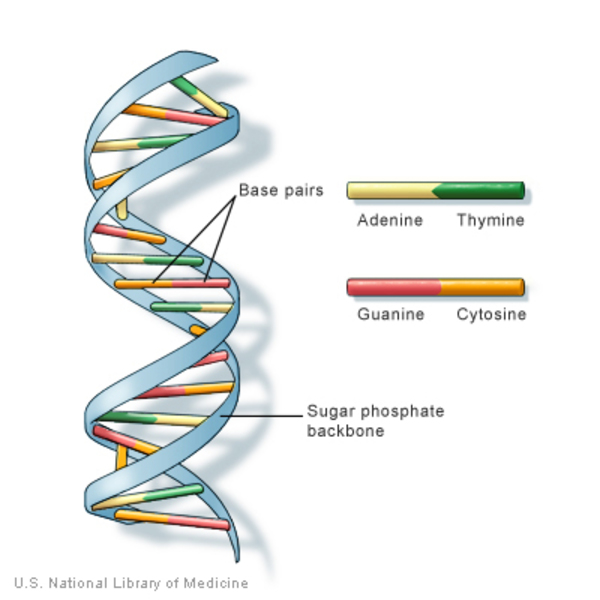
Deoxyribonucleic acid (DNA) is more than just a molecular structure; it serves as a pivotal blueprint for life itself. To explore the intricate world of DNA is to embark on an intellectual journey that unveils the complexity of genetic coding, inheritance, and biological identity. As we delve into the nature of DNA, we discover it is a representation of various fundamental concepts that underpin life on Earth.
1. DNA as an Example of Biological Information
At its core, DNA encapsulates vast amounts of biological information. Each molecule is composed of sequences of nucleotides—adenine (A), thymine (T), cytosine (C), and guanine (G)—which form the foundation of genetic data. The unique arrangement of these nucleotides translates into the specific instructions necessary for the synthesis of proteins, orchestrating cellular functions, growth, and development.
This encoding of information is akin to the binary language of computers. In fact, DNA can be viewed as nature’s own programming language, a complex code that determines not just physical traits, but also predispositions to certain conditions, behaviors, and susceptibilities. Thus, it serves as an exquisite example of how biological systems encode, transmit, and express information over generations.
2. DNA as an Example of Evolutionary Adaptation
Another intriguing aspect of DNA is its role in the mechanism of evolution. Through the process of mutation and natural selection, DNA facilitates the adaptation of organisms to their environments. Each alteration in the genetic code can lead to variations that may be advantageous for survival, showcasing how life evolves through time.
Consider the phenomenon of antibiotic resistance in bacteria. Variants of bacterial DNA that acquire mutations allowing them to survive antibiotic treatment illustrate the continuous and dynamic interplay between organisms and their surroundings. Here, DNA becomes a chronicle of evolutionary history, revealing the diverse pathways that species have traversed in their quest for survival.
3. DNA as an Example of A Personal Identity
DNA also represents the very essence of individuality. From forensic science to paternity tests, our genetic material is uniquely ours—much like a fingerprint. The study of genomics has illuminated the ways in which small variations in our DNA can lead to significant differences in health, behavior, and appearance.
This individuality extends beyond mere physical traits. Genetic predispositions to certain diseases, resilience against infections, and even personality traits can often be traced back to specific sequences within our DNA. Consequently, understanding one’s DNA provides a glimpse into ancestry, familial connections, and personal health, opening new realms for exploring identity in a genetic context.
4. DNA as an Example of Biotechnological Innovation
The advancements in biotechnology underscore DNA’s significance as a catalyst for innovation. Techniques like CRISPR-Cas9 have transformed genetic engineering, enabling scientists to edit DNA with remarkable precision and efficiency. This revolutionary capability holds the promise for treating genetic disorders, enhancing agricultural productivity, and tackling pressing global challenges such as climate change.
Such breakthroughs evoke a sense of ethical contemplation as we consider the implications of mastering the genetic code. As we decode and manipulate DNA, we must grapple with the responsibilities that accompany such powerful tools, ensuring that innovations serve the collective good rather than lead to unintended consequences. DNA thus stands as both an instrument of potential and a harbinger of moral dilemmas.
5. DNA as an Example of Interdisciplinary Science
The study of DNA exemplifies the interweaving of diverse scientific disciplines, from molecular biology and genetics to anthropology and bioinformatics. Researchers collaborate across fields to decode the mysteries of genetic information, employing computational tools to analyze vast genomic datasets, and using insights from evolutionary biology to contextualize findings within the broader tapestry of life.
This interdisciplinary approach enriches our understanding of DNA, emphasizing that the exploration of genetics is not solely confined to biology but spans across mathematics, ethics, and technology. Engaging with DNA invites curiosity and fosters a collective inquiry that embraces multiple perspectives—an essential quality in today’s complex scientific landscape.
6. DNA as an Example of Future Possibilities
The potential future applications of DNA research are staggering. As we stand on the precipice of personalized medicine, the insights extracted from individual genomes may revolutionize healthcare delivery. Imagine tailored treatments that consider one’s unique genetic profile, mitigating side effects and maximizing efficacy.
Similarly, DNA analysis could drive advancements in environmental sustainability, offering solutions to conservation efforts by understanding the genetic diversity of endangered species. The possibilities seem limitless, urging us to ponder how deeply the exploration of DNA can influence radical changes in various sectors, from agriculture to human health. In this sense, DNA serves not only as a record of the past but also as a beacon guiding us toward a sustainable future.
Conclusion
In conclusion, DNA exemplifies a multitude of concepts pivotal to life, identity, and innovation. Serving as a repository of biological information, a catalyst for evolution, a reflection of individual uniqueness, and a springboard for scientific advancement, DNA continues to captivate our curiosity and drive our research forward. Embracing the intricate nature of this remarkable molecule opens new frontiers of exploration, challenging us to consider our ethical responsibilities and the impact of our findings. The journey into the depths of DNA is one that not only illuminates the past but also propels us into an intriguing future full of possibilities.