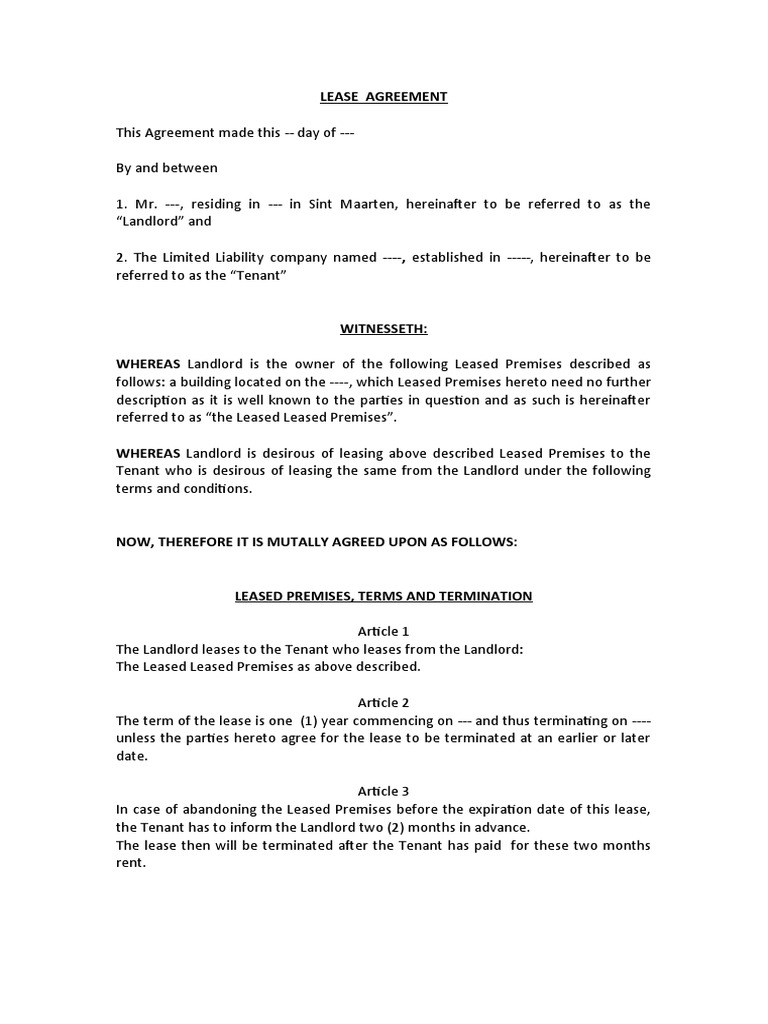
When we consider a lease agreement contract, we step into a realm rich with intricacies, much like wandering through a labyrinthine garden filled with diverse plants and blooms—each representing various clauses that contribute to the contract’s vibrancy. A lease agreement serves as a binding pact between landlord and tenant, delineating the rights and responsibilities of both parties. Through this contractual pact, a symbiotic relationship is forged, one that can flourish or wither depending on the meticulousness of its construction.
At its core, a lease agreement is akin to a roadmap that guides both the lessor and lessee through the winding paths of residential or commercial rental. It is essential to dissect the various components that constitute a lease agreement, understanding how each section interlinks with and supports the others.
1. Title: The Formal Greeting
The very first impression a lease agreement makes is encapsulated in its title. Think of it as the front door of a magnificent estate: inviting yet resolute, it declares the intention behind the document. The title typically identifies the nature of the contract, often including phrases such as “Lease Agreement” or “Rental Agreement.” A well-articulated title sets the tone, preparing both parties for the contents that are about to unfold.
2. Preamble: The Prelude of Purpose
The preamble serves as the introduction, a brief overview that outlines the relationship between the parties involved. It encapsulates the essence of the agreement, much like the opening lines of a captivating novel. Here, one would typically find the identity of the parties, signaling the gravity of the obligations undertaken. The roles of the lessor and lessee are clearly defined, cutting through any ambiguity that may cloud the introductory stage of the agreement.
3. Property Description: The Heart of the Matter
Central to the lease agreement is the description of the property being leased. This section is much like a cartographer’s detailed rendering, identifying not just the physical space but also its unique characteristics. Dimensions, location, and any included amenities create a vivid tableau, ensuring that both parties visualize their commitments accurately. This meticulous attention to detail alleviates potential disputes regarding the “what” and “where” of the agreement.
4. Term of the Lease: The Duration of Committal
Just as seasons change, so too can relationships. The term of the lease delineates the duration for which the agreement is valid. Short-term leases may evoke a feeling of transience, while long-term agreements conjure the notion of stability. This section defines the start and end dates, as well as the conditions under which an extension or renewal might transpire. The fragility of time is captured here; every second of commitment counts in the tapestry of tenant-landlord dynamics.
5. Rent Payment Terms: The Financial Cadence
Rent is often the lifeblood of the leasing relationship, and this section composes the financial rhythm to which both parties must adhere. Details such as the amount of rent, payment method, due dates, and penalties for late payments create a structured financial cadence. Picture it as the metronome for a musical composition—each note and pause carefully orchestrated to ensure harmony. Clarity in this section mitigates the dissonance that misunderstandings can cause.
6. Security Deposit: The Safety Net
The security deposit acts as a safety net, shielding the landlord from unforeseen circumstances. This portion outlines the expectations regarding the amount, the conditions for its return, and any permissible deductions. Much like the proverbial guard at the gates, the security deposit stands sentinel, ensuring protection for the landlord while offering the tenant reassurance that their investment will be honored. The balance struck here determines the level of trust between the two parties.
7. Maintenance and Repairs: The Caretakers’ Contract
In any dwelling, maintenance and repairs are vital to preserving its integrity and comfort. This section delineates the responsibilities of both the landlord and tenant regarding upkeep. Clear stipulations about who is liable for repairs, yard maintenance, and any necessary inspections are imperative. Here, the agreement serves as a collective pledge to protect and nurture the property, cultivating respect for one another’s rights and efforts.
8. Termination: The Endgame
All good things must come to an end, and this encompasses lease agreements as well. The termination clause details the acceptable grounds for ending the arrangement, from the expiration of the lease term to significant violations of the agreement. It is akin to the final act of a play, where all outstanding issues reach resolution. Clarity in this section ensures that both parties can part gracefully, preserving dignity and minimizing conflict.
9. Additional Provisions: The Fine Print
Within the realm of lease agreements lies the fine print—those additional provisions that can have significant implications. This section may encompass everything from pet policies to restrictions on subletting. Each clause serves as an added layer of specificity, tantamount to the details that make an artwork truly singular. Although often overlooked, these provisions can carry profound consequences, warranting careful examination.
10. Signatures: The Indelible Mark
Finally, as the ink flows upon the paper and signatures are penned, the lease agreement transforms from mere words into a tangible contract. It is the culmination of discussions, negotiations, and crafting—a binding testament to the commitments made by both parties. Like the closing of a significant chapter in a life’s journey, the signatures resonate with promise and accountability.
Ultimately, a lease agreement contract is not merely a legal formality; it is a rich tapestry interwoven with the lives of the individuals it connects. Its unique appeal lies in its capacity to not only protect and delineate, but to foster relationships based on trust, respect, and reciprocity. In the grand garden of property rental, a well-crafted lease agreement is the trellis upon which fruitful collaborations may thrive.