What if you could examine the world through the lens of collaboration? Imagine a bustling ecosystem where each organism contributes to the thriving symphony of life. In this intricate web, mutualism shines as one of nature’s most captivating examples of cooperation. But what exactly does mutualism entail, and how does it manifest among animals? Throughout this exploration, we will dissect the multifaceted relationships exemplified by mutualism, highlighting fascinating examples that will intrigue and inform.
Mutualism, a term derived from the Latin word “mutuus,” meaning “borrowed” or “reciprocal,” refers to a biological interaction where both organisms involved gain benefits. It’s a delightful interdependence that facilitates survival, reproduction, and overall well-being. In a world marked by competition and struggle, mutualistic relationships stand out as exemplars of cooperation. But can you think of an extraordinary animal that showcases this relationship?
The Majestic Clownfish and Anemones
One of the most iconic examples of mutualism is the relationship between clownfish and sea anemones. Picture a vibrant coral reef teeming with life, where the clownfish swims playfully among the tentacles of a stinging anemone. At first glance, it might seem like a perilous endeavor. However, these two species have developed a symbiotic relationship that benefits both. The clownfish enjoys a safe haven amidst the anemone’s tentacles, protected from predators thanks to the anemone’s stinging cells, which are not harmful to clownfish due to a unique mucous coating.
In return, clownfish offer the anemone food in the form of nutrients derived from their waste and occasional detritus. Furthermore, they provide the anemone with increased water circulation through their swimming activities, enhancing the anemone’s access to oxygen and nutrients. This mutualistic bond is not only a testament to the elegance of nature but also highlights the intricate dance of survival within the aquatic realm.
Oxpeckers and Large Herbivores
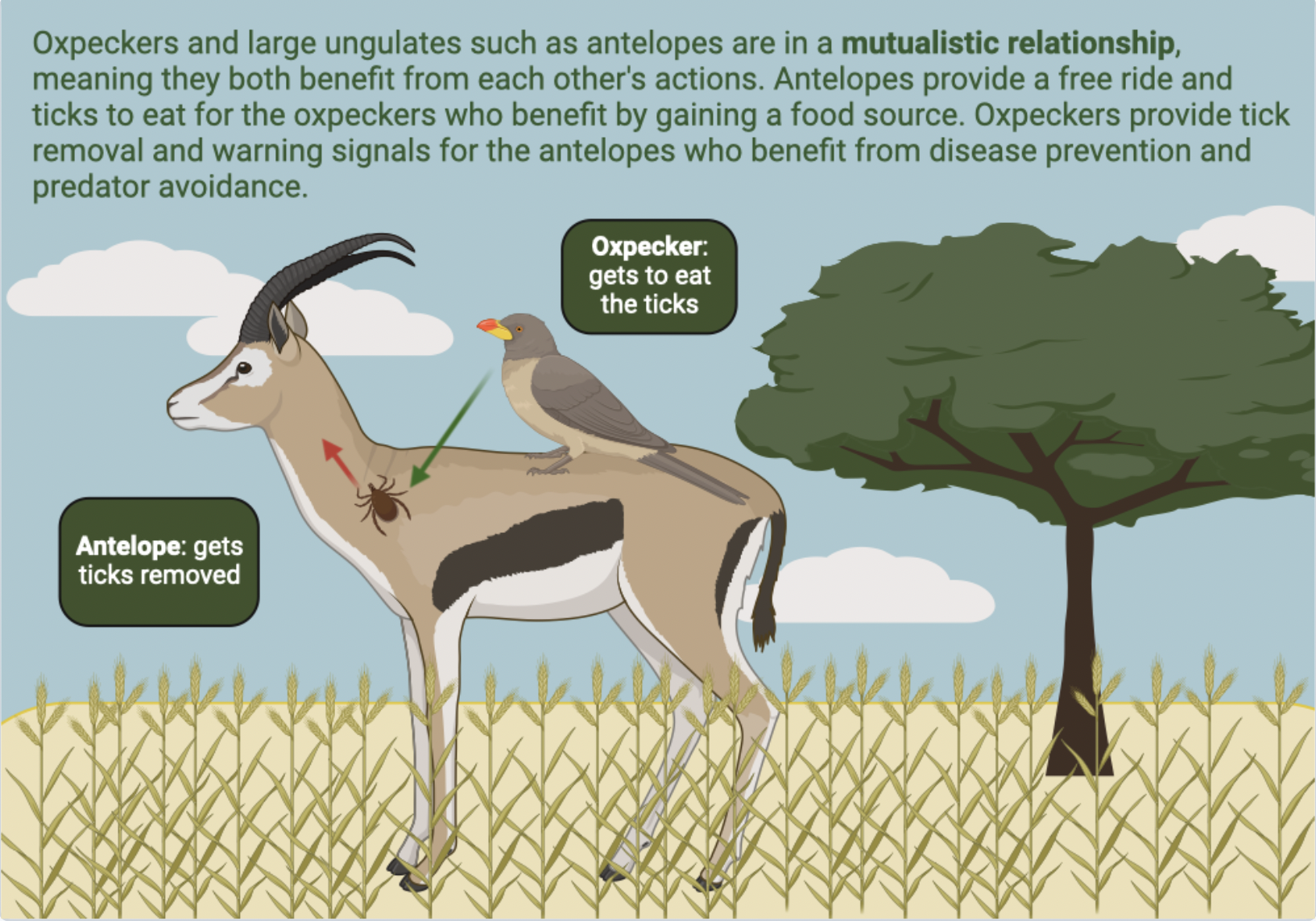
Moving from the depths of the ocean to the expansive savannas, we encounter another fascinating example of mutualism: the relationship between oxpeckers and large herbivores, such as rhinoceroses and buffaloes. These small birds offer their larger companions a unique service by feeding on ticks, dead skin, and parasites that plague their hosts. But can you imagine how an oxpecker knows where to find these pesky parasites?
As they perch on the backs of their herbivorous allies, oxpeckers possess a keen sense of sight and a sharp beak. They comb through the thick skin, unearthing pests that would otherwise compromise the health of their hosts. This delicate balance illustrates the notion that both parties are better off together. The oxpecker finds sustenance, while the herbivore enjoys relief from irritating infestations.
Yet, there lies an interesting twist to this relationship: not all oxpeckers are altruistic. Some have been known to peck at the wounds of their hosts, drinking blood. This behavior raises questions about the limits of mutualism and poses a challenge in defining the fine line between true mutualism and parasitism. While some oxpeckers provide essential cleaning services, others may exploit their hosts, adding depth to the complexity of these interactions.
The Complexities of Ant-Aphid Relationships
Shifting our focus to a miniature world, we encounter another compelling mutualistic relationship: ants and aphids. This partnership illustrates the beauty and intricacy of nature, revealing a different dimension of mutualism. Ants, often seen scurrying about, provide protection for aphids from predators such as ladybugs. In this alliance, ants have adopted a behavior reminiscent of shepherding, guarding aphid colonies from harm.
In return, aphids reward their ant allies with a sugary substance called honeydew, rich in carbohydrates. Ants are drawn to this secretion, making it a lucrative source of sustenance. The interaction is so profound that some species of ants even farm aphids, creating a symbiotic system where both parties thrive.
However, the relationship is not without complexities. Should an ant colony become too dominant, they may exploit aphids excessively, potentially leading to population imbalances. This conundrum raises questions about the sustainability of mutualism: how much exchange is equitable? What happens when one member of the partnership overexerts its influence?
Conclusion: The Dance of Cooperation
As we delve into the tapestry of mutualism in the animal kingdom, it becomes clear that these relationships are anything but simplistic. Whether through the playful antics of clownfish and their anemone abodes, the diligent vigilance of oxpeckers over their herbivorous companions, or the intricate dynamics between ants and aphids, mutualism showcases a breathtaking interplay of survival strategies.
Yet, the inherent complexities challenge our understanding of cooperation. While mutualism fosters growth and success, it also poses intriguing questions: How does one balance the scales of reciprocity? What light do these relationships shed on the nature of collaboration in broader ecological systems? Each mutualistic relationship invites us to wonder, to explore, and to appreciate the wondrous intricacies found within the animal kingdom.
As you reflect on these remarkable alliances, consider the playful equilibrium of life. Can we learn something profound from nature’s collaboration? Let the exploration of mutualism inspire our understanding of interdependence, both in the wild and within our own lives.