Language is an intricate labyrinth, filled with words that swirl and dance in the minds of speakers and listeners alike. Among this vast array, some terms stand out not only for their meanings but for their profound implications. One such word that catches the attention, while also serving as a perfect catalyst for discussion, is “Untruth.” What does this word evoke in your imagination? Can you recall a time when a seemingly innocuous word spiraled into a labyrinth of misconceptions? Let’s delve deeply into the fascinating world of the word “Untruth,” as we uncover its meanings, implications, and the bewildering reality of human communication.
At its core, an untruth represents something verifiably false, a statement that deviates from reality. Yet, the simple definition belies the complexities of its impact on society and personal interactions. Untruths can manifest as benign fibs, harmless exaggerations, or even malicious deceptions. They range from the innocuous “I’ll be there in five minutes” to the insidious “I didn’t eat your cookies.” Can you detect the layers of severity among various untruths? Each carries its own weight and repercussions, intricately woven into the fabric of relationships, policy, and public discourse.
The playful dichotomy of the untruth creates a uniquely engaging discussion point. In a world dominated by social media and 24-hour news cycles, the prevalence of false statements challenges our critical thinking abilities. This begs the question: How do we differentiate between mere hyperbole and potentially harmful misinformation? The fine line between parody and deceit becomes blurred, urging us to hone our discernment and questioning skills.
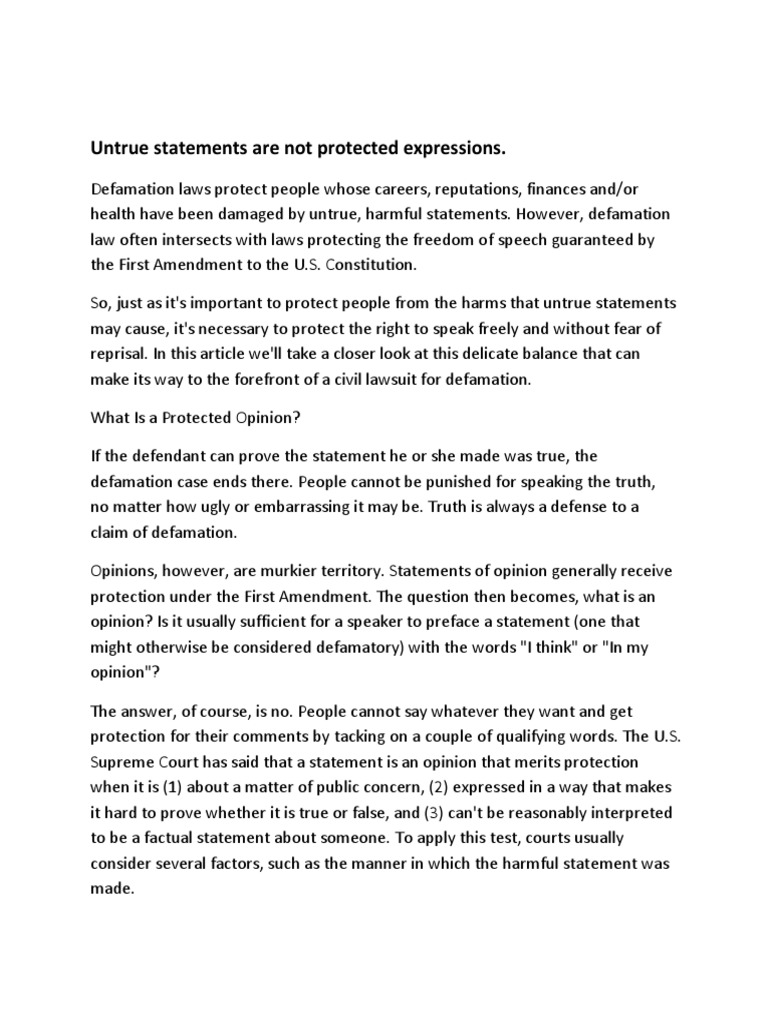
One must consider the role of context when dissecting untruths. For instance, a statement can be perceived differently depending on its delivery, the audience, and the environment. A creative storyteller may embellish facts for entertainment; thus, the untruth becomes an art form rather than an outright deception. Conversely, when utilized in legal contexts, untruths can lead to defamation, creating long-lasting damage. Therefore, it is imperative to evaluate each situation individually, weighing the implications of the untruth at hand.
Think of how deeply rooted untruths can penetrate cultural narratives. Throughout history, many civilizations have grappled with falsehoods that propagated misogyny, racism, and other forms of discrimination. The phrase “alternative facts” emerged as a striking reminder of how malleable truth can be and the power vested in those who wield language. When untruths weave deeply into societal beliefs, they become more than mere words; they are societal constructs that shape identities and influence behaviors.
Exploring the psychological aspect of untruths invites a fascinating examination of human nature. What drives individuals to perpetuate falsehoods? Often, the motivations range from self-preservation to a desire for social acceptance. An internecine struggle between honesty and acceptance can lead people to create elaborate untruths, sometimes even believing their own fabrications. This creates a fascinating paradox: How can one be inherently honest yet still clutch tight to an untruth?
The ripple effect of untruths can expand outward dramatically. Picture the butterfly effect; a single untruth whispered in a quiet room may grow into a cacophony of miscommunication. This transformation is particularly clear in digital communication. A misleading meme or a misconstrued social media post can reach hundreds—or even thousands—in a matter of seconds. As each person shares or reacts to the initial untruth, it morphs and diversifies like a living organism, evolving beyond its original form and intent.
Your perception of reality significantly impacts how you interpret untruths. Can a lie truly become an untruth if believed by a majority? This philosophical quandary urges one to ponder the relationship between collective beliefs and objective truth. What happens when a community collectively decides to accept an untruth as truth? Sociologists have long studied the phenomenon of “groupthink,” illustrating the tendency of groups to prioritize consensus over accuracy. Within such dynamics, the binding social fabric can often obscure the line between what is a lie and what is accepted as truth.
Moreover, the rise of “fake news” is a modern-day monolith that challenges our ability to navigate untruths effectively. Distinguishing between legitimate journalism and sensationalism is not merely an academic exercise—it has real-world implications. In an era where information is readily accessible yet often questionable, the ability to critically evaluate untruths becomes essential for the maintenance of a democratic society. Educating oneself and others on media literacy, fact-checking, and the identification of credible sources forms the bulwark against the tide of misinformation.
In conclusion, the examination of untruths serves not just as an intellectual pursuit but as a necessary reflection of the mechanisms of communication. In pondering the nuances and repercussions of this singular word, we uncover a deeper understanding of human interactions, cultural narratives, and societal constructs. It becomes clear that vigilance and curiosity must guide our engagement with language and truth. In the modern world, where untruths traverse boundaries and morph into unrecognizable forms, each individual must remain a conscientious guardian of clarity and honesty. What untruth will you challenge today? The journey of exploration begins with the courage to confront the fallacies that permeate our daily lives.