When wandering through the labyrinth of the universe, we often encounter an extraordinary variety of entities that populate our reality. These entities, termed matter, are the building blocks of everything we can see, touch, and even feel. Matter is not just confined to the solid form that greets us daily; it manifests in numerous phases and compositions, shaping our interactions with the world around us. This article delves into the fascinating topic of matter, exploring what qualifies as matter, and exemplifying its myriad forms. Like a painter wielding a palette, the universe offers us a spectrum of matter that fills the canvas of existence.
Understanding Matter: The Foundation of Existence
At its core, matter is defined as anything that possesses mass and occupies space. This seemingly simple definition conceals layers of complexity. Imagine matter as an exquisite tapestry, woven together by countless threads—each thread representing different characteristics and states. The exploration of matter leads us through gaseous clouds, solid barriers, and shimmering liquids. Each state plays a crucial role, like instruments in an orchestra, contributing to the symphony of life.
The States of Matter: A Dance of Energy and Arrangement
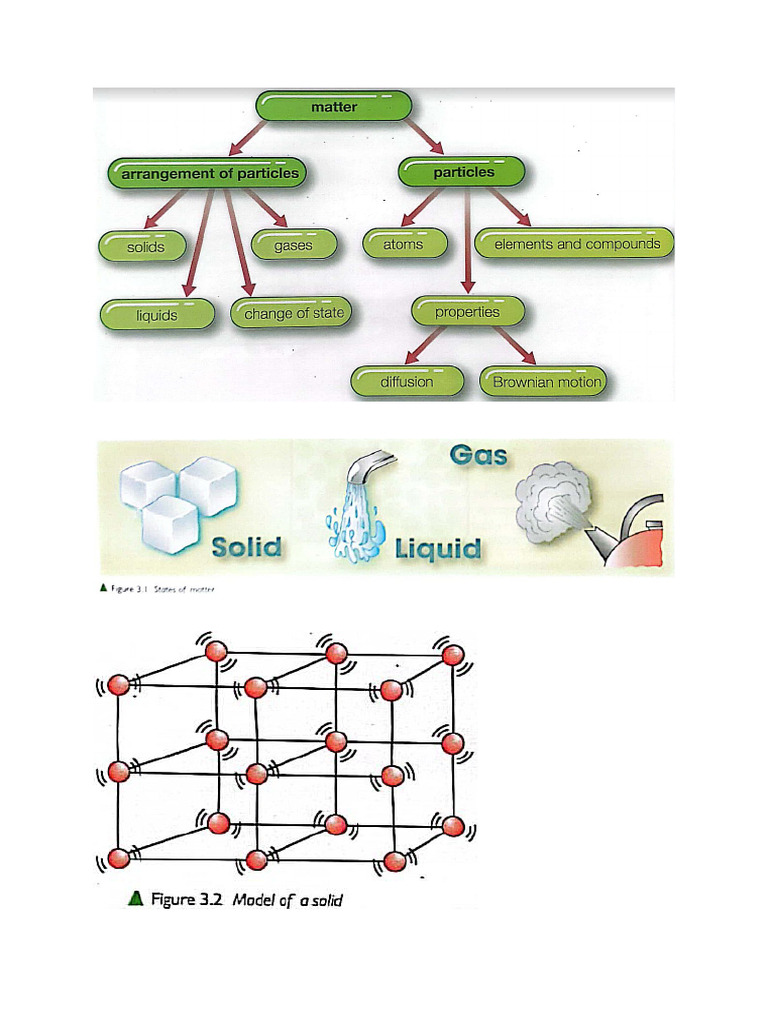
Traditionally, matter exists in four primary states: solids, liquids, gases, and plasmas. Each state exhibits unique properties that dictate its behavior and interactions.
- Solids: Picture a sturdy mountain—unchyielding and steadfast. Solids possess a definite shape and volume because their particles are tightly packed, often in a structured arrangement. This rigidity allows solids to maintain their form under external pressures, making them essential for constructing everything from skyscrapers to sculptures.
- Liquids: Envision a flowing river that adapts to the contours of its surroundings. Liquids have a definite volume but take the shape of their containers, as their particles are less tightly bound than those of solids. This fluidity contributes to the vital role liquids play in biological systems and environmental processes.
- Gases: Think of the vast expanse of the sky, populated with invisible yet omnipresent gases. Gases have neither definite shape nor volume; they expand to fill any available space. The particles within a gas move freely and rapidly, akin to dancers swirling across a stage, making gases crucial for processes such as respiration and combustion.
- Plasmas: Plasmas are the wild, chaotic offspring of the other three states. Comprising charged particles and exhibiting remarkable conductivity, plasmas emerge in environments like stars, where the temperature escalates to astronomical heights. This state of matter is more prevalent in the universe than one might intuitively realize.
Examples of Matter: The Tangible and Intangible
While the states of matter serve as a foundation for understanding, the examples of matter in our environment are as diverse as the ecosystems they inhabit. To illustrate, consider the following categories:
- Elements: The building blocks of matter, elements exist in their purest form, such as oxygen and gold—each with unique atomic structures that endow them with distinct properties. An element is like a unique note in a symphony, crucial for the melody of life.
- Compounds: These are substances formed when two or more elements combine chemically. Water (H₂O), for instance, is a compound that embodies the harmony of hydrogen and oxygen. This synthesis produces a substance essential for life, illustrating how collaboration can yield profound significance.
- Mixtures: Unlike compounds, mixtures retain the individual characteristics of their components. A salad, for example, is an amalgamation of various elements, yet each retains its identity, much like a vibrant community. The beauty of mixtures lies in the diversity and richness they offer.
Beyond the Visible: Matter in the Nano Realm
As we peer beyond the macroscopic world, the universe unveils a hidden microcosm. At the nanoscale, matter exhibits behaviors that defy our conventional understanding. Nanomaterials, for instance, possess unique chemical and physical properties that differ from their bulk counterparts. Imagine a shape-shifter, transforming its capabilities based on the scale at which it is observed. This nano-level exploration is revolutionizing technology, medicine, and materials science.
Conclusion: The Infinite Tapestry of Matter
In traversing the landscape of matter, we uncover the intricate tapestry that constitutes our universe. From the mundane to the extraordinary, each example of matter holds its story, contributing its part to the grand narrative. As we stand in awe, beholding this spectacle of creation, we are reminded that matter is not merely a physical entity—it is the essence of existence itself. As we deepen our understanding, let each encounter with matter serve as a poignant reminder of the marvels that dwell within the threads of our reality, intertwining life and the cosmos in a grand, inescapable dance.