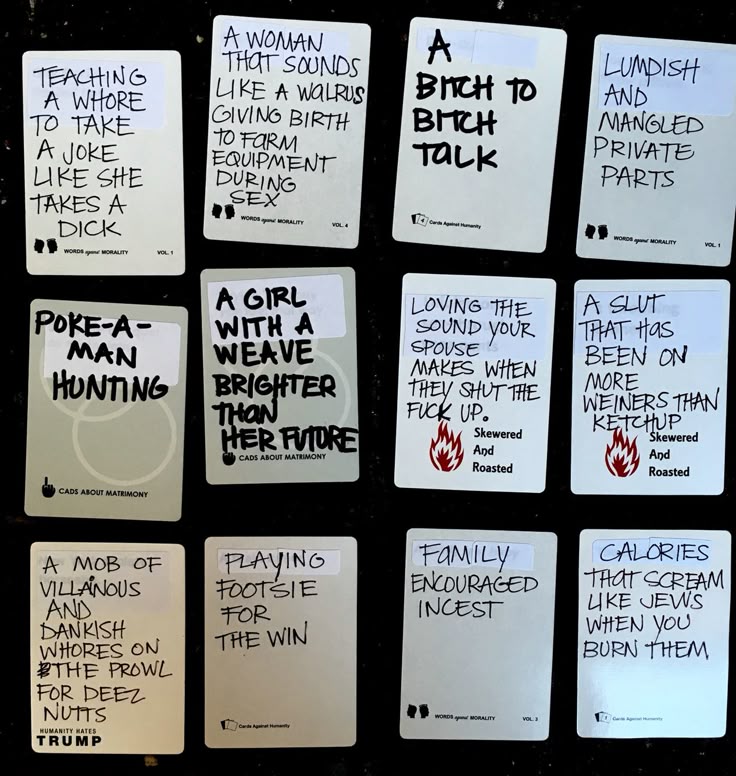
Cards Against Humanity has carved a unique niche in the realm of social games, known for its irreverent humor that often treads into the realms of the absurd and the inappropriate. It is both a simple game and a complex sociocultural phenomenon, encapsulating not merely the act of gameplay, but also a deeper commentary on contemporary society’s values and shared quirks. This article delves into the intricacies of Cards Against Humanity, exploring its allure, gameplay dynamics, and the multifaceted reasons behind its widespread appeal.
The Essence of Gameplay
At its core, Cards Against Humanity is a party game that thrives on creativity and the unexpected synergy of combinations. Each player receives a hand of white cards, each bearing a phrase, word, or clause, while a black card poses a fill-in-the-blank statement or a question. The players must then submit their most humorous or shocking responses, with the “Card Czar”—the designated judge—deciding which entry wins based on subjective criteria of wit and fit. This process fosters not just competitive spirit but also spirited discussions, laughter, and sometimes, a touch of discomfort.
A Catalyst for Social Interaction
Why, one may ask, do people flock to such a game? The answer lies in the subconscious need for social connectivity. Cards Against Humanity acts as an icebreaker, unveiling the layers of individual personality in a convivial setting. While some may shy away from discussing taboo topics in a more formal milieu, the game provides a safe harbor for risqué humor and unabashed expression. Players feel a camaraderie as they navigate through difficult subjects, allowing discussions that range from political satire to absurd exaggerations that can lead to cathartic laughter.
Humor as a Vehicle for Reflection
The humor embedded within Cards Against Humanity serves as a conduit for reflective thought. By addressing contentious societal issues—race, relationships, and existential dread—players are invited to confront realities that are often glossed over in everyday conversation. The comedy, laden with dark undertones, becomes a lens through which to view the world candidly. This juxtaposition of light-heartedness against grave subjects sparks an inner dialogue, compelling players to consider not just the absurdity at hand, but the underlying truths that shape our societal fabric.
The Psychological Appeal of Shock Value
One cannot ignore the psychological magnetism of shock value. Humorous content that provokes outrage or surprise compels individuals to engage at a more primal level. Cards Against Humanity masterfully wields this element, drawing in players who revel in the transgressive nature of its content. There is a thrill in the unexpected juxtaposition of innocent fluff and dark humor; it ignites laughter through the cognitive dissonance aroused. This is particularly profound in group settings, where shared laughter reinforces group identity while simultaneously pushing social boundaries.
The Invitation to Personalization
Moreover, the game is an open canvas for personal expression. Many fans create bespoke expansions and customized prompts that resonate with their interests or societal observations. This personalization creates a deeper connection with the material, transforming the game from a generic commodity into a treasured artifact of shared experiences. The act of crafting new cards harnesses creativity, ensuring that each gameplay is uniquely distinct, reflective of the collective psyche of its players.
Coalescence of Pop Culture and Satire
Pop culture and satire are intertwined within the gameplay. The game possesses an uncanny ability to dissect current events and societal trends through its questions and phrases. Whether referencing viral internet memes or the latest political faux pas, the game remains evergreen, adapting to the zeitgeist of the moment. This flexible nature ensures that players remain engaged and invested, continually returning for new material that amplifies their understanding of contemporary issues through humor.
Fostering a Culture of Inclusivity
Ironically, even though the game’s humor can sometimes veer into discomforting territory, it fosters a culture of inclusivity among players. The implicit agreements made in the sanctity of gameplay—where everyone’s contributions are treated with an undertone of respect—allow players from varying backgrounds to engage in deeper conversations. Laughter, derived from shared and distinct experiences alike, serves as a binding force, creating bonds among players that might not have been forged in casual settings.
The Controversy: Balancing Boundaries
Yet, the very nature of Cards Against Humanity invites controversy. Critics argue that its brand of humor may reinforce negative stereotypes or be excessively crude. This discussion is instrumental in understanding the dynamic tension between playful irreverence and social responsibility. It raises essential questions regarding free speech in entertainment, prompting a discourse on where to draw the line and how humor can heal or harm. Players often grapple with these themes, challenged to navigate their comfort zones while remaining respectful of the perspectives of others.
A Legacy Beyond the Game
Ultimately, Cards Against Humanity is more than an aggregation of humorous prompts and cheeky answers; it embodies a cultural commentary that resonates on multiple levels. In a world where sincerity is sometimes scarce, the game encourages authentic interactions, catalyzing profound discussions while providing a release valve for societal pressures. The combination of structured chaos and unrestrained creativity elevates Cards Against Humanity beyond merely a game—it transforms it into a platform for reflection, connection, and sometimes, uncomfortable yet necessary conversations about the human experience.