In a world rife with professional transitions, the letter of resignation stands as both an artifact of formality and an opportunity for introspection. Crafting a resignation letter transcends mere protocol; it encapsulates a moment of profound change, often filled with mixed emotions. What if we delved into the art of resignation? How might this simple act of departure reframe our perspectives on work, growth, and future endeavors?
When contemplating the departure from your current position, it’s essential to understand that a resignation letter serves multiple purposes. It not only informs your employer of your decision but also leaves an indelible impression that characterizes your professional demeanor. An exquisitely articulated resignation letter can significantly impact the way future employers perceive you, turning what could be a mundane notice into a testament to your professionalism and decorum.
Before you establish your letter’s content, consider the tone and purpose. Your letter should embody clarity and professionalism, capturing your sentiments without delving into negative rhetoric. This is an avenue to demonstrate to current and future employers that you handle transitions with grace and dignity.
**The Structure of a Resignation Letter**
1. **Header and Date**: Begin with your contact information and the date, followed by the employer’s or manager’s contact details. This layout conveys professionalism and ensures easy reference. Your letter should have a polished layout, giving it an air of authenticity.
2. **Greeting**: A simple, respectful salutation such as “Dear [Manager’s Name]” sets a cordial tone. Remember, this is a formal letter; maintain a level of formality that reflects your relationship with your supervisor – adjust as necessary based on your workplace culture.
3. **Opening Statement**: Here lies the crux of your communication. Clearly state your intention to resign. For example, “I am writing to formally resign from my position at [Company Name], effective [Last Working Day].” This direct approach eliminates ambiguity, allowing your employer to prepare for the transition.
4. **Expression of Gratitude**: This segment is crucial. Offering thanks for the opportunities you have had or the experiences gained showcases maturity and appreciation. It also leaves the door open for future connections. A phrase like, “I am genuinely grateful for the support and guidance I have received during my tenure,” can resonate well with your employer.
5. **Reason for Leaving**: While it is not strictly necessary to divulge your reasons for leaving, sharing a brief explanation may be beneficial. Whether you’re pursuing a new opportunity, relocating, or seeking a different career path, articulating a positive rationale helps to frame your departure favorably. Avoid negativity and focus on forward-looking sentiments.
6. **Transition Assistance**: Offering help during the transition period demonstrates your commitment to the company and your respect for your colleagues. Phrases such as, “I am willing to assist in training my replacement or provide any support necessary during this transition,” underscore your professionalism and consideration for the organization.
7. **Closing Statement**: Conclude your letter with a wish for the company’s success and a reiteration of your gratitude. “I wish [Company Name] continued success in all its endeavors” sends a positive note as you depart, ensuring that your exit is as amicable as your entry.
8. **Signature**: Finish with a formal closing such as “Sincerely” or “Best Regards,” followed by your name. If delivering a hard copy, include a handwritten signature above your typed name for a personal touch.
**An Example of a Resignation Letter**
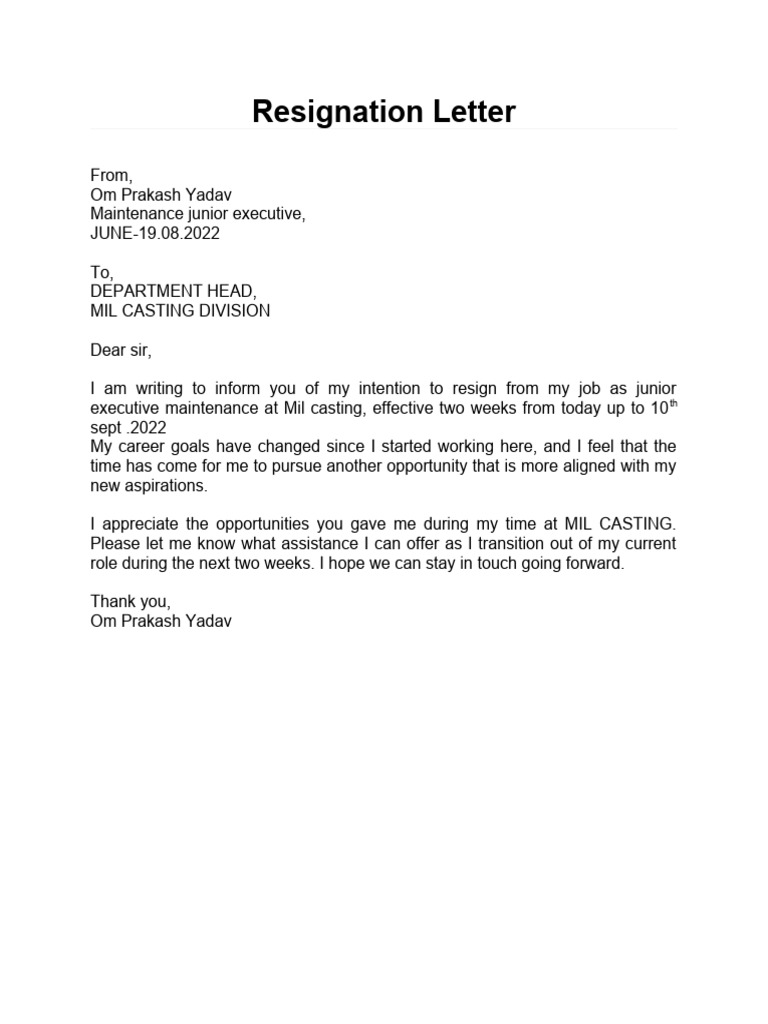
Here’s a polished example that incorporates the aforementioned elements, depicted in a professional format:
[Your Name]
[Your Address]
[City, State, Zip Code]
[Email Address]
[Phone Number]
[Date][Manager’s Name]
[Company Name]
[Company Address]
[City, State, Zip Code]Dear [Manager’s Name],
I am writing to formally resign from my position at [Company Name], effective [Last Working Day].
I wish to express my heartfelt gratitude for the opportunities I have had while working here. The support and guidance I received have significantly contributed to my personal and professional development.
As I embark on a new journey that aligns more closely with my career aspirations, I remain enthusiastic about the future. I appreciate the collaborative environment and the invaluable experiences I’ve shared with my colleagues.
To ensure a seamless transition, I am more than willing to assist in training my replacement and will ensure that my tasks are up to date before my departure.
I wish [Company Name] continued success in all future endeavors and hope to maintain our professional connections. Thank you once again for everything.
Sincerely,
[Your Name]
In conclusion, the art of resignation is not merely about leaving a job but about forging a new perspective on one’s career trajectory. The way you craft your resignation letter can reinforce your professional identity and create opportunities for future connections. This pivotal moment is a chance to pivot towards the unknown—a place bustling with potential and promise. Embrace it with enthusiasm and grace, knowing that every ending is merely a prelude to a new beginning. How will you shape your narrative as you step forward into your future?