Meter in poetry serves as the rhythmic backbone that propels words forward, imbuing them with an intrinsic musicality. But can it be a mere afterthought in the poet’s craft? Or does it demand the same attention as imagery and theme? This perplexing interplay between structure and artistry paves the way for a deeper exploration of meters, their peculiarities, and their influence on poetic forms. What if we ventured to unravel these mysteries and delve into the myriad examples of meter in poetry?
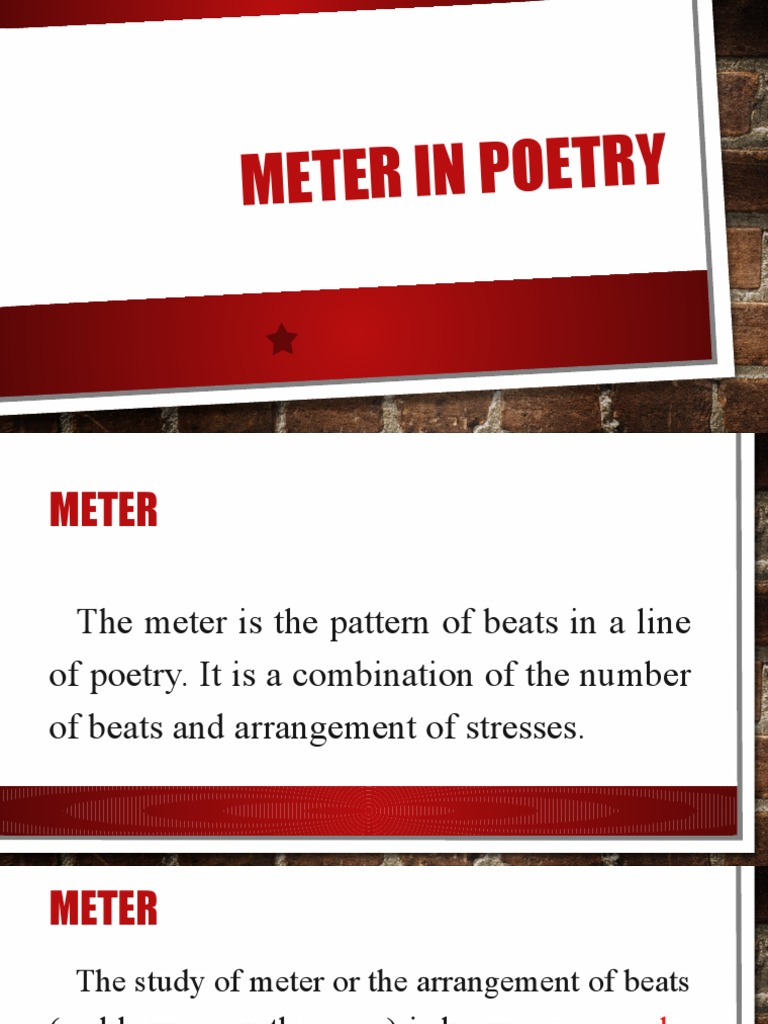
The concept of meter originates from the Greek word “metron,” meaning measure. In essence, meter refers to a structured rhythm established through the arrangement of stressed and unstressed syllables within a line of verse. Various meters have found their way into the heart of poetic composition, each carrying its unique charm. When mastered, meter can evoke emotions and enhance the overall impact of a poem, creating an immersive experience for the reader.
Let’s journey through some prominent examples of meter, showcasing their distinctiveness and influence:
1. Iambic Pentameter
Iambic pentameter reigns supreme in English poetry, celebrated for its melodic quality and versatility. Composed of five iambs—each consisting of an unstressed syllable followed by a stressed syllable—this meter is best exemplified in the works of William Shakespeare. Consider the opening lines from “Romeo and Juliet”:
“But, soft! What light through yonder window breaks?”
Here, the rhythm creates a natural flow, mirroring the beating heart of love itself. The challenge lies in capturing this rhythm’s nuance, allowing the words to dance upon the page.
2. Trochaic Tetrameter
Trochaic tetrameter takes an opposite approach. Each line comprises four trochees, which are pairs of syllables in the pattern of stressed followed by unstressed. This meter employs a more forceful cadence, often invoking urgency or intensity. A famous illustration can be found in Henry Wadsworth Longfellow’s “The Song of Hiawatha”:
“By the shores of Gitche Gumee,
By the shining Big-Sea-Water—”
As the words roll forth, they conjure vivid imagery of nature, inviting the reader to dive into this evocative landscape. Can one harness this meter to evoke serenity, or is its strength too overwhelming for softer themes?
3. Anapestic Meter
Anapestic meter, characterized by two unstressed syllables followed by a stressed syllable, often elicits a sense of playfulness and speed. This meter finds its way into the whimsical work of poets like Lewis Carroll. Consider the opening of “The Hunting of the Snark”:
“’Twas brillig, and the slithy toves
Did gyre and gimble in the wabe.”
The anapestic meter imbues the lines with a lilting quality that mimics the antics of the creatures described. But here arises an intriguing conundrum: how does one balance the exuberance of this meter while maintaining clarity of meaning?
4. Dactylic Hexameter
Employed predominantly in epic poetry, dactylic hexameter consists of six feet per line, primarily dactyls (one stressed followed by two unstressed). This meter evokes grandeur and formality, as observed in Homer’s “Iliad.” The rhythmic structure creates an elevated tone, suitable for heroism and exploration:
“Sing, O goddess, the anger of Achilles son of Peleus.”
The rich soundscape resonates with the power of the narrative. However, what strategy must poets employ to break the monotony of such a meter while honoring its legacy?
5. Snappy Irregular Meter
While traditional meters provide a foundation, many poets have chosen to experiment with free verse or irregular meters, blending effects to suit their expressive needs. Poets like Walt Whitman and e.e. cummings disregarded strict metrical bounds, creating cadence that defies predictability. In Whitman’s “Song of Myself,” the fluidity echoes the spontaneity of life itself. Take, for example:
“I celebrate myself, and sing myself,”
Here, there’s a rhythmic quality reminiscent of meter yet liberally free, elongating concepts rather than confining them. The use of irregularity invites wonder—how might artists utilize such breaks from conventional rhythm to elicit unexpected emotional responses?
Exploring these examples raises exhilarating questions about the flexibility and creative potential of meter in poetry. Do poets experience more freedom when they embrace unconventional structures, or do they find strength in adhering to traditional forms? The very tension between rigidity and fluidity can spark innovation, yielding stunning poetic expressions that resonate throughout time.
In conclusion, meter in poetry is much more than a rhythmic framework; it is a gateway into the heartbeat of language itself. Each type of meter—whether it follows strict conventions or breaks free from them—offers vast opportunities for exploration and expression. As poets wield their craft, contemplating the role of meter becomes an engaging challenge, allowing them to create meaning, evoke emotions, and impart a unique musicality to their work.
So, the next time you delve into a poem, pause to consider its meter. What melodious patterns lie hidden beneath the surface? Can you hear the subtle rhythm guiding the words, inviting you to experience the raw cadence of the poet’s thoughts?