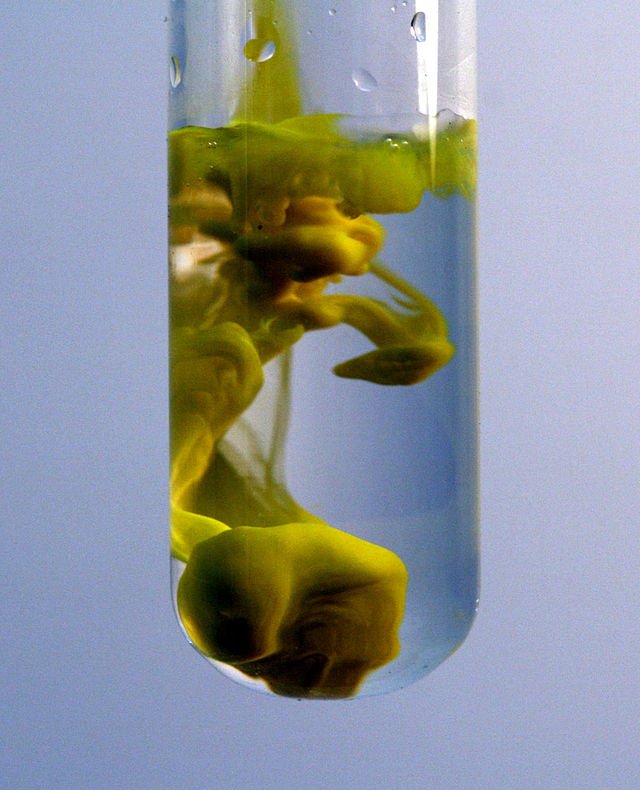
Have you ever watched a magical transformation unfold right before your eyes? Picture a colorless solution morphing into a vibrant cloud of colors, twinkling like stars in a night sky. This captivating phenomenon is none other than precipitation in chemistry, where solute particles gather to form solid precipitates when concentrations exceed their solubility limits. With this enthralling process in mind, let us embark on a fascinating exploration of precipitation reactions, their significance, examples, and even some of the challenges they present.
Precipitation reactions serve as a fundamental concept in chemistry, particularly in the realm of analytical and synthetic disciplines. A precipitation reaction can be succinctly defined as a chemical change where two solutions react, resulting in the formation of an insoluble compound known as a precipitate. This transformation not only enlivens the study of chemistry but also raises intriguing questions about underlying mechanisms—how do we predict the outcome of such reactions? What factors influence precipitate formation? Let’s delve deeper into these captivating queries.
Understanding precipitation reactions begins with an appreciation for solubility rules. These guidelines assist chemists in predicting whether a precipitate will form by assessing the solubility of various ionic compounds in water. For instance, most sulfate compounds are soluble, but barium sulfate, lead(II) sulfate, and calcium sulfate exhibit limited solubility—these notify us that when mixed with specific ionic solutions, precipitates may form. The importance of these rules extends into areas such as medicine, environmental science, and materials engineering, where reactive compounds are frequently analyzed.
To grasp the concept of precipitation more thoroughly, let’s consider a classic example involving lead(II) iodide. When solutions of lead(II) nitrate and potassium iodide are combined, a vibrant yellow precipitate of lead(II) iodide emerges. The balanced chemical equation for this precipitation reaction can be expressed as:
Pb(NO3)2 (aq) + 2KI (aq) → 2KNO3 (aq) + PbI2 (s)
In this instance, the lead(II) ions (Pb2+) and iodide ions (I–) unite to form the insoluble solid compound PbI2, vividly demonstrating the process of precipitation. The formation of this yellow solid provides an exciting application of visual indicators that reinforce the notion of chemical changes.
Another compelling example is the reaction between silver nitrate and sodium chloride. When these two colorless solutions intermingle, they form a white precipitate of silver chloride, which is often utilized in photographic applications. This reaction is illustrated as follows:
AgNO3 (aq) + NaCl (aq) → NaNO3 (aq) + AgCl (s)
The striking transition from transparency to opacity when a precipitate forms offers a visual spectacle through which chemists can understand molecular interactions. In this way, precipitation reactions become a tangible demonstration of ionic exchange and solubility principles.
However, precipitation is not merely a classroom curiosity. In real-world applications, precipitation reactions are integral to various processes. Water treatment facilities often utilize precipitation methods to eliminate contaminants such as heavy metals. By strategically adding chemicals that facilitate precipitation, these plants can enhance water quality, showcasing the practical importance of precipitation chemistry. Despite their benefits, challenges abound. How do facilities ensure complete removal of unwanted species? What environmental implications could arise from using certain precipitating agents?
Moreover, precipitation plays a pivotal role in geological processes, such as mineral formation. Over eons, various ions can precipitate from supersaturated solutions, crystallizing into minerals like calcite or halite. This natural precipitation illustrates the dynamic interplay between chemistry and geology, offering insights into Earth’s history. Yet, inorganic precipitation can also pose challenges; for instance, the formation of scale in pipes can obstruct flow, presenting a major issue for industrial processes. What mitigation strategies could industries adopt to address these problematic precipitates?
Furthermore, the intricacies of precipitation reactions challenge chemists to explore thermodynamic principles and reaction kinetics. Factors such as temperature, concentration, and the presence of competing ions influence the propensity for precipitation, leading researchers to devise experiments that quantify these variables. For example, deviations from expected precipitation can reveal the presence of complex ions or mixed-solubility phenomena. How might these fluctuations inform our theoretical models of solubility?
In conclusion, precipitation in chemistry encompasses a vibrant tapestry of reactions, transformations, and real-world applications. Through visual manifestations of interaction, rigorous prediction methods, and far-reaching implications in environmental science, geology, and beyond, precipitation reactions reign as a captivating subject of study. The challenge now lies not only in predicting these transformations but also in harnessing their potential for practical applications while navigating the accompanying challenges. As we continue to explore these multifaceted reactions, the possibilities remain as boundless as the sky filled with twinkling stars.