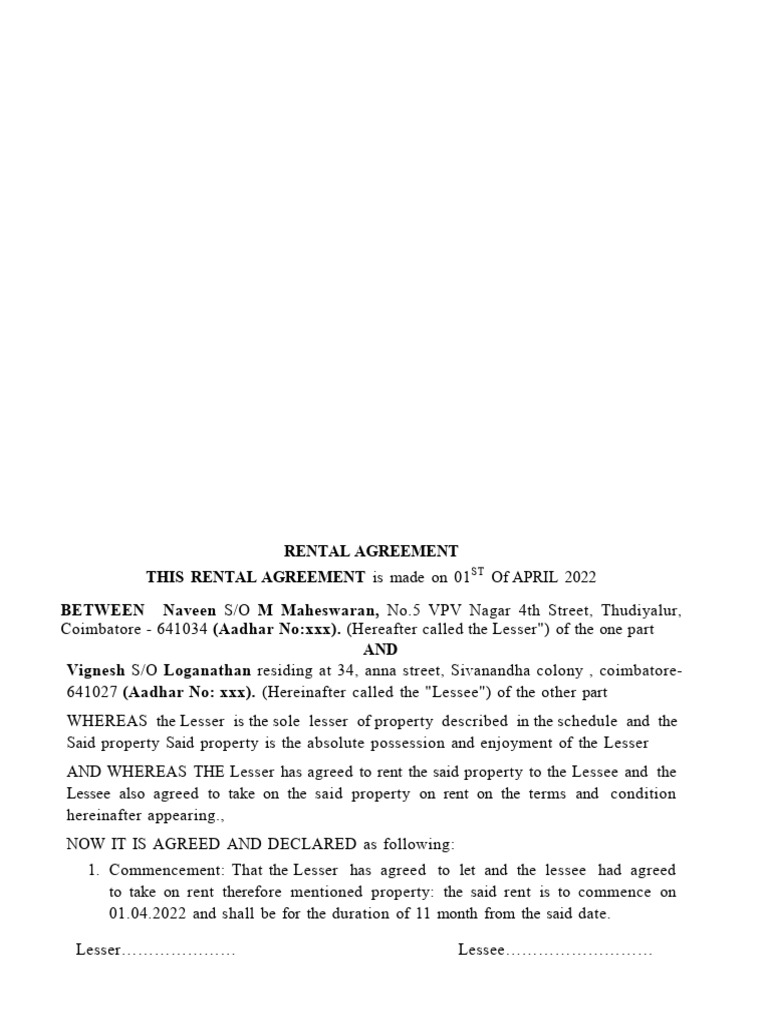
When navigating the often turbulent waters of rental properties, one document commands attention and respect: the rental agreement. This pivotal contract serves as the backbone of the tenant-landlord relationship, delineating rights, responsibilities, and expectations clearly. More than a mere formality, a rental agreement is a carefully crafted blueprint that facilitates harmony between two parties engaged in a mutual exchange—habitation for payment.
Imagine stepping into an unfamiliar abode. The walls exude fresh paint; sunlight filters through gleaming windows, casting delightful patterns on the floor. This space could be your sanctuary, yet the logistics of living there hinge entirely upon a legal document, one that encapsulates intricate details. In this exploration, we delve into the essence of a rental agreement, revealing its structure, significance, and the transformative power it harbors when understood and executed properly.
Understanding the Components of a Rental Agreement
A well-constructed rental agreement encompasses numerous essential components. Each element serves a unique purpose, underscoring the fundamental promises made by each party—promise of shelter from the tenant, promise of payment from the landlord. Let’s dissect these components meticulously.
1. Parties Involved
At the very outset, the rental agreement identifies the parties involved: the landlord and the tenant. This section typically includes names, addresses, and, importantly, the legal status of each party. Whether the landlord is an individual or represents a property management firm, clarity about who holds responsibility is paramount.
2. Property Description
Moving to the heart of the contract, one finds the property description—an essential facet that underscores the specific location being rented. This section provides the full address and may include notable features such as the number of bedrooms, bathrooms, and other amenities. Precision in this description safeguards against disputes and sets clear expectations about what is being rented.
3. Duration of Tenancy
Every journey has a destination or, in this case, a timeline. The duration of tenancy spells out whether the agreement is for a fixed term or on a month-to-month basis. A fixed-term lease offers stability, while a month-to-month arrangement allows flexibility. Potential tenants should weigh their lifestyle needs against the commitments each option entails, ensuring alignment with personal circumstances.
4. Rent, Payment Terms, and Security Deposits
The heart of the contract transcends the physical description of the property—it pulsates with the financial specifications. This section details the monthly rent, including when it is due and acceptable payment methods. Moreover, it addresses the security deposit, its amount, and the conditions under which it may be withheld. This component is critical; it sets the tone for financial expectations and underscores the value of transparency in monetary matters.
5. Responsibilities of the Tenant
A responsible tenant is a treasured asset. This clause elucidates the obligations placed upon the tenant: punctual rent payments, maintenance of the property, adherence to community rules, and more. It empowers the landlord by establishing a foundation for accountability, fostering a cooperative living environment.
6. Responsibilities of the Landlord
Equally important are the responsibilities of the landlord. This section defines the landlord’s duties—maintaining the property, providing essential repairs, and ensuring a safe living environment. It promotes balance in the landlord-tenant dynamic, ensuring that obligations are mutual and equitable.
7. Termination of the Agreement
Like all good things, tenancies may reach their conclusion. The termination clause specifies how either party may end the agreement. It typically outlines required notice periods, conditions for lease renewal, and any penalties for early termination. Clarity in this section can stave off future discord, allowing both parties to part amicably when the time comes.
8. Miscellaneous Clauses
Here lies a treasure trove of details that captures the nuances of tenancy. This section may encompass everything from pet policies, subletting regulations, to maintenance protocols. Each clause adds an additional layer of specificity, catering to the unique circumstances of each rental arrangement. These often-overlooked provisions are crucial, and navigating them requires an awareness of both parties’ needs and desires.
The Importance of a Rental Agreement
The value of a rental agreement extends beyond its legal implications. It serves as a reassuring touchstone for both tenants and landlords, delineating boundaries and fostering mutual respect. When tenants comprehend the document in its entirety, a profound sense of security often arises. They know their rights and responsibilities, which can foster a more harmonious living situation. Meanwhile, landlords enjoy the assurance that their investment is protected. This promises a shift in perspective: rental agreements are not mere formalities but rather vital instruments for nurturing healthy relationships.
Conclusion: A Call to Curiosity
As you explore the world of rental documents, consider the beacon that a rental agreement represents. It is not merely a legal obligation; it is a powerful facilitator of communication, understanding, and respect. These agreements, when embraced with diligence and care, serve as a strong foundation upon which successful landlord-tenant relationships are built. By delving deeper into the multifaceted structure of rental agreements, individuals can arm themselves with knowledge, transforming potential challenges into opportunities for growth and collaboration. Indeed, the journey of renting can be both rewarding and enriching when approached with an informed perspective.