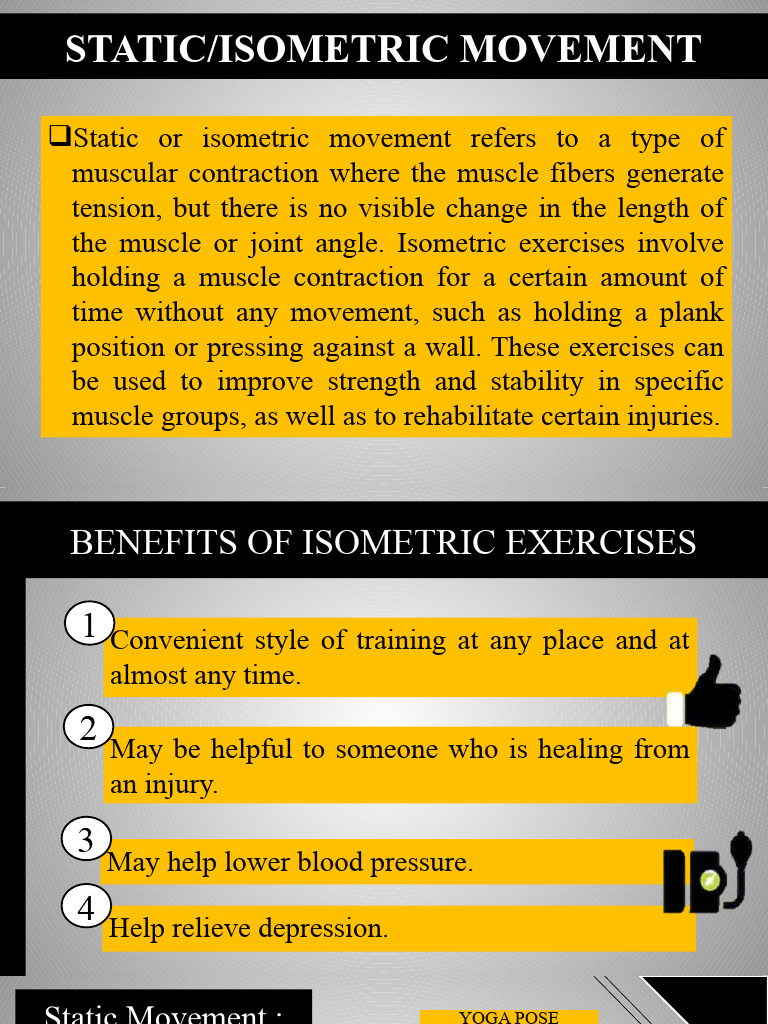
Isometric exercises are an intriguing segment of fitness that often fly under the radar, overshadowed by their more dynamic counterparts. Despite their understated nature, isometric movements hold a treasure trove of benefits for both seasoned athletes and everyday fitness enthusiasts. This article delves into the multifaceted world of isometric exercises, offering examples, advantages, and innovative ways to integrate them into your wellness regimen.
To begin, let’s clarify what isometric exercises entail. Unlike traditional exercises that involve movement through a range of motion, isometric exercises require the muscle to exert force against an immovable object or hold a specific position for an extended period. These static contractions engage the muscle fibers intensely, leading to muscle strengthening without the physical movement of joints.
One compelling example of an isometric exercise is the plank, often regarded as the king of core stabilization exercises. When performed correctly, the plank can strengthen the entire core, including the abdominals, back, and shoulders, while also engaging the glutes and legs in a supportive role. Imagine suspending your body in a straight line, balancing on your forearms and toes, with every muscle fiber contracting to defy gravity.
To achieve an effective plank, position your forearms on the ground, ensuring they are parallel and aligned with your shoulders. Spread your fingers wide to maximize stability, and engage your core by pulling your belly button toward your spine. Keep your back straight, avoiding the common pitfall of sagging hips or elevated buttocks. Hold this position for as long as you can maintain perfect form, challenging your endurance and enhancing your muscular resilience.
What makes the plank particularly fascinating is its ability to encourage a shift in perspective regarding physical strength. Many individuals equate strength exclusively with dynamic movement, but the plank exemplifies that tremendous muscular endurance can be developed through immobilization. Consequently, those who might not resonate with weightlifting or high-intensity workouts could find their niche within isometric training.
Incorporating isometric exercises can be seamlessly integrated into any fitness routine. Besides the plank, a plethora of isometric movements exist to target various muscle groups. For instance, the wall sit is another exemplary isometric exercise worth exploring. Here’s how it unfolds: lean against a wall and slide down until your thighs are parallel to the ground, as if sitting in an invisible chair. This scenario forces the quads, hamstrings, and glutes to engage profoundly.
Wall sits are inherently accessible, making them a suitable choice for individuals at all fitness levels. They can be performed almost anywhere, from homes to gym studios, providing a versatile option for strengthening the lower body. Notably, the simplicity of wall sits belies their intensity; one may initially feel comfortable, but as the seconds tick by, the burning sensation of muscle fatigue arises, reinforcing the power of isometric contractions.
Furthermore, let’s not overlook the isometric push-up hold. This variation of the standard push-up involves lowering your body to the point just above the ground and holding that position. This technique not only builds acute strength in the chest, shoulders, and triceps but also stimulates mental fortitude. Remaining in this challenging position forces you to confront the uncomfortable sensations of muscular fatigue, fostering resilience that transcends the physical realm.
Emphasizing the psychological benefits of isometric exercises is equally vital. The static nature of these movements cultivates mindfulness, compelling practitioners to focus entirely on their body and the sensations they experience. This practice can transform a mundane workout into a meditative experience, offering a respite from the noise of daily life. In this light, isometric exercises extend beyond mere physical benefits; they impart lessons of patience, concentration, and perseverance.
Moreover, research supports the effectiveness of isometric exercises in enhancing muscle strength, stability, and endurance. Studies reveal that engaging in isometric training can lead to measurable increases in muscle hypertrophy and overall strength. Such potency makes it an appealing choice for individuals recovering from injury, as it permits muscle engagement without placing undue stress on joints and connective tissues.
The beauty of isometric exercises lies in their adaptability. They can be tailored to fit various fitness levels and goals, allowing individuals to craft a personalized workout that resonates with their unique journeys. Whether you aspire to improve overall strength, enhance athletic performance, or rehabilitate an injury, isometric movements can effectively complement many training paradigms.
Incorporating isometric exercises into your routine doesn’t require a convoluted approach. Begin by integrating one or two isometric holds into your regular workouts. As you develop familiarity, consider experimenting with varied angles and durations to continually challenge your muscles. For an added layer of intrigue, try pairing isometric holds with dynamic movements, creating a hybrid exercise format that amplifies the benefits of both styles.
Ultimately, engaging in isometric exercises invites a refreshing perspective on fitness. They challenge the notion that movement is the only pathway to strength, encouraging practitioners to explore the power of static holds. Whether you’re balancing in a plank, sequestering in a wall sit, or engaging in an isometric push-up hold, these exercises offer a compelling journey towards a stronger, more resilient self.
As curiosity drives exploration, consider giving isometric exercises a prominent role in your fitness repertoire. You may discover that the power of stillness can transform not just your muscles, but also your approach to physical well-being.