In the realm of human resources and employment practices, the employment verification letter stands out as an indispensable artifact. This document serves as proof of an employee’s work history, detailing their role within an organization, tenure, and oftentimes, insights into their professional conduct. This letter is not merely a formality; it’s a crucial element in establishing trust with prospective employers or lenders. In this exploration, we will delve into the various facets of employment verification letters, highlighting different examples, essential components, and tips for crafting an effective letter.
Understanding Employment Verification Letters
Employment verification letters are typically issued by current or past employers at the request of the employee. Such requests often arise when an employee seeks new job opportunities, applies for a mortgage, or requires confirmation for other official purposes. This correspondence can take many forms, varying in complexity and detail based on the employee’s tenure, role, and the specific needs of the request.
Types of Employment Verification Letters
While the general framework of an employment verification letter remains consistent, the content and tone can adapt to various contexts. Below are common types of employment verification letters:
- Standard Employment Verification Letter: This type serves as a basic confirmation of employment. It typically includes the employee’s name, job title, employment dates, and sometimes, salary information. This straightforward approach suffices for most basic verification needs.
- Income Verification Letter: When income verification is essential — for instance, when applying for loans — this letter not only confirms employment but also specifies the employee’s salary or hourly wage. It’s crucial for financial institutions and landlords who must quote specific figures in their assessments.
- Character Reference Verification Letter: Beyond just confirming employment details, this letter delves into the employee’s performance and character. It often includes qualitative insights about the employee’s work ethic, skills, and contributions to the organization, making it invaluable for job seekers in competitive markets.
- Employment Status Verification for Visa Applications: This specialized letter is tailored for employees who may need to prove their employment status as part of a visa or immigration application process. It often includes additional governmental details and is formatted per specific regulatory standards.
- Termination Verification Letter: In instances where an employee has been terminated, a letter may be requested to provide clarity on the termination status. This letter is sensitive and typically outlines whether the employee was laid off or if they resigned.
Key Components of an Employment Verification Letter
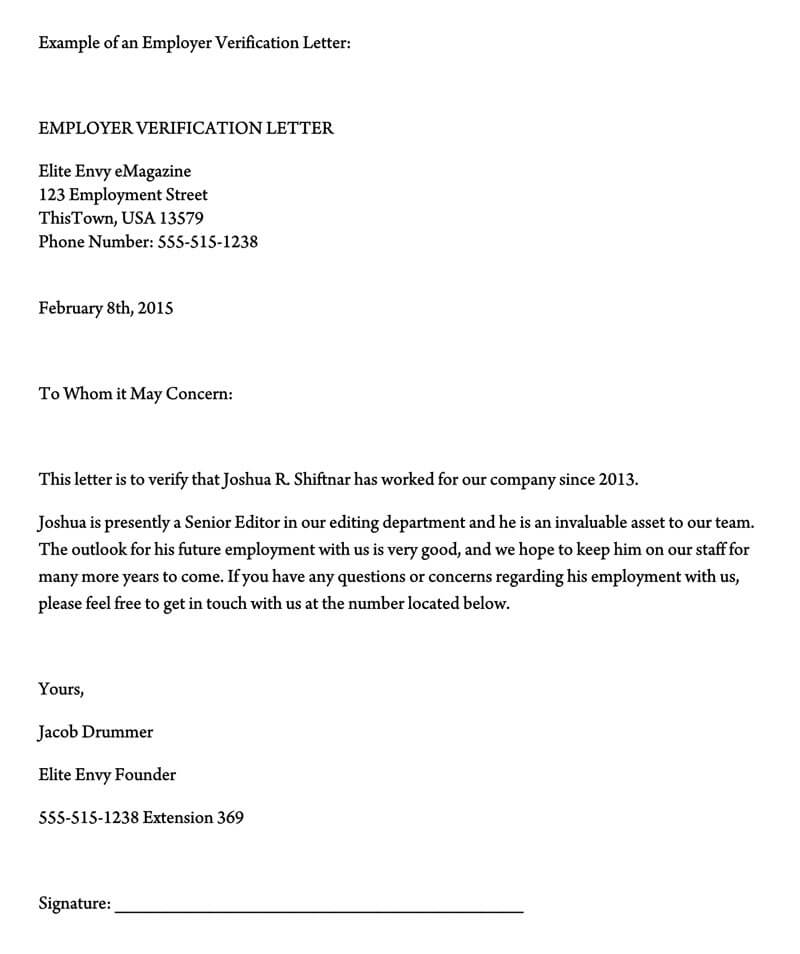
Irrespective of the type, certain key elements are paramount in constructing an effective employment verification letter:
- Header: The letter should begin with the company’s letterhead, including the organization’s name, address, and contact information. Professional presentation is critical.
- Date: The date of issuance should be clearly stated, establishing a timeline for the verification process.
- Employee Details: Full name, job title, and the employment duration are essential to furnish a comprehensive view of the employee’s professional background.
- Employer Statement: A clear statement confirming employment status should follow, detailing all relevant specifics such as job responsibilities, conduct, and reasons for the letter’s issuance.
- Signature: The letter must conclude with a signature from an authorized personnel, typically the HR manager or direct supervisor, reinforcing its authenticity.
Best Practices for Crafting Employment Verification Letters
Creating an employment verification letter may seem straightforward, yet certain nuances can enhance its efficacy. Best practices include:
- Clarity and Brevity: Strive for a clear and concise message. Avoid convoluted language that could obfuscate the letter’s intent. A direct approach ensures that the recipient grasps the important details swiftly.
- Confidentiality Compliance: Respect the privacy of the employee. Avoid including sensitive information that could infringe upon confidentiality regulations, such as health details or excessive personal information.
- Professional Tone: The document should exude professionalism. It is essential to maintain a formal tone throughout, as this reinforces the credibility of the letter.
- Personalization: Whenever feasible, customize the letter based on the individual circumstances of the employee or the reasons for the verification request. Tailoring the content can bolster its relevance and impact.
- Proofreading: Before issuance, ensure a thorough review for grammatical and factual accuracy. A polished letter reflects well on the organization and can influence decisions made by third parties.
Conclusion
Employment verification letters serve as vital links in the chain of employment history and integrity. By understanding their different types, essential components, and how to craft them effectively, both employers and employees can navigate the complexities of work verification requests with confidence. This documentation encapsulates more than just employment details; it represents trust, professionalism, and transparency in the workplace. For those in need of templates or examples, numerous resources are available to guide the creation of these significant letters, ensuring that they meet the required standards for any situation.