The Modern Language Association (MLA) citation style is a fundamental standard within academic writing. It serves as an essential framework for citing sources, ensuring that the scholarly community maintains intellectual honesty and promotes the trustworthiness of ideas. Many students and researchers find themselves bewildered at the thought of constructing a well-formulated MLA citation page. Yet, the simplicity and clarity inherent in this style can be a source of fascination and appreciation once one understands its nuances. By delving into an exploration of what constitutes an exemplary MLA citation page, a myriad of observations emerge that elucidate its importance in the scholarly realm.
The primary function of an MLA citation page is to list all the sources referenced in a research paper, thus providing credibility to the academic work. This list not only helps to enhance the work’s authority but also serves as a guide for readers who may wish to delve deeper into the subject matter. At its core, the citation page is a roadmap that leads others to the original ideas and arguments outlined by the authors of the works cited.
To begin constructing an MLA citation page, one must possess a comprehensive understanding of the format’s specific guidelines. The title of the page should be centered at the top and labeled “Works Cited” without any embellishments, such as italics or boldface. Following this title, entries should be double-spaced with a hanging indent format, where the second and subsequent lines of each source are indented. This structural design heightens readability and helps distinguish between multiple sources, a critical aspect given the likelihood of dense content.
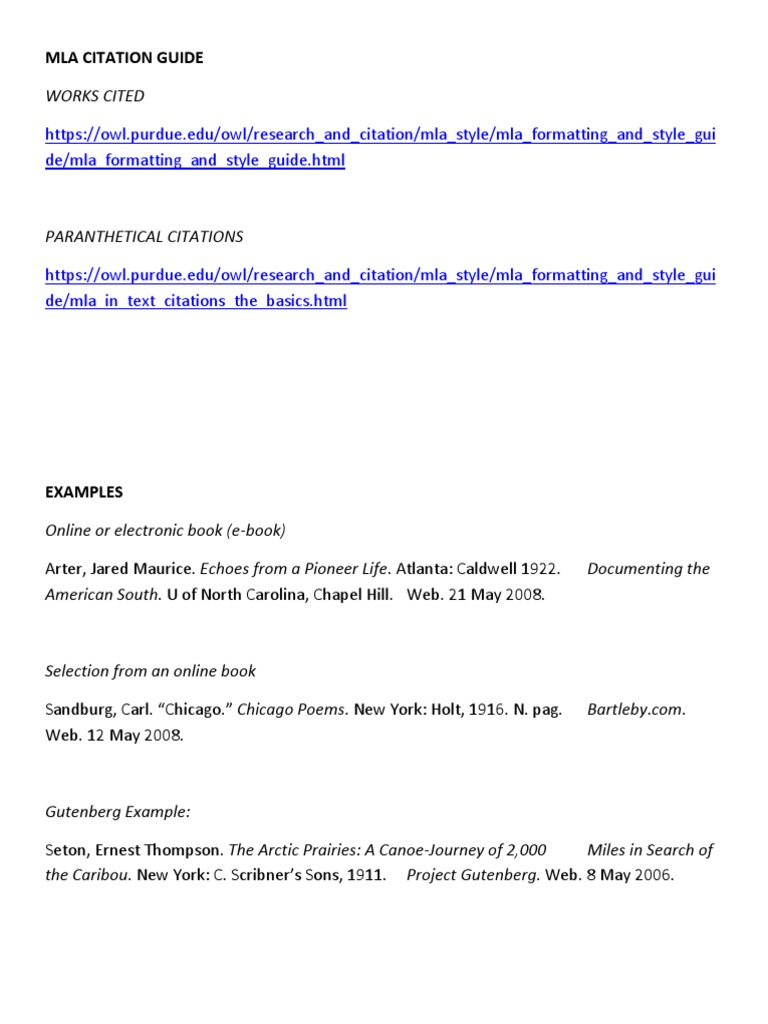
Each entry on the citation page typically includes the author’s name, the title of the work, publication details, and the medium of publication. For example, a book citation would appear as follows:
Smith, John. The Art of Citation. Penguin Books, 2020.
In this instance, John Smith is the author, while *The Art of Citation* is the title of the work. The item is published by Penguin Books in the year 2020. Notably, the title is italicized to emphasize the work’s importance and distinguish it from the rest of the citation. This practice of italicizing titles is equally applicable to titles of journals, websites, and films, thereby establishing a consistent methodology across varied mediums.
MLA citations also facilitate the inclusion of multiple authors. If a work has two authors, their names are listed in the following format:
Johnson, Emily, and Sarah Lee. Exploring Literature: An Introduction. Academic Press, 2021.
When dealing with three or more authors, the first author’s name is inverted, followed by the phrase “et al.”—a Latin term that translates as “and others.” This tactic emphasizes the lead contributor while acknowledging the collaborative nature of academic research.
The importance of specificity cannot be understated when it comes to dating, particularly with articles and websites. Dates should generally include the day, month, and year of publication—ensuring accuracy in the citation. In cases where a citation involves a website, the URL can be included, along with a date of access if the content is prone to change. For example:
Taylor, Rebecca. "The Evolution of Citation Styles." Literary Studies Today, 15 Aug. 2022, www.literarystudiestoday.com/evolution-of-citation-styles.
In this instance, Taylor’s article contributes to the discussion of citation styles, revealing how they have transformed over time. URLs expound the citation’s transparency, allowing readers to navigate directly to the source material. This underscores the ethical commitment inherent in any academic endeavor, ensuring that researchers respect the intellectual property of others.
Common observations among students dealing with MLA citation often include a degree of anxiety regarding style adherence, particularly among those new to the academic world. They might marvel at how such meticulous attention to detail can be pivotal in conveying respect for the original authors while bolstering the integrity of their own arguments. As students grapple with the nuances of citation, deeper reasons for fascination arise—highlighting the intersection of artistry and academic rigor. Some students might even discover an unexpected appreciation for the structure itself, reveling in the order it brings to their scholarly pursuits.
The MLA citation page serves as a metaphor for academic life: meticulous, structured, and egalitarian. It resonates with the idea that scholarly work is not an isolated venture, but rather a conversation—one that transcends time and context. This interconnectedness emphasizes collaboration and shared knowledge while fostering a sense of belonging within the broader scholastic dialogue. Institutions and educators instill the significance of proper citation to impart values of integrity and respect for intellectual labor.
In conclusion, understanding how to construct an MLA citation page is neither mundane nor overly complex—it is an invaluable life skill that nurtures an appreciation for knowledge. By learning to organize, format, and articulate citations correctly, students equip themselves for future scholarly challenges. Such engagement with scholarly sources encourages critical thinking and strengthens the foundation of academic discourse. As one traverses through the landscape of research and writing, embracing the intricacies of citation can transform a seemingly laborious task into a rewarding facet of intellectual exploration.