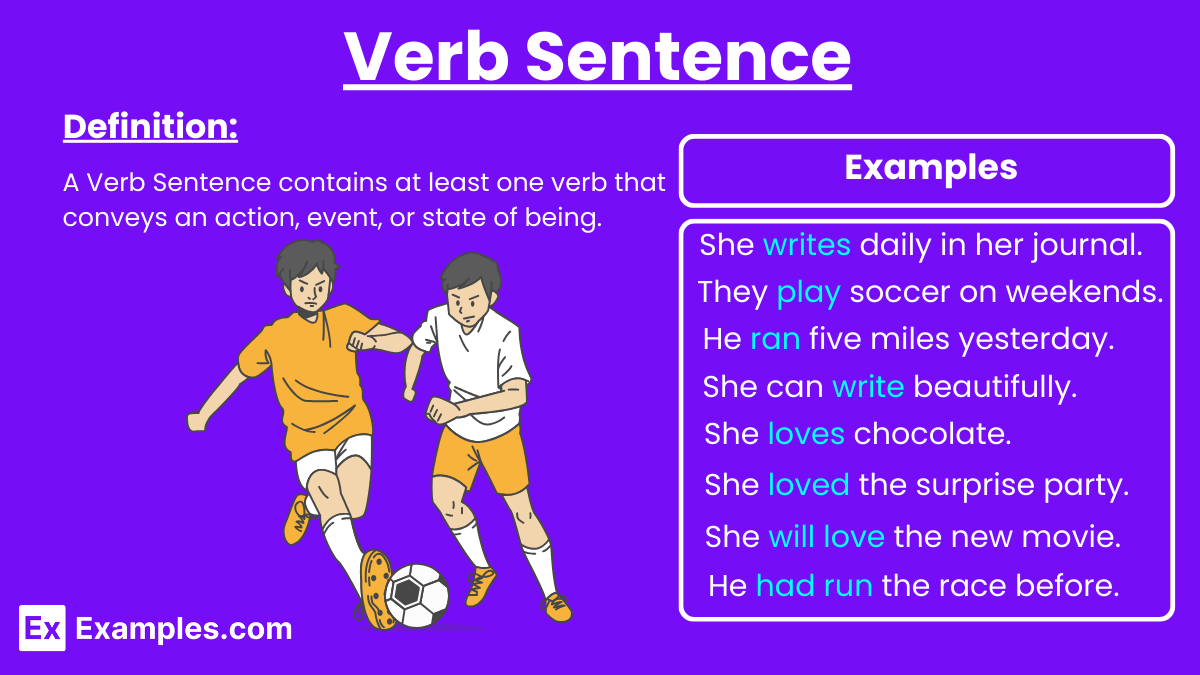
Language, an intricate tapestry woven from countless threads of expression, relies heavily on verbs to convey action, occurrence, and existence. Verbs are the lifeblood of sentences, transforming static nouns into dynamic narratives. Their undeniable significance in communication is often taken for granted, yet they carry an enigmatic weight that deserves exploration. What makes certain verbs resonate deeply with us? Why do we find particular actions enthralling or relatable? This article delves into the multifaceted world of verbs, illustrating their power through examples while addressing our innate attraction to them.
At the core of every vibrant sentence lies a verb. The simple verb “run,” for instance, evokes a myriad of images—from a child sprinting joyfully in a sunlit park to a dedicated athlete pushing the limits of human endurance on a track. Each representation varies dramatically, yet they share the same root action. This phenomenon encapsulates the versatile nature of verbs; they encapsulate emotions, cultures, and personal experiences. The active verb breathes life into a narrative, facilitating immersive storytelling.
Consider the verb “create.” It implies more than merely producing something; it suggests inception, innovation, and an alchemical transformation of ideas into reality. When one says, “She creates art,” it transcends mere craft; it embodies the manifestation of inspiration, the reflection of societal values, and the exploration of individual identity. The fascination with creation stems not just from the act itself, but from the implications of forging something uniquely one’s own, a reflection of imagination, toil, and perseverance.
Moreover, verbs are pivotal in conveying emotional depth. Take “love,” an action that oscillates between profound joy and poignant sorrow. When someone declares, “He loves his family,” it resonates with warmth and connection, evoking images of shared laughter, comfort, and unity. Yet, in contrast, if one states, “She loves and loses,” the essence of love becomes intertwined with loss, uncertainty, and longing, illustrating a spectrum of human emotion that is complex and relatable. Herein lies the allure of verbs; they facilitate our understanding of the human experience, shaping our perceptions and empathy.
The juxtaposition of strong and weak verbs introduces another layer of nuance. Strong verbs invigorate prose; they possess clarity and evoke a visceral response. For instance, the verb “sprint” engenders a sense of urgency and vigor as opposed to the relatively bland “run.” Consider these sentences: “He sprints towards his goal,” versus, “He runs towards his goal.” The former imbues the action with intensity and purpose. Writers often gravitate towards the compelling nature of strong verbs, recognizing their capability to elicit emotion and engagement from the audience.
On the contrary, weak verbs can dilute the intensity of a statement. “Is,” “are,” and “was” serve pivotal roles in sentence construction, but when overused, they can render writing flat. In the expression “The foods are delicious,” a stronger verb like “tempt” could enhance the allure: “The foods tempt the senses.” This subtle yet powerful distinction highlights an essential aspect of language; the choice of verbs can dramatically alter perceptions and convey an array of emotions, enriching the written word.
Furthermore, verbs offer insight into societal changes and cultural perspectives. Language evolves, and verbs frequently adapt to capture emerging ideas and challenges. For instance, the verb “sustain” reflects contemporary concerns about environmental stewardship. In the phrase “We must sustain our planet,” it moves beyond a mere suggestion to a clarion call for responsibility, emphasizing the urgency in maintaining harmony with nature. This evolution illustrates the veracity of verbs as living entities, shaping and reshaping societal discourses through their embodiment of current events.
In crafting sentences, the interplay between transitive and intransitive verbs further enriches the narrative potential. A transitive verb requires a direct object to complete its meaning, while an intransitive verb stands alone. For instance, in “The cat chased the mouse,” the verb “chased” is transitive; it necessitates a direct object (the mouse) to complete the action. Contrastingly, in “The cat sleeps,” the intransitive verb “sleeps” is self-sufficient. This distinction allows writers to manipulate sentence structure creatively, dictating the rhythm and flow of prose while tailoring the experience for readers.
In summary, the profound significance of verbs in language manifests in their ability to convey action, emotion, and cultural context. Verbs breathe life into our narratives, shaping the way we communicate and understand the human experience. They are not simply tools, but rather the essence of our expression. By thoughtfully selecting and employing verbs, writers can illuminate their prose, crafting sentences that resonate deeply and evoke the full spectrum of human emotion. Whether through the exhilarating rush of an action or the contemplative echo of reflection, verbs invite us to explore the complexities of life, making them indispensable in the art of communication.