
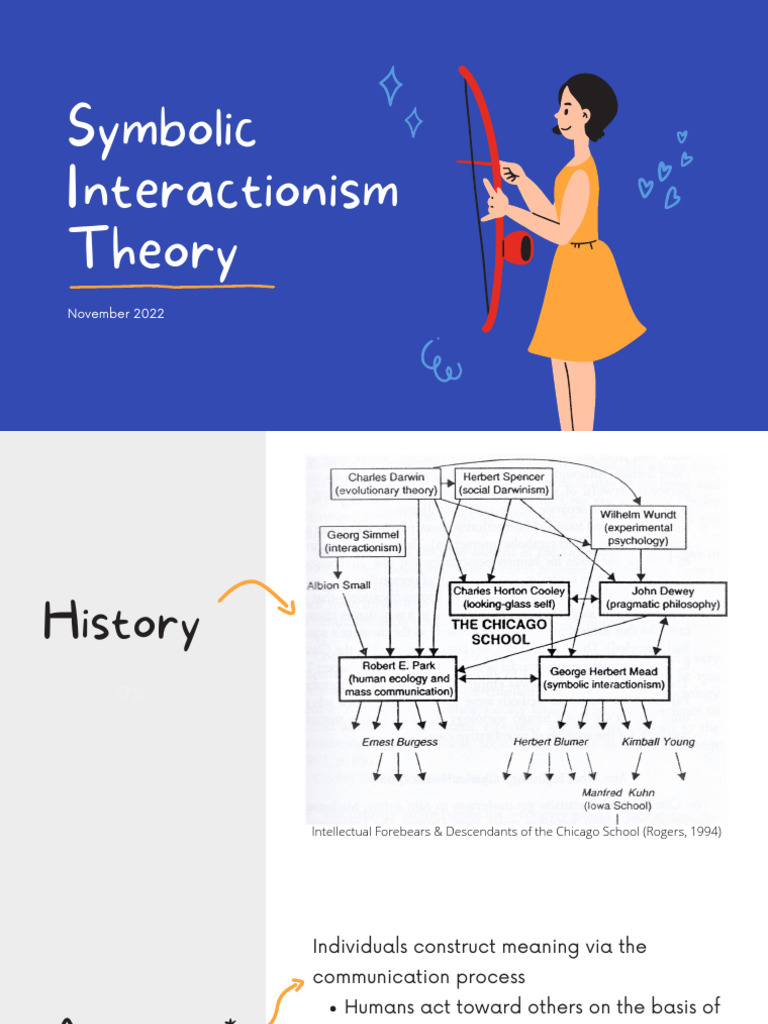
Symbolic Interactionism, a sociological framework that emphasizes the role of symbols and subjective meanings in human behavior, offers a nuanced lens through which to examine the complexities of social interactions. Originating from the works of early 20th-century thinkers like George Herbert Mead and Herbert Blumer, this theory posits that individuals create, modify, and interpret symbols in their interactions with others, ultimately shaping their social reality and identity. In this exploration of Symbolic Interactionism, readers can expect to discover its foundational principles, practical applications, and various real-world examples that highlight its significance in contemporary society.
Understanding the Foundations of Symbolic Interactionism
At its core, Symbolic Interactionism is built upon several key premises. First and foremost is the concept of meaning-making. According to this theory, individuals act based on the meanings that things hold for them, which are derived from social interactions. For instance, consider how the color white is interpreted in different cultures—while it symbolizes purity and peace in Western cultures, it often represents mourning in some Eastern societies. This illustrates how meaning is not inherent but constructed through social context.
Another essential aspect is the role of the self in social interactions. The “self” is viewed as a social product that evolves through interactions with others. Mead’s notion of the “looking-glass self” suggests that our self-perceptions are significantly influenced by how we believe others perceive us. This reciprocal relationship between self and society epitomizes how human behavior is not merely a reflection of personal choice but rather a tapestry woven from social threads.
Applications of Symbolic Interactionism in Various Contexts
Symbolic Interactionism can be applied across various fields such as education, healthcare, and criminal justice. In education, for instance, the teacher-student dynamic provides fertile ground for symbolic interactionism. Students internalize symbols and interactions within the classroom, which affect their perceptions of ability and motivation. A teacher’s reinforcement, praise, or criticism can shape a student’s self-image and engagement, underscoring how crucial interpersonal interactions are for learning outcomes.
In the realm of healthcare, patient-provider relationships illustrate the significance of communication and the interpretation of medical advice. A patient’s understanding of their health condition is often influenced by how healthcare professionals convey information. An empathetic interaction may empower a patient, enhancing their adherence to treatment protocols, while a lack of clarity or perceived indifference may lead to fatal misunderstandings.
Criminal justice, too, employs principles of Symbolic Interactionism. The labels attached to individuals, whether they are “criminal,” “delinquent,” or “rehabilitated,” can significantly affect their identity and behavior. Once labeled, individuals may conform to societal expectations associated with that label—a concept referred to as secondary deviance. This underscores the power of societal perception in shaping individual trajectories.
Real-World Examples of Symbolic Interactionism
Exploring real-world examples offers profound insights into the workings of Symbolic Interactionism. One compelling instance is the phenomenon of social media and its impact on identity construction. Platforms like Instagram and Facebook are veritable arenas of interaction where users curate their identities through the symbols of photographs and posts. The feedback loop created by likes, comments, and shares can alter self-perception and self-worth, illustrating how virtual interactions manifest real-world implications.
Another salient example can be found in the realm of political movements and activism. Symbolic Interactionism elucidates how social movements use symbols—such as peace signs, slogans, and flags—to convey ideologies and rally support. The Black Lives Matter movement effectively utilizes symbols to evoke emotions and frame the discourse surrounding racial injustice. The collective interpretation of these symbols can galvanize individuals toward a shared cause, demonstrating the power of symbols in fostering social change.
Critiques and Limitations of Symbolic Interactionism
While Symbolic Interactionism provides critical insights into human interaction, it is not without its critiques. One major criticism is its potential to downplay the influence of societal structures and systems. By focusing primarily on individual meanings and interactions, it may overlook how broader contexts—such as economic, political, and historical factors—shape these interactions. Additionally, the theory’s emphasis on subjective interpretation may introduce ambiguity, making empirical testing more challenging.
Moreover, critics argue that Symbolic Interactionism can sometimes lead to an overly deterministic view of behavior. If individuals are seen solely as products of their social interactions, the potential for agency and personal choice may be minimized. Balancing this perspective with considerations of free will and external influences is essential for a comprehensive understanding of human behavior.
The Relevance of Symbolic Interactionism in Contemporary Society
In an era characterized by rapid social change and technological advancements, the relevance of Symbolic Interactionism persists. As societies increasingly embrace diversity and globalization, understanding the myriad meanings individuals attach to their experiences becomes even more critical. The ongoing dialogue over identity, representation, and social justice can significantly benefit from the insights offered through this theoretical lens. Moreover, in a world brimming with complex interpersonal dynamics, navigating these interactions with a Symbolic Interactionist perspective fosters empathy and deeper understanding.
In conclusion, Symbolic Interactionism provides a rich, multidimensional framework for examining social interactions and the construction of meaning. Through its principles and real-world applications, one can appreciate how this theory elucidates the intricate dance between individual agency and societal influence. From education to health care, the ramifications of symbolic interactions are extensive, inviting further exploration and dialogue.













