
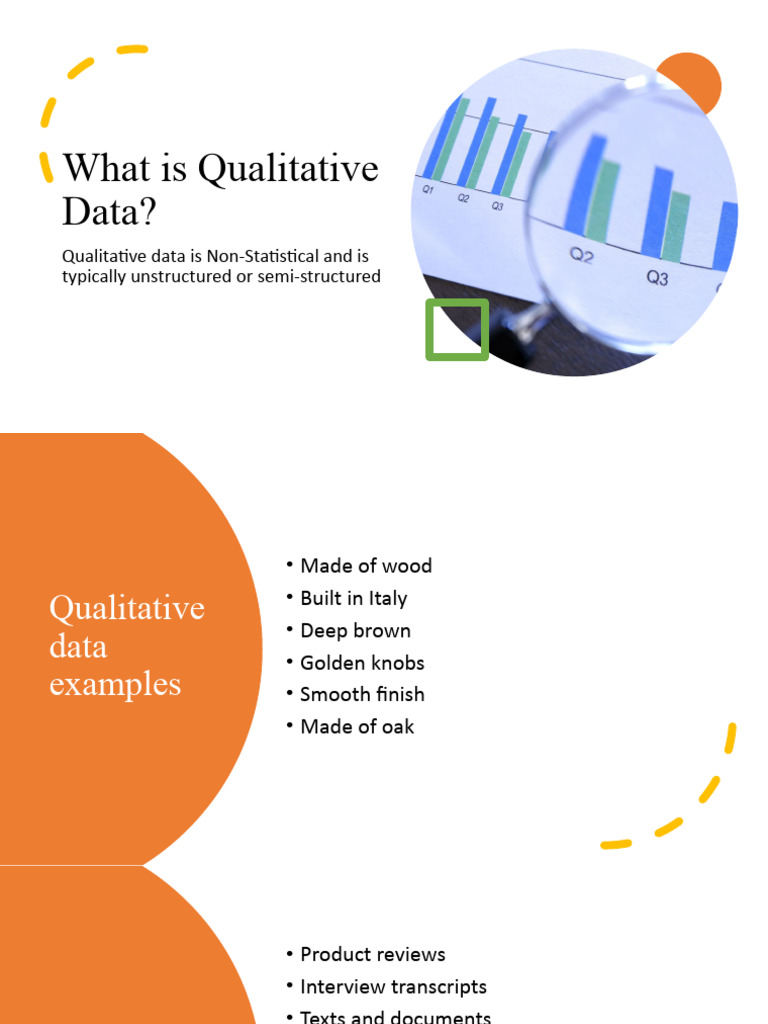
When we delve into the realms of data analysis, a compelling question arises: Which of the following is an example of qualitative data? This inquiry serves as a gateway into a rich tapestry of analytical possibilities, enticing both novices and seasoned statisticians alike. Qualitative data, in its essence, is often enigmatic yet profoundly impactful in conveying human experiences and perceptions. So, let’s embark on this exploratory journey to illuminate the nuances that differentiate qualitative data from its quantitative counterpart.
Before we dive into specific examples, let’s establish a foundational understanding of qualitative data. At its core, qualitative data is non-numerical and seeks to capture the complexities of human behavior, thoughts, and emotions. It embraces subjectivity and emphasizes the importance of context and meaning, often illustrated through narratives, descriptions, and thematic patterns. Think of it as a vibrant canvas painted with countless emotions and stories, where numbers merely cannot encapsulate the richness of human experience.
Imagine a scenario where a psychologist is conducting interviews with individuals to understand their coping mechanisms during stressful times. The responses, laden with personal anecdotes, emotions, and meanings, represent qualitative data. Each story reflects deep insights that numbers alone cannot convey. Now, juxtapose this with a survey collecting data on the frequency of stress-related illnesses—a clear example of quantitative data. The challenge lies in discerning which type of data serves a specific purpose best.
Another illustrative instance of qualitative data can be found in ethnographic research, where researchers immerse themselves in the environments of their subjects. In studying a community’s cultural practices, they document observations that reveal not just what people do, but how they interpret their actions and the meanings behind them. Here, formulating a quantitative analysis would obscure the intricate dynamics at play. Qualitative data embraces a narrative structure that breathes life into statistics, enhancing our understanding.
But what about open-ended survey questions? Are they not qualitative? Indeed, they often are! When respondents provide feedback in their own words—describing their experiences with a product or service—these rich narratives form the bedrock of qualitative data. Each response is a unique insight that helps researchers unearth feelings of satisfaction, frustration, or joy, which can be pivotal for businesses seeking to improve their offerings.
In the realm of marketing, qualitative data is indispensable. Consider focus group discussions aimed at deciphering consumer perceptions about a new brand. Participants typically share their thoughts and feelings, providing invaluable feedback that informs strategy. The qualitative insights gleaned from such gatherings often lead to paradigm shifts in product design and marketing campaigns. Here, the challenge is not only in capturing diverse opinions but also in interpreting the underlying emotions and motivations, which can sometimes be overlooked in demographic surveys.
Another fascinating dimension of qualitative data is its role in social sciences. Researchers often conduct case studies that detail particular instances or phenomena, shedding light on complex societal issues. For example, a study exploring the experiences of refugees might encompass interviews and participant observations. Such qualitative data can expose the systemic barriers faced by these individuals, far beyond mere statistics about their numbers or demographics.
Yet, qualitative data is not without its challenges. For instance, the subjectivity inherent in interpreting such data can lead to biases if researchers are not meticulous. Recall the psychologist’s interviews; their analysis must remain anchored to the data presented without imposing preconceived notions. The credibility and reliability of qualitative research hinge on the rigor of the methodology employed and the researcher’s ability to maintain impartiality.
Coding qualitative data, a common practice in qualitative research, involves transforming raw narratives into manageable themes or categories. This process not only streamlines the analysis but also distills complex sentiments into coherent representations. However, the nuance lies in the researcher’s capability to capture the essence of the narratives without losing their original meaning—a remarkable fusion of art and science.
As we navigate through qualitative data, it becomes increasingly clear that its value lies in telling stories. These stories resonate on a personal level, providing insights that statistics simply cannot portray. For instance, if we were to analyze the sentiment around a historical event, qualitative data might consist of personal letters, diaries, or oral histories, illuminating the myriad ways individuals experienced that event. This brings forth the heart of the matter: why choose one type of data over the other? The answer often hinges on the research question at hand.
In conclusion, qualitative data serves as an essential component in the scholarship of life, offering rich insights and profound understanding. It mesmerizes by inviting us to explore the subjective facets of human experiences, often answering questions that numbers scarcely touch upon. So, the next time someone poses the question, “Which of the following is an example of qualitative data?” take a moment to reflect on the tapestry of emotions, behaviors, and narratives that form our world. As we continue to navigate our digital and analytical landscapes, let us celebrate the power of qualitative data in shaping our understanding of the human experience.













