
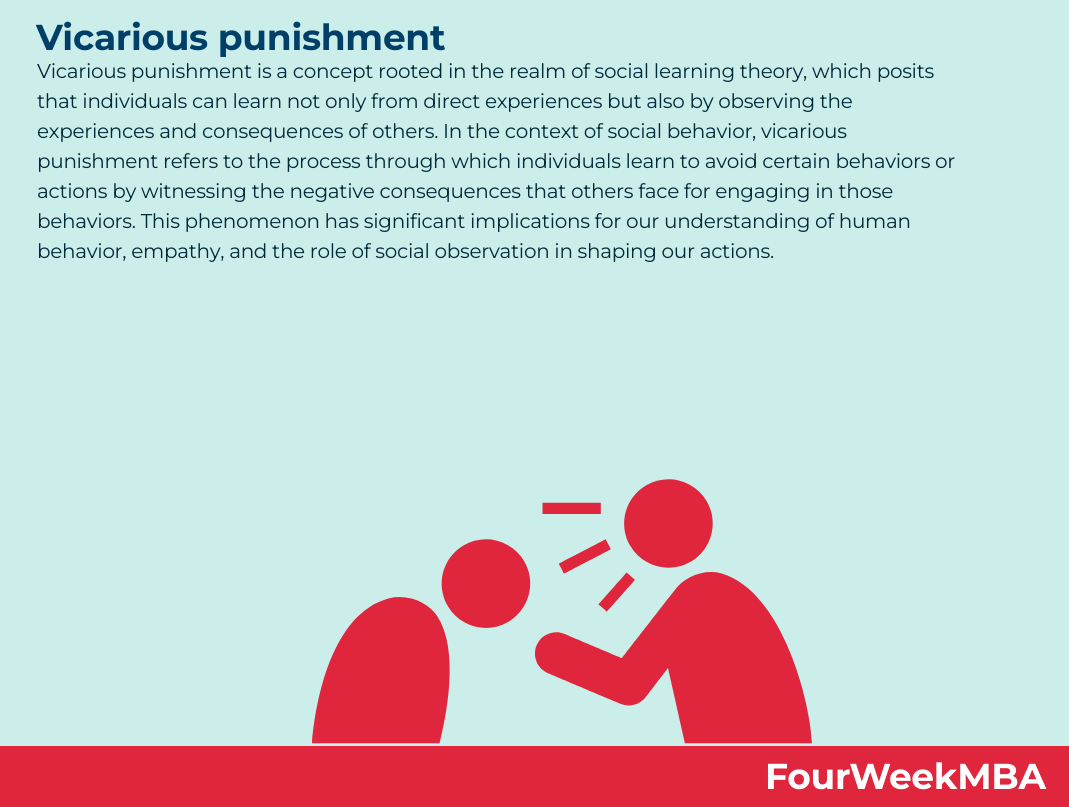
Have you ever witnessed a situation where someone else faced the consequences of their actions, and it made you think twice about your own behavior? This phenomenon is known as vicarious punishment, and it serves as a fascinating mechanism of social learning. It prompts us to ponder a critical question: How does witnessing punishment affect our own actions? In this exploration of vicarious punishment, we’ll delve deeply into its definitions, implications, and various examples, enriching our understanding of how this concept manifests in daily life.
Understanding Vicarious Punishment
Vicarious punishment occurs when an individual observes a punishment being administered to another person, leading to an alteration in the observer’s behavior due to a fear of similar consequences. This is rooted in social learning theory, posited by Albert Bandura, which suggests that people learn not just through direct experience but also by observing others. A quintessential example would be children witnessing a peer being reprimanded for misbehavior; the children who see this may become more compliant, internalizing the lesson without ever experiencing the punishment themselves.
Psychological Underpinnings
At the core of vicarious punishment lies a complex interplay of cognitive processes. Observers engage in both emotional and rational assessments of the punished individual’s plight. The emotional response—often a combination of empathy, fear, or schadenfreude—affects how likely they are to adopt or avoid certain behaviors. Rational assessment involves understanding the consequences of the behavior that led to punishment, thus informing one’s future choices. This dual processing can profoundly shape social norms and personal ethics.
Real-World Exemplifications
Consider a classroom setting where a teacher reprimands a student for speaking out of turn. Other students may not only feel a sense of relief that they weren’t the ones punished, but they also internalize the lesson. This incident serves as a catalyst for behavioral adjustment; the observers are encouraged to think carefully before engaging in similar conduct. The repercussions of this singular event ripple through the classroom dynamic, influencing collective behavior for some time to come.
Another vivid illustration would be the workplace scenario. Imagine an employee who receives a public scolding for consistently missing deadlines. Colleagues witnessing this reprimand may feel apprehensive about procrastination or failure to meet expectations. The fear of facing potential embarrassment or similar punishment may prompt them to enhance their productivity and time management skills, demonstrating the profound impact of vicarious punishment on group behavior.
Vicarious Punishment in Popular Media
The realm of entertainment often depicts vicarious punishment as a crucial narrative device. In films or television shows, characters frequently witness the downfall of others due to their poor choices, effectively serving as cautionary tales. For instance, the failure of a character in a high-stakes drama often speaks volumes about the dangers of greed or betrayal, prompting viewers to reflect on their own lives and decisions.
This dynamic is not merely limited to scripted media; reality TV often magnifies these scenarios. Contestants who witness a fellow participant being ousted for dishonesty may be spurred to remain truthful in their gameplay, lest they suffer the same fate. This encourages a form of behavioral regulation that transcends individual experience, forging a community governed by shared standards of conduct.
Challenges in Embracing Vicarious Punishment
While vicarious punishment can be an effective deterrent, challenges abound. Not everyone responds uniformly; individual differences, such as personality traits and prior experiences, can lead to divergent outcomes. Some may become desensitized to punishment, viewing it as a mere spectacle rather than a serious consequence. This desensitization can foster a culture of risk-taking where individuals engage in high-risk behaviors despite witnessing negative outcomes.
Additionally, the context of punishment matters. If punishment appears arbitrary or excessively harsh, observers may reject the lessons intended for them. Instead of acting more responsibly, they might rebel against the very authority imposing the punishment, seeing it as an infringement on their autonomy. Such resistance can create a dissonance, challenging the efficacy of vicarious learning.
Navigating the Complexity of Social Behavior
Ultimately, vicarious punishment serves as a reminder of the intricate web of social influences that shape behavior. It highlights the power of observation and the lessons derived from the experiences of others. As we navigate our personal and professional interactions, understanding this concept can empower us to promote healthier environments, wherein consequences are justly administered and lead to constructive outcomes.
So, the next time you find yourself at a crossroads of decision-making, consider the echoes of those around you. How might the actions of others—be they cautious or reckless—influence your own choices? This reflection might just be the key to embracing a more thoughtful approach to your interactions.













