In the vast universe of language, sentences are like stars; some shine brightly on their own, while others cluster together in constellations that tell a story. Among these celestial formations, the compound-complex sentence stands out, weaving multiple threads of thought into a rich tapestry of meaning. This intricate structure may seem daunting at first, but it serves as a powerful tool for writers and speakers aiming to convey complex ideas with elegance.
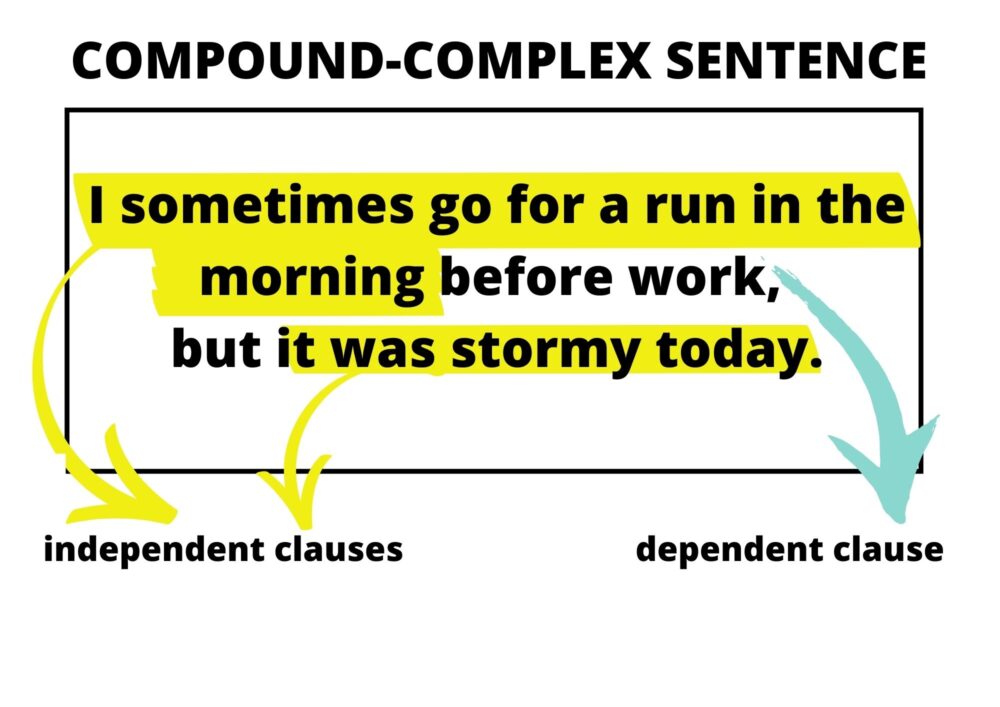
The compound-complex sentence can be likened to a grand symphony, where individual instruments—independent clauses and dependent clauses—intermingle to create harmonious melodies. At its core, this constellation of clauses combines at least two independent clauses and at least one dependent clause, allowing for a nuanced expression of thoughts and nuances. This structure provides the flexibility to elaborate on ideas while maintaining clarity.
Let’s explore this captivating sentence structure further. A simple independent clause, like a solitary star, comprises a subject and a verb, standing alone to express a complete thought. For instance, “The sun sets” conveys a straightforward observation. However, when you introduce a dependent clause, it adds depth and dimension, transforming the phrase into something more evocative. For example, “when the sky darkens” becomes a dependent clause, enhancing the imagery. Together, they form a compound-complex sentence: “The sun sets when the sky darkens, and the stars begin to twinkle.” Here, the interplay between the independent and dependent clauses paints a vivid picture, creating a sense of time and anticipation.
Intriguingly, the charm of compound-complex sentences lies in their versatility. They can be employed to exhibit contrasts, elaborate on information, or elaborate on actions and thoughts. Consider the following example: “Although the storm raged outside, the couple continued to dance, and they reveled in their own little world.” The use of “although the storm raged outside” introduces a dependent clause that contrasts with the joyful imagery of the couple dancing. This structure not only conveys the couple’s defiance against nature’s fury but also evokes a sense of warmth, intimacy, and resilience in the face of adversity.
Employing a compound-complex sentence provides the opportunity to portray relationships and sequences of events. Such sentences often incorporate conjunctions, both coordinating and subordinating, playing the role of bridges that connect these diverse clauses. Words like “and,” “but,” and “although” serve as keys, unlocking the creative potential within the sentence. For instance, “The children laughed as they played in the yard, but their mother called them inside when it began to rain.” In this sentence, the independent clauses articulate simultaneous actions, while the dependent clause introduces a pivotal moment, adding urgency to the scenario.
Consider the metaphorical richness found within compound-complex sentences. They can encapsulate complex emotional landscapes or elaborate philosophical reflections. A poignant example might be: “While she yearned for adventure, her responsibilities kept her anchored at home, and she often wondered if she would ever find the courage to break free.” This example captures an internal conflict, combining longing and duty into one intricately woven thought. The combination of contrast and inquiry suggests a deeper exploration of the human experience—an uncharted territory of aspirations and obligations.
Sentence variety is vital in creating engaging written content, and the compound-complex sentence excels in providing a dynamic cadence. By juxtaposing shorter, more concise sentences with these intricate constructs, writers can maintain reader interest and drive their message home—much like a music composer contrasting soft melodies with powerful crescendos. The strategic use of compound-complex sentences enhances the rhythmic flow, allowing for a greater emotional resonance.
Such complexity, however, requires careful practice. One must tread lightly to avoid convoluted constructions that would puzzle rather than elucidate. To master the art of the compound-complex sentence, writers should consider the clarity of their ideas. Each clause must serve a purpose, fitting together like pieces of a jigsaw puzzle to create a coherent picture. Effective writing is not merely about showcasing grammar prowess; it is about fostering clarity and understanding.
In educational contexts, compound-complex sentences are instrumental in developing students’ proficiency in writing. By encouraging learners to experiment with this structure, educators can cultivate their ability to articulate thoughts with sophistication. Exercises that require the formation of compound-complex sentences based on specific themes or prompts can enhance both critical thinking and creative expression.
In conclusion, the compound-complex sentence stands as a testament to the power of language. It invites creativity, encourages self-expression, and bridges ideas together in an artistic manner. Whether you seek to captivate an audience, convey complicated feelings, or simply embellish your prose with eloquence, understanding and mastering this sentence structure can elevate your writing to celestial heights. In the infinite expanse of the written word, the compound-complex sentence shines brightly, beckoning writers to explore its profound depths and complexities.