In today’s competitive job landscape, an effective resume serves as your ambassador. It speaks for you before you have the opportunity to showcase your personality and skills in an interview. This is particularly true for roles such as Customer Service Representative (CSR), where the nuances of communication and interpersonal skills are paramount. A meticulously crafted resume can shift the perspective of hiring managers, piquing their curiosity and prompting them to explore your qualifications more deeply. Let’s delve into the essential components of a Customer Service Representative resume, with a focus on creating a compelling narrative that captures attention.
1. Understanding the CSR Role
Before diving into the specifics of crafting a resume, it’s crucial to understand the very essence of the Customer Service Representative role. CSRs are the frontline warriors of any organization, engaging with clients and resolving queries. They are problem solvers, communicators, and the embodiment of the company’s values. Their interactions can significantly influence customer satisfaction and brand loyalty. Thus, the resume must convey not just skills and experience but the ethos of empathy, service, and reliability.
2. Crafting a Captivating Summary
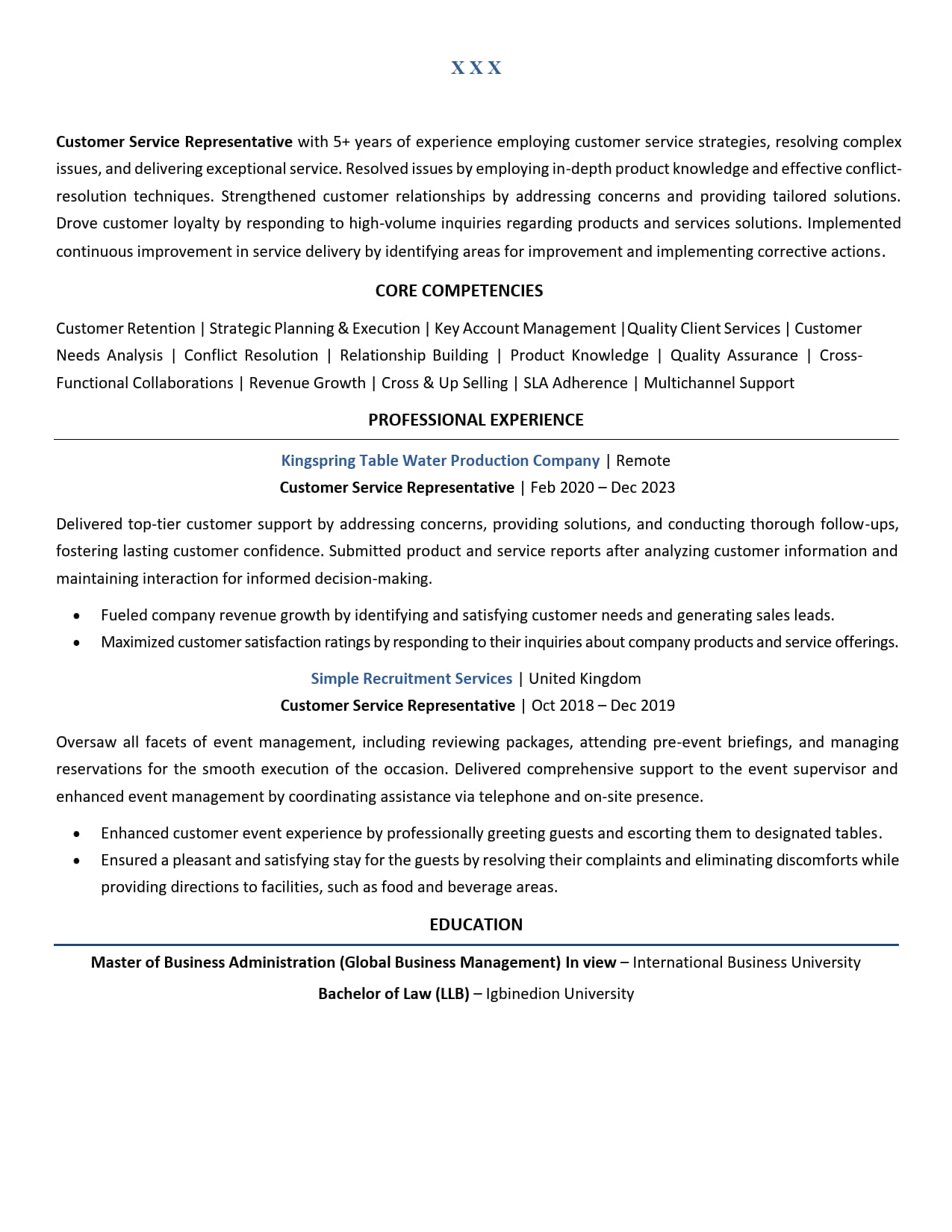
The summary statement is your opening act—a succinct capture of who you are and what you bring to the table. This should be a powerful paragraph that encapsulates your experience, strengths, and career objectives. Consider starting with a strong descriptor of your professional identity, such as “Dynamic Customer Service Representative with over five years of experience in enhancing customer engagement.” This sets the tone. Follow with specifics about your skills, such as conflict resolution, communication proficiency, and teamwork. This will not only establish credibility but also draw the reader in.
3. Highlighting Key Skills
Skills sections are vital in demonstrating your capability at a glance. For a Customer Service Representative, consider categorizing skills into three dimensions: Technical Skills, Soft Skills, and Language Proficiency. Technical skills might encompass CRM software proficiency and data entry accuracy. Soft skills should highlight your interpersonal abilities, such as active listening, patience, and emotional intelligence, which are invaluable in this role. Language proficiency is increasingly advantageous in diverse workplaces, so list any additional languages spoken. Formatting these skills in a bullet-point list makes them easily digestible and visually appealing, enhancing the likelihood of retention.
4. Emphasizing Professional Experience
Next, the professional experience section stands as the cornerstone of your resume. Here, you’ll need to go beyond mere job titles and dates. Instead, focus on quantifiable achievements. Use the STAR method (Situation, Task, Action, Result) to succinctly narrate your contributions. For example:
- Situation: “Faced with dwindling customer satisfaction scores.”
- Task: “Tasked with improving the service quality within six months.”
- Action: “Implemented a feedback system and trained team on customer engagement techniques.”
- Result: “Achieved a 20% increase in customer satisfaction ratings, exceeding company expectations.”
This format not only elaborates on your responsibilities but markedly highlights your impact, honing in on your value as an employee.
5. Educational Background and Certifications
Although recent graduates or those with limited experience may place this section higher on their resumes, for seasoned professionals, it might reside at the end. Nevertheless, include your degree(s) and any relevant coursework or extracurricular activities that demonstrate your leadership or teamwork capabilities. Additionally, certifications such as Customer Service Quality (CSQ) or ITIL foundation demonstrate your commitment to professional development and can set you apart from the competition.
6. Optional Sections: Awards and Volunteer Work
Don’t overlook the opportunity to include relevant volunteer experiences and awards. These sections can add depth to your narrative, showcasing your dedication to service outside of a traditional work environment. Mentioning roles with community organizations or recognition for outstanding customer service can provide a more rounded picture of your qualifications. This could pique the curiosity of hiring managers who value well-rounded candidates.
7. Tailoring Your Resume
One size does not fit all when it comes to resumes. Tailoring your application to each position is paramount. Carefully read each job description and incorporate keywords and phrases that align with the role’s requirements. This approach not only showcases your genuine interest in the position but also enhances the chances of passing through Applicant Tracking Systems (ATS) that many companies employ. Customization transforms your resume from a generic document into a precise reflection of your suitability for the role.
8. Formatting for Success
Finally, presentation matters. A clean, professional format featuring clear headings, an easy-to-read font, and thoughtful use of white space enhances clarity and aesthetic appeal. Pay attention to consistencies in formatting—bullet points, font size, and colors—ensuring a polished look. Remember, first impressions are often visual. A well-designed resume may evoke both professionalism and attention to detail.
In conclusion, a Customer Service Representative resume should be a layered narrative showcasing your skills, experience, and passion for exceptional service. By focusing attention on your summary, skills, experience, and the details that set you apart, you can create a document that not only informs but intrigues potential employers. The journey from application to interview begins with your resume, so ensure it paints a dynamic picture of who you are and what you can contribute to the organizations you seek to join.