
In the grand theatre of nature, where every element plays a specific role, negative feedback mechanisms function like an astute director, orchestrating a delicate balance among the myriad components of ecological and physiological systems. Imagine, for a moment, a pendulum—a beautiful, swinging arc that epitomizes the ebb and flow of equilibrium. When the pendulum sways too far in one direction, the force of gravity gently pulls it back, restoring harmony and preventing chaos. This metaphor aptly encapsulates the essence of negative feedback. It represents a restorative process, ensuring stability in varied systems, from climate regulation to metabolic pathways.
To illustrate the multifaceted nature of negative feedback, let us delve deeper into its applications, revealing how this mechanism operates across different domains, drawing compelling parallels along the way.
1. The Human Body: Homeostasis at Play
Consider the human body as a finely tuned orchestra, each instrument crucial in creating a harmonious melody. When the body temperature rises beyond a comfortable level, the hypothalamus, acting as the conductor, initiates a series of physiological changes. Sweating ensues, designed to cool the skin through evaporative cooling, akin to gentle rain on a parched landscape. This negative feedback loop is pivotal; without it, our internal climate would spiral into disarray, much like a symphony descending into cacophony.
Further applying this analogy, when glucose levels in the bloodstream elevate postprandially (after eating), the pancreas releases insulin—a saccharine serenade urging cells to absorb glucose. This subsequent decrease in blood sugar validates the efficacy of the feedback loop, showcasing nature’s innate brilliance in maintaining balance.
2. Climate Dynamics: The Earth’s Self-Regulating System
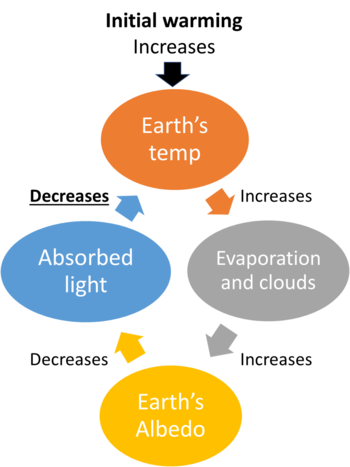
Transitioning from the microcosm of human physiology to the macrocosm of climate, we uncover negative feedback mechanisms at work within Earth’s system. Picture the Earth as a colossal machine, with numerous cogs interconnected, dependent on one another for optimal function. One exemplary phenomenon is the role of clouds in regulating temperature. As global temperatures increase due to greenhouse gas emissions, more water vapor enters the atmosphere, leading to enhanced cloud formation.
These clouds perform a dual function: they reflect sunlight back into space (albedo effect) while also trapping heat below, much like a thermal blanket. The interplay between these two properties exemplifies negative feedback, as the solar reflectance can mitigate further warming. Thus, clouds act as nature’s cooling agents, striving to restore a stable climate in the face of human-induced changes—a stark reminder of how interconnected and responsive our environmental systems can be.
3. Ecological Feedback: A Dance of Flora and Fauna
Delving into the ecological realm, negative feedback mechanisms manifest vividly in predator-prey relationships. Consider the majestic predator, the wolf, roaming the vast wilderness. As wolf populations grow, the abundance of deer—its primary prey—decreases due to increased hunting pressure. This decline ultimately leads to a reduction in the wolf population, ensuring that the deer can survive and eventually thrive once again. Here, we witness a primal dance of life, where each step taken reverberates through the ecosystem, illustrating how nature self-corrects.
Furthermore, the principle of carrying capacity further embodies this theme. As certain species approach the limits of their environment’s resources—be it food, water, or shelter—their populations stabilize or even decline. This balance, orchestrated through negative feedback, maintains biodiversity and personalizes the survival of both flora and fauna—a testament to evolution’s craftsmanship.
4. Technological Systems: Engineering Balance
Extending the concept of negative feedback into the realm of technology, we encounter systems designed with automated feedback loops. Thermostats, for instance, exemplify this principle adeptly. When a room grows too warm, a thermostat activates the air conditioning system, cooling the environment down to a preordained threshold. This intelligent design acts similarly to biological feedback loops—both realms reflecting the axiom of systems theory, where outputs are intricately linked to their inputs.
The integration of negative feedback in engineering not only enhances efficiency but also minimizes waste, capturing the essence of sustainability. As builders of technology, engineers aspire to create systems that harmonize with their environment—a noble pursuit echoing that of nature itself.
5. Societal Dynamics: A Cultural Perspective
In the sociocultural sphere, negative feedback can be observed in social contracts and societal norms. Consider the phenomenon of public opinion—a fluid entity that shifts and sways in response to various stimuli. When policies enacted by governments deviate too far from the public’s expectations, a backlash unfolds, prompting revisions or reversals. This responsiveness fosters a democratic equilibrium that reflects the collective will of the populace, ensuring that governance remains aligned with its constituents. Here, we witness the subtle maneuvering of societal forces, illustrating how negative feedback is woven into the fabric of human interaction.
In conclusion, negative feedback emerges as a pivotal principle governing various systems, transcending the boundaries of biology, ecology, engineering, and society. It serves as a reminder of the underlying interconnectivity of all elements, whether in the natural world or human constructs. Just like the pendulum that sways to restore equilibrium, these feedback mechanisms ensure stability and balance in the face of changing conditions. By embracing the elegance of negative feedback, we not only gain insight into the complexities of the world around us, but also foster a profound respect for the intricate dance of life itself.













