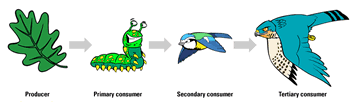
When contemplating the intricate web of life’s ecosystem, one might ask: what role do primary consumers play in the grand food chain? Perhaps even more intriguing is the challenge of identifying a vivid example of such a consumer that embodies this ecological function. Today, let us explore the fascinating world of primary consumers and center our discussion on a quintessential example: the herbivorous rabbit.
At the heart of any ecosystem lies a complex interplay of organisms, encompassing producers—typically green plants that harness solar energy through photosynthesis—and consumers, which are further divided into primary, secondary, and tertiary categories. Primary consumers are specifically those organisms that feed directly on producers. As such, they are critical to transferring energy from the plant kingdom to the animal world, ultimately influencing the entire ecological balance.
Now, why choose the rabbit as a representative of primary consumers? This seemingly innocuous creature is much more than meets the eye. Adult rabbits primarily consume grasses, clover, and other herbaceous plants. Their diet primarily consists of plant matter, establishing them firmly in the realm of herbivores. They exhibit both grazing and browsing behavior, depending on the availability of food sources. This flexibility in dietary habits not only allows them to thrive in diverse environments but also makes them a key player in their respective ecosystems.
Rabbits are notorious for their rapid reproduction rates, which, while advantageous to their species, also poses a challenge to their environment. With one rabbit capable of producing as many as 12 young in a single litter, populations can grow exponentially in favorable conditions. Such a phenomenon prompts an essential question: how do these burgeoning populations affect the balance within their ecosystem?
The answer lies in the concept of carrying capacity, which refers to the maximum population size of a species that an environment can sustain indefinitely. When rabbit populations surge, they may exert excessive pressure on local vegetation, leading to overgrazing. This phenomenon can diminish biodiversity by eradicating certain plant species and triggering a cascade of ecological consequences.
Yet, the life of a rabbit is fraught with challenges beyond mere food availability. As primary consumers, rabbits are also prey for a myriad of secondary consumers, including predators such as foxes, hawks, and coyotes. This predator-prey dynamic illustrates the delicate equilibrium within food webs and highlights the importance of primary consumers in nutrient cycling and energy transfer. As rabbits graze on grasses and other plants, they not only consume energy but also disperse seeds through their droppings, contributing to the perpetuation of plant life.
It’s essential to understand that primary consumers exist within an intricate network of interdependencies. For instance, consider the relationship between rabbits and the flora they consume. Many plants have evolved specific adaptations to mitigate herbivory. Some develop tough, fibrous tissues, while others employ chemical defenses to make themselves less palatable. This ongoing arms race between primary producers and consumers shapes the evolution of species within that ecosystem.
In urban environments, the context shifts slightly. The Eastern cottontail rabbit, a common sight in North American suburbs, illustrates the adaptability and resourcefulness of such primary consumers. Here, they often forage on cultivated gardens, lawns, and ornamental plants, navigating a landscape increasingly dominated by human activity. This adaptation poses another question: how do urban ecosystems redefine the relationships between primary consumers and their food sources?
While some may view the presence of rabbits in gardens as a nuisance, they also serve as indicators of ecological health. Their activity might suggest a thriving environment; a rich variety of plants can support flourishing herbivore populations. Conversely, a steep decline in rabbit populations may suggest habitat degradation or an increase in predation pressure, prompting a closer examination of local ecological dynamics.
Additionally, considering climate change, one cannot ignore the implications for primary consumers. As temperature shifts and precipitation patterns change, the distribution and availability of vegetation will inevitably be affected. Would rabbits be able to adapt quickly enough to climate-induced changes, or would they face food shortages that jeopardize their survival? This pressing question highlights the importance of ecological conservation efforts, particularly as we strive to maintain the delicate balance of ecosystems worldwide.
Rabbits, as a prime example of primary consumers, encapsulate the essential functions these organisms perform within their ecosystems. From energy transfer to seed dispersal, their role is foundational to ecological health. While the inherent challenges they face may complicate their existence, it is these very challenges that contribute to the vibrant tapestry of life on Earth. Understanding and appreciating the intricacies of such relationships provides invaluable insight into the functioning of our planet’s ecosystems, reinforcing the need for responsible stewardship and conservation efforts.
As we ponder the role of primary consumers like rabbits in the ecological narrative, we are invited to reflect on our interactions with nature and the responsibilities we bear. Will we champion efforts to preserve these critical species, or will we allow their plight to go unnoticed? It is through vigilance and awareness that we can ensure the continued vitality of both primary consumers and the ecosystems they inhabit.