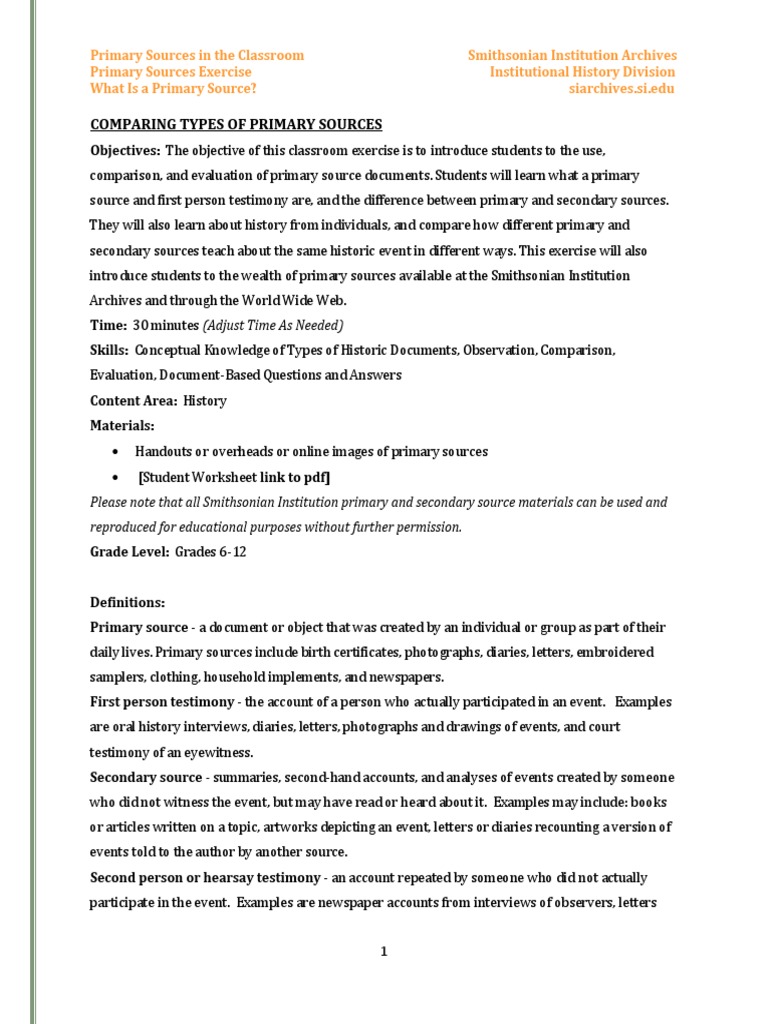
When diving into research and exploration within the vast landscape of history or academia, the concept of primary sources emerges as a pillar of authenticity and original discovery. A primary source constitutes a direct or firsthand piece of evidence from the time period or event in question, unfiltered by interpretation. This article meticulously examines diverse examples of primary sources, showcasing how they encapsulate the essence of their time.
1. Historical Documents: The Backbone of Research
One of the most recognized forms of primary sources, historical documents, encompasses a broad spectrum of written materials, including letters, official records, treaties, and decrees. These documents are not merely artifacts; they hold the weight of historical significance, chronicling events with raw immediacy and detail. Consider the iconic Declaration of Independence, a powerfully poignant statement that heralded a new nation and its aspirations. Such documents provide invaluable insights into societal values, beliefs, and tensions prevalent during their creation, enabling scholars to dissect and analyze the past’s multifaceted layers.
2. Diaries and Journals: Personal Accounts from the Past
Intimately woven into the fabric of primary sources, diaries and journals offer a reflective lens into personal experiences, thoughts, and emotions during specific historical moments. The eloquent musings of Anne Frank serve as a haunting reminder of the horrors of war and human resilience. Through the pages of her diary, readers glean not just historical facts but the poignant, personal realities faced by individuals in dire circumstances. These literary gems encapsulate the human experience, inviting audiences to connect emotionally with history on a personal level.
3. Photographs: Visual Narratives of History
In an increasingly visual world, photographs stand as powerful primary sources that capture moments frozen in time. A single photograph can evoke potent emotions and tell stories that words cannot convey. For example, Dorothea Lange’s iconic photograph of a destitute mother during the Great Depression powerfully encapsulates the suffering and resilience of the era. Photographs serve as visceral reminders of historical events, providing context, emotional weight, and a tangible connection to bygone eras.
4. Artifacts: Tangible Connections to the Past
Artifacts, ranging from ancient pottery to vintage clothing, serve as physical representations of cultural heritage and societal development. Each piece holds within it a narrative that tells us about the people who created and utilized it. The Rosetta Stone, for instance, not only embodies a significant phase in linguistics and archaeology but also acts as a bridge between ancient civilizations and contemporary understanding. Such objects offer an intimate connection to history, allowing insights into the daily lives, customs, and practices of our ancestors.
5. Oral Histories: Voices from the Community
Oral histories elevate primary sources by providing auditory snapshots of personal experiences and communal narratives. Through interviews and storytelling, individuals recount their unique perspectives on historical events, revealing rich, textured layers of the past. These narratives are particularly powerful in preserving marginalized voices that may have been omitted from mainstream historical accounts. As communities share their stories, they contribute to a collective memory, fostering an understanding of cultural identity and heritage.
6. Official Government Records: The Authority of Documentation
Government documents, including census data, treaties, and budgets, serve as authoritative primary sources that shape our understanding of political and social structures. They often reflect the legislative priorities and societal concerns of their time. The United States Constitution, a foundational legal document, is not only a testament to governance but also a mirror of the revolutionary ideals that birthed a nation. Analyzing such records allows researchers to trace the evolution of policies and societal values through the years.
7. Music and Literature: The Creative Pulse of an Era
Artistic expressions, from poetry to music, can also function as primary sources that encapsulate the spirit of their time. For instance, Langston Hughes’s poetry resonates with themes of resilience amidst racial oppression, conveying the struggles and triumphs of the African American community during the Harlem Renaissance. Likewise, musical compositions from a certain period can encapsulate societal moods, cultural conflicts, and shared experiences, serving as time capsules reflecting life’s nuances.
8. Newspapers and Periodicals: The News of the Day
Newspapers and periodicals represent a primary source that chronicles the events of their era in real-time. They document public discourse, social movements, and significant occurrences, offering snapshots of daily life and thought. The coverage of pivotal events, such as the moon landing in 1969, not only informs but also reflects societal attitudes and cultural significance. Analyzing past newspaper articles enables researchers to understand how contemporary societies reacted to events with immediacy and emotion.
9. Maps and Geographic Data: Representations of Space and Time
Maps, while often overlooked, serve as vital primary sources that illustrate human understanding of geography and politics throughout history. Historical maps reveal not just territorial boundaries but also cultural significations and resource distributions. The transformation of maps over time can indicate shifts in power dynamics, migration patterns, and economic developments. Thus, they offer an invaluable perspective on how societies have shaped and been shaped by their environments.
Conclusion: The Power of Primary Sources
In sum, primary sources are foundational to the study and understanding of history, providing direct insights into the past through diverse formats. From historical documents to oral histories, each type enriches our comprehension of human experiences and societal evolution. They encourage meticulous analysis and foster profound connections between past and present, allowing us to appreciate the complexity of our shared heritage. Engaging with primary sources is not merely an academic pursuit; it is an invitation to understand the narratives that shape our world today.