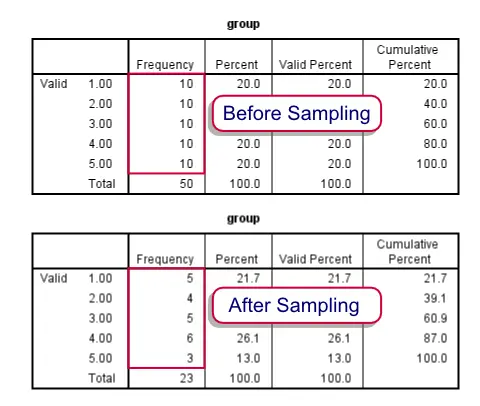
Stratified random sampling is akin to a maestro orchestrating a symphony where each musician represents a distinct group within the population. Just as a conductor deftly balances the timbre and tone of violins, cellos, and trumpets, researchers can utilize this sampling method to capture the plurality of voices within a diverse dataset. It is a technique that elegantly weaves together the intricacies of various subgroups to ensure that each one contributes to the final harmonious composition of findings.
To truly appreciate the nuances of stratified random sampling, it is essential to plunge into its defining characteristics and explore its multifaceted nature. Imagine a vast orchard where apple trees, orange trees, and pear trees stand side by side. Each type of tree represents a stratum within the population. By carefully selecting samples from each stratum, researchers can ensure that every fruit contributes to the overall yield, thereby providing a more representative harvest of the orchard’s bounty.
In the realm of empirical research, a stratified random sample is invaluable. It allows researchers to gain insights from various segments of a population without the risk of bias that may arise when a sample is chosen indiscriminately. For instance, consider a study assessing the effectiveness of a new educational program introduced in a school district. A stratified random sample might involve dividing the student body into strata based on grade level, socioeconomic status, or gender. By ensuring that each subgroup is represented proportionately in the sample, researchers can draw conclusions that reflect the diverse experiences of all students.
The process of creating a stratified random sample begins with the identification of relevant strata, or subgroups. These strata can be defined based on characteristics that are likely to influence the outcome of the research. The next step involves determining the size of the sample that will be drawn from each stratum. This can depend on the size of the subgroup and the total population, ensuring that larger groups are represented by a proportionally greater number of samples.
Take for instance a national health study aimed at understanding dietary habits among different age groups. To employ stratified random sampling, researchers might categorize the population into distinct age strata—children, adolescents, adults, and seniors. From each of these groups, a random sample is extracted, leading to a comprehensive view of dietary patterns that are reflective of the entire population.
Once strata are established and samples are drawn, the procedure does not end there. The allure of stratified random sampling also lies in its potential for increased statistical precision. By minimizing variance within each subgroup while maximizing variability between them, researchers can achieve greater accuracy in their estimates. This approach is akin to a quilt: each patch represents a different stratum, and together they create a fuller, richer narrative when stitched together. Statistical analyses derived from such samples tend to yield results with narrower confidence intervals, which can significantly enhance the validity of conclusions drawn from the data.
One of the unique appeals of stratified random sampling is its versatility. It can be employed across a myriad of fields, from public health and marketing research to social sciences and education. In each case, the stratification process resonates with the specific characteristics of the population being studied. For example, a marketing team exploring consumer behavior might stratify their sample based on demographic factors such as age, income, and geographical location. This enables a nuanced understanding of market preferences across diverse consumer bases, allowing for more targeted and effective marketing strategies.
However, while the merits of stratified random sampling are substantial, it is not without challenges. Defining appropriate strata can be a complex endeavor, requiring a deep understanding of the population and the factors that influence the behavior being studied. Researchers must also grapple with the logistics of collecting samples from multiple strata, which can be resource-intensive and time-consuming.
Moreover, as with any sampling technique, a misstep in the stratification process can lead to sampling error. Strata must be mutually exclusive and collectively exhaustive, meaning that every individual in the population should belong to one stratum only, and all individuals must be classified within the strata. A lack of careful stratification can inadvertently introduce bias, skewing results and undermining the integrity of the research.
In conclusion, stratified random sampling offers a compelling framework for researchers aiming to engage with the complexities of diverse populations. By artfully drafting samples that reflect the multifarious nature of the target population, researchers can produce findings that are not only statistically robust but also deeply enlightening. Whether one envisions it as a symphony of sounds or a patchwork quilt of experiences, stratified random sampling remains a method that celebrates diversity and nuance in research, elevating findings beyond the superficial and into the realm of meaningful insights.