The aftermath of a job interview can often feel like standing at the edge of an expansive abyss, brimming with uncertainty and anxious anticipation. A thank you email, when crafted with intention and sincerity, serves as a bridge across that chasm. It’s not merely a perfunctory gesture; rather, it is a steadfast lifeline connecting you to the hiring manager, reinforcing the rapport established during your conversation. Herein lies the allure of such a communication: its capacity to echo your appreciation while subtly reiterating your qualifications. Let’s delve into the intricate art of crafting an effective thank you email after an interview.
1. The Purpose of a Thank You Email
A thank you email operates on multiple levels. On the initial plane, it signifies your gratitude and politeness, acknowledging the time the interviewer dedicated to assessing your candidacy. Yet, it extends beyond mere etiquette. It offers a golden opportunity to reassert your compatibility with the role and the company’s ethos. Like a polished gemstone reflecting light from multiple facets, your email can illuminate your most salient attributes while glorifying the interview experience.
2. Key Components of a Thank You Email
When crafting a thank you email, several quintessential elements should be intertwined to create a cohesive and impactful message.
a. A Warm Greeting
Start your email with a cordial greeting. Address the interviewer by their name to personalize the communication. A simple “Dear [Interviewer’s Name]” sets an amiable tone right from the start.
b. Expression of Gratitude
The heart of your message should revolve around genuine appreciation. Acknowledge their time and the insights they shared during the interview. This reflects humility while showcasing your understanding of their busy schedule.
c. Specific Reflections
Referencing specific topics discussed during the interview adds a layer of depth to your message. It not only demonstrates active listening but also reinforces your enthusiasm for the position. Consider saying, “I enjoyed our discussion about [specific topic]. It resonated with me, especially in relation to [personal experience or opinion].”
d. Restate Your Qualifications
This segment of the email acts as a gentle reminder of why you are the ideal candidate. Articulate your skills and experiences in a manner tailored to the role, linking back to the conversation you had. Imagine polishing a masterpiece; here, you showcase your attributes which align seamlessly with the organization’s needs.
e. Closing and Call to Action
End your email with a gracious closing statement. Inviting further dialogue by expressing your eagerness to hear back shows confidence and commitment. A simple “I look forward to the possibility of joining your team” sends a powerful, optimistic signal.
3. A Template for Inspiration
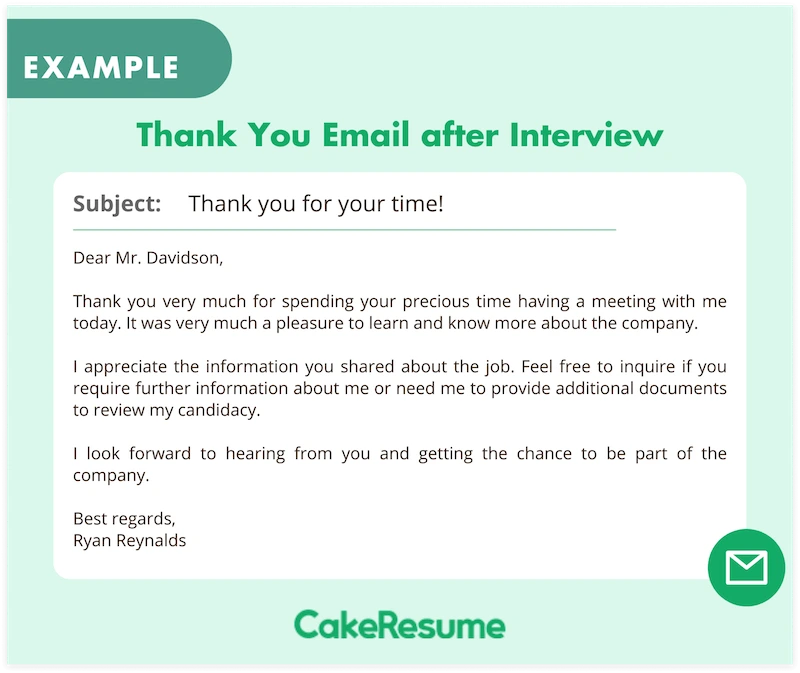
To provide a tangible reference, consider the following template as a guiding structure for your thank you email:
Dear [Interviewer’s Name],
I hope this message finds you well. Thank you for the opportunity to interview for the [Job Title] position at [Company Name] on [Date]. I truly appreciated the time you took to discuss the role and to share insights on the exciting projects your team is undertaking.
I was particularly intrigued by our conversation about [specific topic]. It reinforced my enthusiasm for the position and my belief that my background in [relevant experience] aligns seamlessly with your team’s goals, particularly in the area of [specific example].
If you have any additional questions or need further information from my side, please do not hesitate to ask. I am looking forward to the possibility of contributing to your esteemed team.
Thank you once again for your time and consideration.
Best regards,
[Your Name]
4. Timing is Everything
Sending your thank you email in a timely fashion is critical. It is best to dispatch your correspondence within 24 hours of the interview. Promptness not only accentuates your enthusiasm but also keeps you fresh in the interviewer’s memory. Be mindful of choosing an appropriate time to send the email, avoiding weekends or late night hours, to ensure it reaches them at an opportune moment.
5. The Final Polish
Before hitting send, devote the necessary moments to refine your email. Meticulously proofread for grammatical accuracy and coherence. An error-free email reflects your attention to detail, an essential trait in any professional setting. Also, consider the tone; maintaining a balance between professionalism and warmth is vital, as an overly formal tone may stifle the spirited connection you’ve fostered.
6. Conclusion
An exemplary thank you email is your artistic expression, distilling the essence of the interview into a fitting tribute. It embodies gratitude, reaffirms your qualifications, and cements your image in the mind of the interviewer. Infuse it with genuine sentiment and personalized reflections, transforming an ordinary email into a strategic touchpoint. In the vast landscape of job hunting, this small yet significant message could catalyze your advance across the path to professional fulfillment.