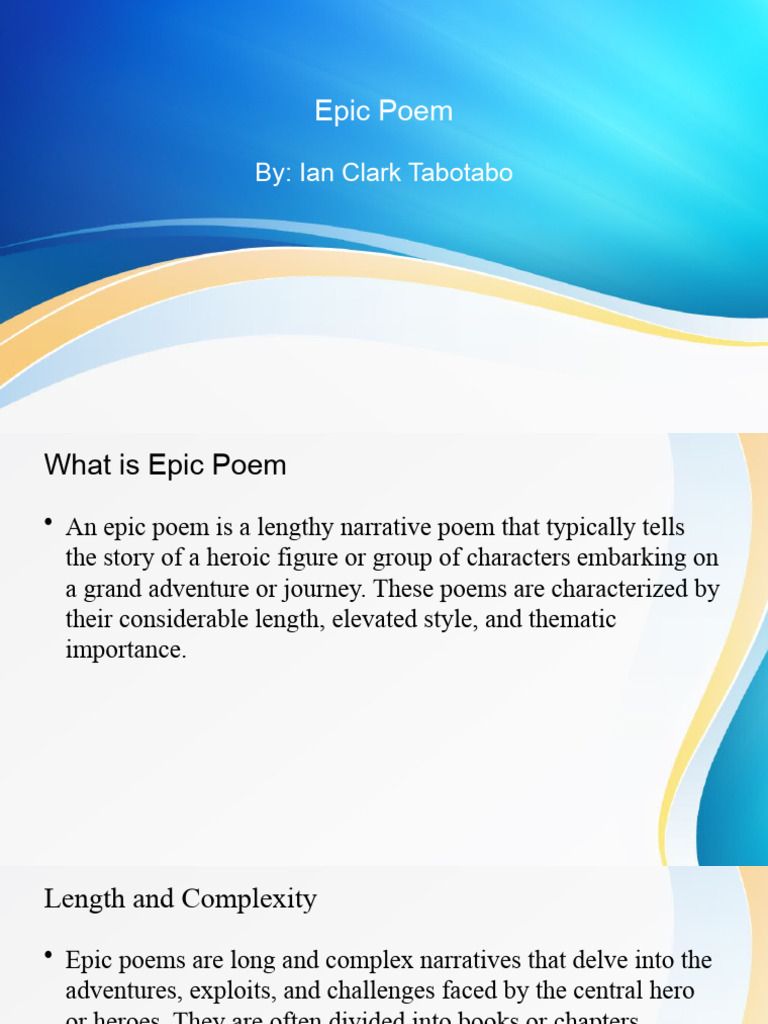
The realm of epic poetry stands as a magnificent testament to human creativity and cultural heritage. These monumental works transcend mere storytelling; they encapsulate the ethos, struggles, and aspirations of civilizations. One striking example that captures the grandeur and intricacy of epic poetry is found in the annals of literature—a timeless narrative that shifts perceptions and stirs curiosity, inviting readers to traverse the landscapes of valor, morality, and the supernatural.
To fully appreciate the richness of an epic poem, one must first understand its defining characteristics. Epic poetry often revolves around a heroic figure or protagonist, whose adventures encapsulate the essence of a culture. These narratives are replete with grand themes such as fate, honor, and the quest for identity. As readers delve into the text, they are not merely passive observers; instead, they are beckoned to engage with the multifaceted layers of meaning woven into each stanza.
Consider, for example, a renowned epic like “The Odyssey.” Composed by the ancient Greek poet Homer, this work epitomizes the quintessence of an epic poem. It tells the tale of Odysseus, a cunning hero who faces insurmountable challenges on his arduous journey home after the Trojan War. His encounters with mythical creatures and divine beings serve not only to entertain but also to provoke contemplation on the nature of human existence.
One of the most striking aspects of “The Odyssey” is its profound exploration of the human condition. Through Odysseus’s trials, readers are invited to ponder profound questions: What does it mean to be resilient in the face of adversity? How do loyalty and love shape our destinies? This introspection is what sets epic poetry apart from other literary forms—it challenges readers to transcend their current worldview and examine the complexities of life.
Moreover, the language employed in epic poetry is characterized by its grandeur and lyrical quality. The use of similes, metaphors, and vivid imagery transports readers to far-off lands and ancient times. Take, for instance, the evocative descriptions of the tumultuous sea that Odysseus must navigate. Likewise, the anthropomorphic representation of the gods, who manipulate fate and intervene in human affairs, adds layers of depth to the narrative, inviting readers to reflect on the interplay between divine providence and personal agency.
Beyond “The Odyssey,” there exists a rich tapestry of epic poems across various cultures, each offering unique insights and perspectives. For instance, the “Epic of Gilgamesh,” hailing from ancient Mesopotamia, recounts the journey of a king driven by a quest for immortality. This narrative delves into themes of friendship, mortality, and the human longing for meaning in an ephemeral existence. As Gilgamesh grapples with his limitations, readers are compelled to confront their own mortality, fostering a sense of empathy and shared humanity.
Central to the allure of epic poetry is its ability to encapsulate historical and cultural narratives. The “Iliad,” also attributed to Homer, paints a vivid picture of the Trojan War, serving as a mirror reflecting the values and ideologies of ancient Greece. Through its valorization of heroism and the tragic consequences of pride, the epic transcends time—its themes resonate with the contemporary struggles for honor and justice.
The significance of epic poetry extends beyond just its content; it lies in its enduring influence on literature and storytelling. Modern writers continue to draw inspiration from the epic form, weaving intricate plots and character arcs that echo the timeless themes of human struggle and triumph. From J.R.R. Tolkien’s “The Lord of the Rings” to Madeline Miller’s “Circe,” the echoes of ancient epics reverberate through contemporary narratives, revealing a shared longing for heroes and quests that illuminate our own lives.
Moreover, the oral tradition from which many epics emerged underscores the communal aspect of storytelling. These poems were not confined to the written word; they existed in the dynamic realm of performance, where bards recited verses to captivated audiences. This interactive exchange fostered a sense of belonging and shared cultural identity, as listeners engaged with the tales that spoke to their shared experiences and aspirations.
As we unpack the layers of epic poetry, we find that it serves as more than just a relic of the past; it acts as a conduit for understanding the complexities of our own lives. The archetypal struggles depicted within these narratives echo through the corridors of time, inviting us to confront our fears, aspirations, and the universal quest for belonging. In this way, epic poetry is both a mirror and a guide—reflecting the intricacies of existence while illuminating paths toward self-discovery.
In conclusion, exploring the exemplars of epic poetry allows for an enriching experience that transcends mere literary appreciation. As readers embark on the journey through “The Odyssey,” “The Epic of Gilgamesh,” and others, they are encouraged to foster a deeper understanding of their historical and cultural contexts. By engaging with these epic narratives, one may indeed find a refreshing shift in perspective, revealing the timeless nature of human experience that unites us all. So, delve deeply into the mesmerizing world of epic poetry and allow your curiosity to be piqued—the tales of yore await your discovery.