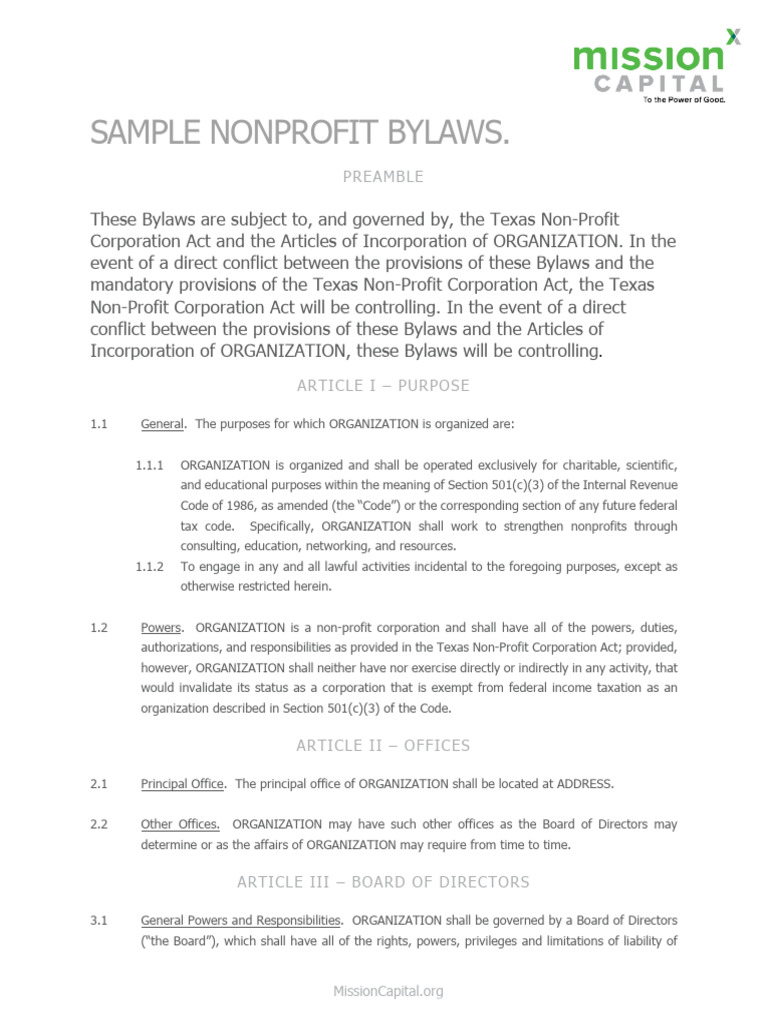
Bylaws serve as the backbone of nonprofit organizations. They delineate the structure, roles, and operational guidelines that govern an organization. This foundational document is essential as it not only provides clarity but also instills a sense of discipline and direction among members. In contemplating the intricacies of nonprofit bylaws, one can’t help but be captivated by their pivotal role in facilitating a harmonious and effective organizational framework.
At their core, bylaws embody a set of rules adopted by an organization to regulate its internal affairs. While these documents might seem dry or bureaucratic at first glance, they hold the power to transform chaotic assemblies into cohesive units with a unifying mission. Herein lies a fascinating paradox: in a realm often associated with altruism and community service, the necessity of structure becomes imperative.
First and foremost, bylaws typically commence with the name of the organization. This seemingly mundane detail carries weight, as it not only identifies the entity but also reflects its ethos and mission. A carefully chosen name can encapsulate the purpose and aspirations of the organization. For instance, a nonprofit dedicated to environmental conservation may choose a name that evokes imagery of nature and sustainability.
Following the naming convention, the bylaws should articulate the purpose of the organization. This section serves as a declaration of intent, providing insight into why the nonprofit exists. It delineates the specific goals that the organization seeks to accomplish, be it advocating for social change, providing educational resources, or assisting vulnerable populations. The elegance of this section lies in its ability to inspire stakeholders and galvanize support.
Equally important are the provisions regarding membership. Bylaws often delineate who is eligible for membership, the rights and responsibilities of members, and the criteria for termination of membership. These rules grant a sense of belonging while setting clear expectations. It can be invigorating to see how these provisions can foster community engagement and establish a shared identity among members.
Next, the governance structure of the nonprofit should be elucidated. This section often describes the composition of the board of directors, detailing the number of directors, their qualifications, and the terms of service. Additionally, it outlines the powers and duties of the board, ensuring that there is a clear delineation of authority. The intricacy of governance is mesmerizing; it holds the potential to either catalyze innovation or stifle it, depending on the caliber of the individuals involved.
Moreover, bylaws frequently stipulate the process for electing board members. This section may address nominations, elections, and what constitutes a quorum. By establishing transparent and equitable processes, nonprofits can instill confidence among members and stakeholders alike. The dance of democracy that plays out in these provisions showcases the profound respect for collective decision-making.
Equally critical is the framework for meetings. Bylaws typically specify the frequency of board meetings, the manner in which meetings are conducted, and provisions for notice. They may also outline the process for emergency meetings, a vital aspect that underscores adaptability in times of crisis. The cadence of meetings, the interplay of dialogue, and the thoroughness of deliberation have an undeniable allure, as they can either electrify the spirit of unity or expose fissures in collaboration.
As the narrative of bylaws unfolds, the nuance of financial oversight emerges. Nonprofits are required to elucidate how funds will be managed, detailing the fiscal year, budgeting processes, and fiscal responsibility. Moreover, audit requirements may be articulated to bolster transparency and accountability. The intricate tapestry of numbers and financial systems embodies the essence of trust; stakeholders yearn for assurance that their contributions are stewarded with caution and integrity.
Another salient aspect of nonprofit bylaws pertains to amendments. The ability to evolve is fundamental to any organization, particularly in a world that is in constant flux. Bylaws should clarify how amendments can be proposed, debated, and ratified. This provision not only reflects the organization’s adaptability but also fosters a culture of openness and responsiveness to the community it serves.
Dispute resolution mechanisms also deserve mention. Having a clearly defined process for resolving conflicts among members or board members is a hallmark of strong governance. These provisions can prevent misunderstandings from escalating into detrimental divisions. The very existence of such mechanisms underscores a commitment to harmony, even amidst discord—an admirable quality in any organization.
In conclusion, despite their seemingly esoteric nature, nonprofit bylaws are anything but mundane. They serve as the sinew that binds an organization together, harmonizing individual passions into a collective mission. The meticulous crafting of each section represents not just adherence to legal obligations, but a deep-seated respect for the values of collaboration, transparency, and accountability. The true beauty of nonprofit bylaws lies in their potential to transform a group of individuals into a synergistic force for good, illuminating the path toward a better society.
In essence, understanding the intricate architecture of nonprofit bylaws unveils the profound responsibility underpinning charitable endeavors. Every clause, every provision, bears the weight of purpose, inviting healthcare providers to feed the hungry, educators to uplift the marginalized, and environmentalists to safeguard our planet. Through this lens, one truly begins to appreciate the reverberating significance of nonprofit bylaws in the grand tapestry of societal impact.