
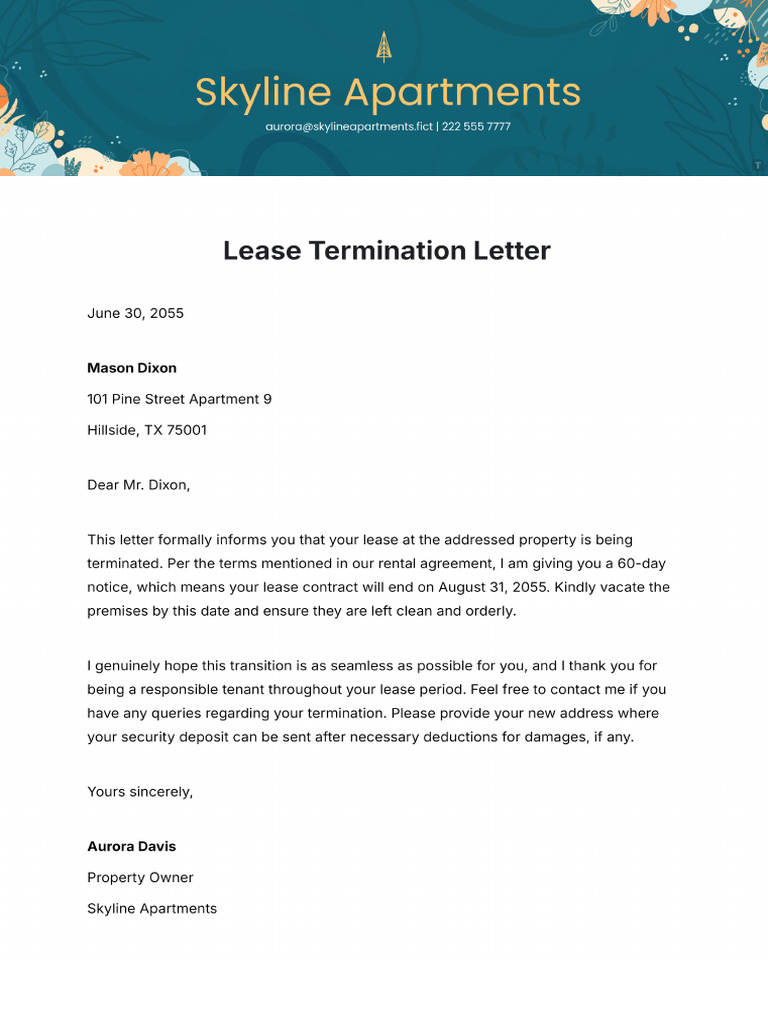
A lease termination letter is a formal document used by tenants or landlords to communicate the intent to end a lease agreement. The nuances of such a letter can vary depending on the circumstances surrounding the lease termination—whether it is mutual, due to breach of contract, or other reasons. This guide explores various types of lease termination letters, their components, and practical tips for crafting an effective letter.
Understanding the importance of a lease termination letter is essential. Not only does it serve as official documentation, but it also lays the groundwork for a smooth transition for both parties involved. Whether you are a tenant or a landlord, knowing how to write an appropriate lease termination letter can prevent potential legal disputes and misunderstandings.
1. Types of Lease Termination Letters
The primary types of lease termination letters cater to different contexts:
- Standard Tenant Lease Termination Letter: This is typically used by tenants who wish to notify their landlord of their decision to vacate the premises at the end of the lease term or before it expires.
- Landlord Lease Termination Letter: When a landlord needs to end a lease for reasons such as non-payment of rent, property damage, or other breaches of lease agreements, they can issue this type of letter.
- Mutual Lease Termination Agreement: In some cases, both the tenant and landlord may mutually agree to terminate the lease due to various reasons, such as job relocation or personal circumstances. A mutual termination letter formalizes this agreement.
- Early Termination Letter: Tenants may encounter situations necessitating an early exit from their lease, such as family emergencies or health concerns. This letter outlines the intent and reasons for leaving before the lease’s stipulated end date.
2. Essential Components of a Lease Termination Letter
Regardless of the specific type of lease termination letter, certain essential components should always be included to make the letter effective and legally acceptable:
- Date: Start with the date on which the letter is written. This ensures a clear timeline regarding when the notice was given.
- Recipient Information: Include the recipient’s full name and address. If you’re a tenant, this would be your landlord’s information. If you’re a landlord, include your tenant’s details.
- Subject Line: A concise subject line clarifies the purpose of the letter. For instance, “Notice of Lease Termination” serves well in most contexts.
- Body of the Letter: This section should clearly articulate the intent to terminate the lease. Mention the specific lease terms, the reason for termination (if necessary), and any other relevant details, like the intended move-out date.
- Final Remarks: Encourage a mutual understanding, express gratitude, and mention intentions for the return of the security deposit if applicable. This section can help preserve a positive relationship.
- Signature: Conclude with your handwritten signature (if printed) and your typed name.
3. Sample Templates
Providing examples illustrates how to structure your lease termination letter effectively. Here are two sample templates suited for varied scenarios:
Template for a Tenant Lease Termination Letter
[Your Name]
[Your Address]
[City, State, Zip Code]
[Email Address]
[Phone Number]

[Date]

[Landlord’s Name]
[Landlord’s Address]
[City, State, Zip Code]

Subject: Notice of Lease Termination

Dear [Landlord’s Name],

I am writing to formally announce my intent to terminate my lease for the apartment located at [Apartment Address], effective [Termination Date]. As per the requirements outlined in our lease agreement, I am providing [Notice Period, e.g., 30 days] notice prior to my intended move-out date.

The decision to vacate stems from personal circumstances that necessitate this transition. I will ensure that the apartment is left in good condition for your next tenant and will be available for any final inspections.

Thank you for the understanding and support during my tenancy. I look forward to the return of my security deposit and wish you continued success with the property.

Sincerely,
[Your Signature]
[Your Typed Name]
Template for a Landlord Lease Termination Letter
[Landlord’s Name]
[Landlord’s Address]
[City, State, Zip Code]
[Email Address]
[Phone Number]

[Date]

[Tenant’s Name]
[Tenant’s Address]
[City, State, Zip Code]

Subject: Notice of Lease Termination

Dear [Tenant’s Name],

This letter serves as formal notice of the termination of your lease for the property at [Property Address] due to [Reason, such as failure to pay rent or property damage]. The lease will officially terminate on [Termination Date], in accordance with our lease agreement and state law requirements.

Please be advised that you must vacate the premises by this date. We will schedule a final inspection of the property at your convenience. Should you return the keys and follow all move-out procedures, you will be entitled to the refund of your security deposit as per our agreement.

Should you have any questions regarding this notice or your upcoming responsibilities, please feel free to reach out directly at [Contact Information].

Best regards,
[Your Signature]
[Your Typed Name]
4. Practical Tips for Writing Your Letter
Crafting a lease termination letter may seem straightforward, yet certain tips can enhance its clarity and effectiveness:
- Be Clear and Concise: Aim for clarity in your writing. Avoid verbose language and stick to the point.
- Follow Legal Guidelines: Familiarize yourself with local laws regarding lease termination to ensure compliance throughout the process.
- Maintain Professionalism: Regardless of the situation, keep a professional tone. You may need to interact with your landlord or tenant again in the future.
- Use Formal Language: Opt for formal language to underline the seriousness of the communication.
- Proofread: Always proofread your letter for typographical errors and clarity before sending it.
Conclusion
In summation, a well-structured lease termination letter is indispensable for both tenants and landlords, facilitating a seamless conclusion to the renting experience. By understanding the types of letters, incorporating key components, utilizing effective templates, and adhering to best practices, individuals can navigate the often-complicated landscape of lease agreements with confidence. Clear communication fosters goodwill, ensuring a smoother transition for all parties involved.













