In a world brimming with uncertainty, the act of giving transcends mere obligation; it embodies a profound commitment to uplift others. A letter of appreciation for a donation serves not merely as a formality but as an ethereal thread binding grateful hearts. Crafting such letters requires a nuanced understanding of gratitude’s transformative nature, ensuring that every word resonates with sincerity and warmth. This article explores the intricacies of composing an exemplary letter of appreciation, providing a template to express profound thanks while simultaneously inviting further engagement.
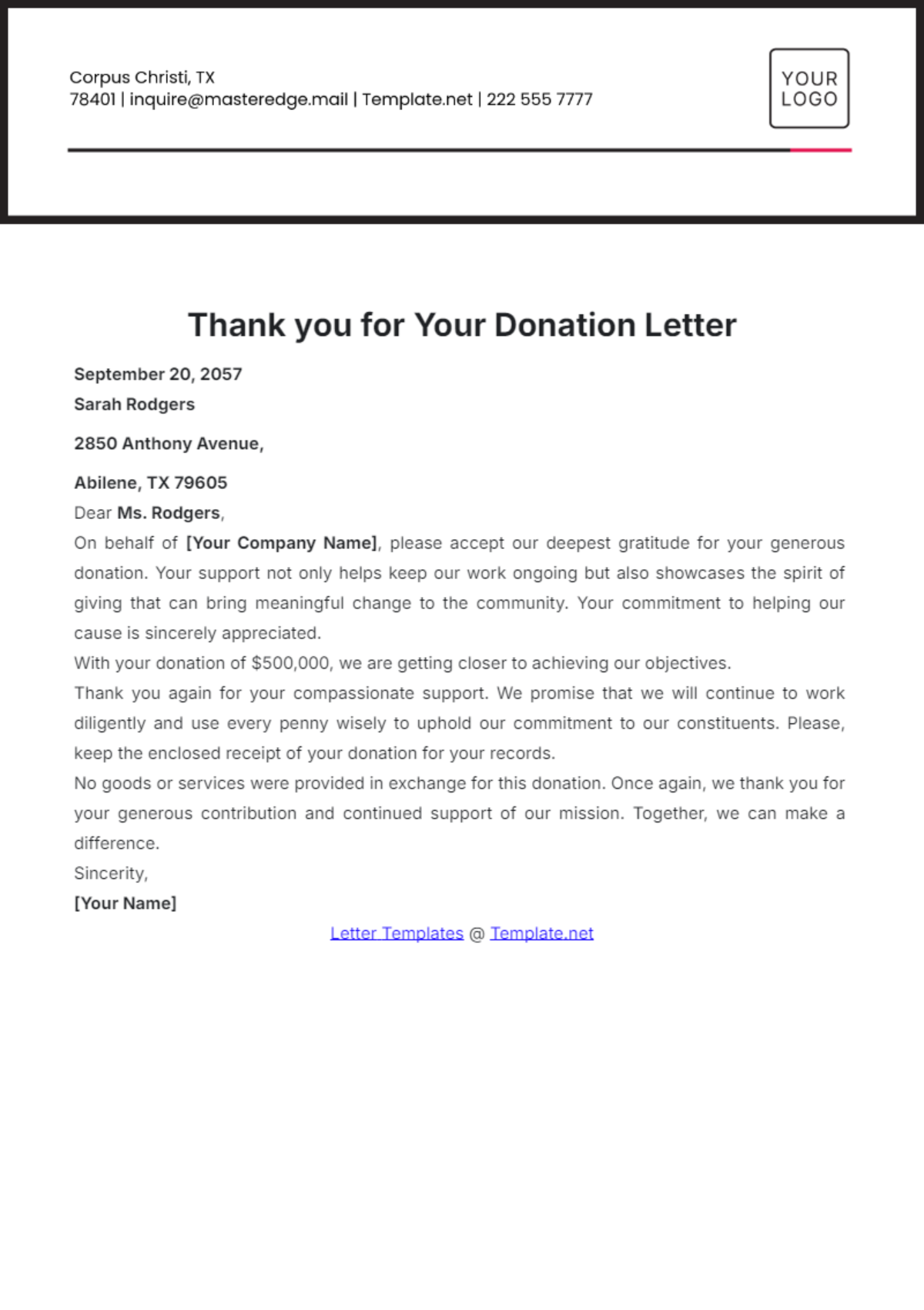
When penning a letter of appreciation for a donation, it is imperative to begin with an authentic expression of gratitude. The salutation must establish a personal connection. Addressing the donor by name rather than a generic title elevates the tone, setting a heartfelt foundation. For instance, starting with “Dear [Donor’s Name],” not only personalizes the message but also acknowledges the individual’s unique contribution.
Subsequently, weave a tapestry of appreciation that delineates the impact of their generosity. It is essential to specify what the donation facilitated. Instead of a vague “thank you for your contribution,” elaborate on how their support catalyzed change. For example, “Your generous contribution of $500 has allowed us to provide essential supplies for families in need.” Such detail enlivens the message, showcasing the tangible difference the donor’s generosity has made.
A detailed explanation can further deepen engagement. Providing insight into the overarching mission of the organization or cause paves the way for the donor to understand the broader implications of their gift. You might write, “Thanks to your support, we were able to distribute warm meals and blankets to over 300 families affected by the recent storm.” By connecting the donor’s gift to real-world consequences, you elevate their sense of purpose and impact.
In the body of the letter, consider incorporating a narrative. A short anecdote about someone who benefited from their donation can humanize the request for support. For instance, sharing a vivid story about a family that received assistance, saying, “The Johnsons, who lost everything in the flood, were able to rebuild their lives thanks to generous supporters like you,” not only personalizes the letter but also immerses the reader in a story, piquing curiosity and stirring empathy.
Additionally, be sure to emphasize the relationship between the organization and the donor. Highlight their previous contributions, if applicable, to foster a sense of continuity and belonging. Mentioning a past donation can evoke nostalgia and reinforce the donor’s ongoing commitment. For instance, “We are incredibly grateful for your past support, allowing us to serve our community effectively.” This acknowledgment fosters loyalty and encourages ongoing support, creating a communal sense of purpose that transcends individual contributions.
Inviting the donor to a future event or engagement can invigorate the relationship. Instead of merely thanking them and closing, consider extending an invitation or a challenge. This could take the form of, “We would love for you to join us at our annual gala, where your contributions will be celebrated and the community will gather to showcase the impact of generosity.” Such invitations build anticipation and pique curiosity about future endeavors, solidifying the foundation for continued collaboration.
It’s also crucial to ensure that the closing remarks encapsulate an overarching sense of hope and possibility. Rather than a generic sign-off, using phrases like “Together, we can create a brighter future” reinforces the notion of unity and shared purpose. This strengthens the emotional resonance of the letter, urging the donor to envisage how their ongoing support can be integral to future success.
Before concluding, a final flourish should seal the letter with a touch of personalization. Handwriting the signature (or adding a scanned signature) adds an intimate touch. You might also consider adding a postscript that includes a forthcoming project or initiative, igniting interest and prompting the donor to engage further. A line such as, “P.S. We’re excited to launch our new initiative next month—stay tuned!” can serve as a subtle nudge towards sustained involvement.
Overall, a letter of appreciation for a donation should transcend the ordinary. It must capture both the essence of gratitude and the vibrant pulse of hope instilled by the donor’s contributions. This endeavor is about more than reporting—a true expression of appreciation can evoke curiosity about ongoing efforts and deepen the relationship between donor and organization.
By following this structure, you can craft a letter that not only thanks the donor but also inspires them to envision their continuing impact. Through detailed expressions of gratitude, narrative engagement, and an open invitation for future collaboration, a donation appreciation letter can become a powerful tool—a catalyst for ongoing generosity and commitment to shared ideals.