
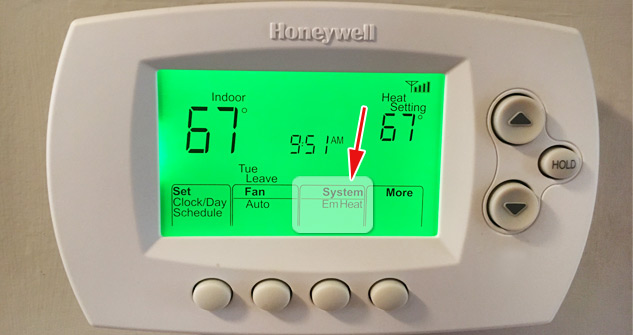
When the chilly embrace of winter descends upon us, the sanctity of a warm home becomes paramount. As you gaze upon your thermostat, you may encounter the enigmatic letters “EM Heat.” But what do these symbols signify in the broader landscape of home heating? Understanding their meaning could not only shift your perspective on your heating system but also enhance your comfort during the frosty months ahead.
To appreciate the importance of EM Heat, we must first delve into the core functionality of a thermostat. In essence, a thermostat serves as the bridge between you and your heating system. It regulates the indoor temperature, ensuring that your home remains a sanctuary against the biting winds outside. Most modern thermostats offer various settings, including the default “Heat” and the often-misunderstood “EM Heat.”
So, what exactly is the distinction? “Heat” typically refers to the normal operation of a heat pump. When you set your thermostat to this mode, the system works in tandem with the outdoor unit, extracting warmth from the outside air, even in sub-zero temperatures, to maintain a cozy atmosphere indoors. However, there are instances when a heat pump requires additional assistance, and that’s where EM Heat enters the fray.
EM Heat stands for “Emergency Heat.” This setting activates your home’s secondary heating source, most commonly electric resistance heating, to provide an immediate boost of warmth. Essentially, when the compressor is unable to extract enough heat from the outside air—or when the outdoor temperature plummets to levels that render it ineffective—EM Heat takes the reins. It is a lifeline for comfort, ensuring that you don’t find yourself shivering in your own living room.
In terms of operation, switching to EM Heat represents a pivotal shift in your heating strategy. While the standard heat mode is generally more energy-efficient, the emergency setting consumes more energy and can significantly impact your utility bills. Thus, it should only be employed during extreme conditions, such as subpar outdoor temperatures or when your primary heating system is malfunctioning.
When you activate EM Heat, it’s crucial to monitor your environment collegially. Your thermostat won’t provide a heat pump’s efficient operation at this point; instead, you’ll rely on the raw power of electric resistance heating. It is vital to comprehend that using this mode frequently can be financially burdensome. Understanding when and how to use EM Heat is essential for optimal home management.
But when should you consider switching to EM Heat? Here are a few scenarios to help guide your decision:
- Outdoor Temperature Drops: If the temperature falls below 30°F, the efficacy of a heat pump diminishes significantly, prompting a need for the more robust EM Heat. When severe cold sets in, you’ll want to be proactive in switching to this alternative.
- Heater Malfunction: If your primary heating system is malfunctioning or has been compromised, EM Heat assures immediate warmth. This decisive action can prevent stress and discomfort in emergencies.
- Rapid Temperature Changes: A sudden temperature drop—say, after a storm—idealizes the necessity of EM Heat to quickly stabilize your home environment.
A common fallacy is to assume that EM Heat is a feature that can be relied upon indiscriminately. However, it is vital to internalize the implications of overusing this mode. It requires an acute awareness of when to toggle its activation. An important question arises: could this reliance indicate an underlying issue with your primary heating system? Or is it merely a temporary solution for an unusually frigid day?
Moreover, being cognizant of any strange noises or erratic behavior from your heating system when predominantly relying on EM Heat may suggest a need for professional evaluation. Regular maintenance checks can foster a long-lasting relationship with your heating systems and avert emergency heat mode activation.
In vanquishing misconceptions, it becomes apparent that EM Heat is not a magical panacea for cold but rather a steadfast shield against stark, arctic winds. By framing the EM Heat setting as an auxiliary support, you can equip yourself with the knowledge necessary to optimize your home heating plan rather than inadvertently squandering resources.
In conclusion, the EM Heat setting is a crucial aspect of modern thermostats that deserves your attention. While its purpose is to provide immediate comfort, understanding when and how to utilize this feature can dramatically alter your home heating dynamics. Grasp this perspective, and you may find yourself not only more comfortable but also financially savvy in the face of winter’s challenges. Adaptation and awareness are your best allies when navigating the chilling realities of the season.












