
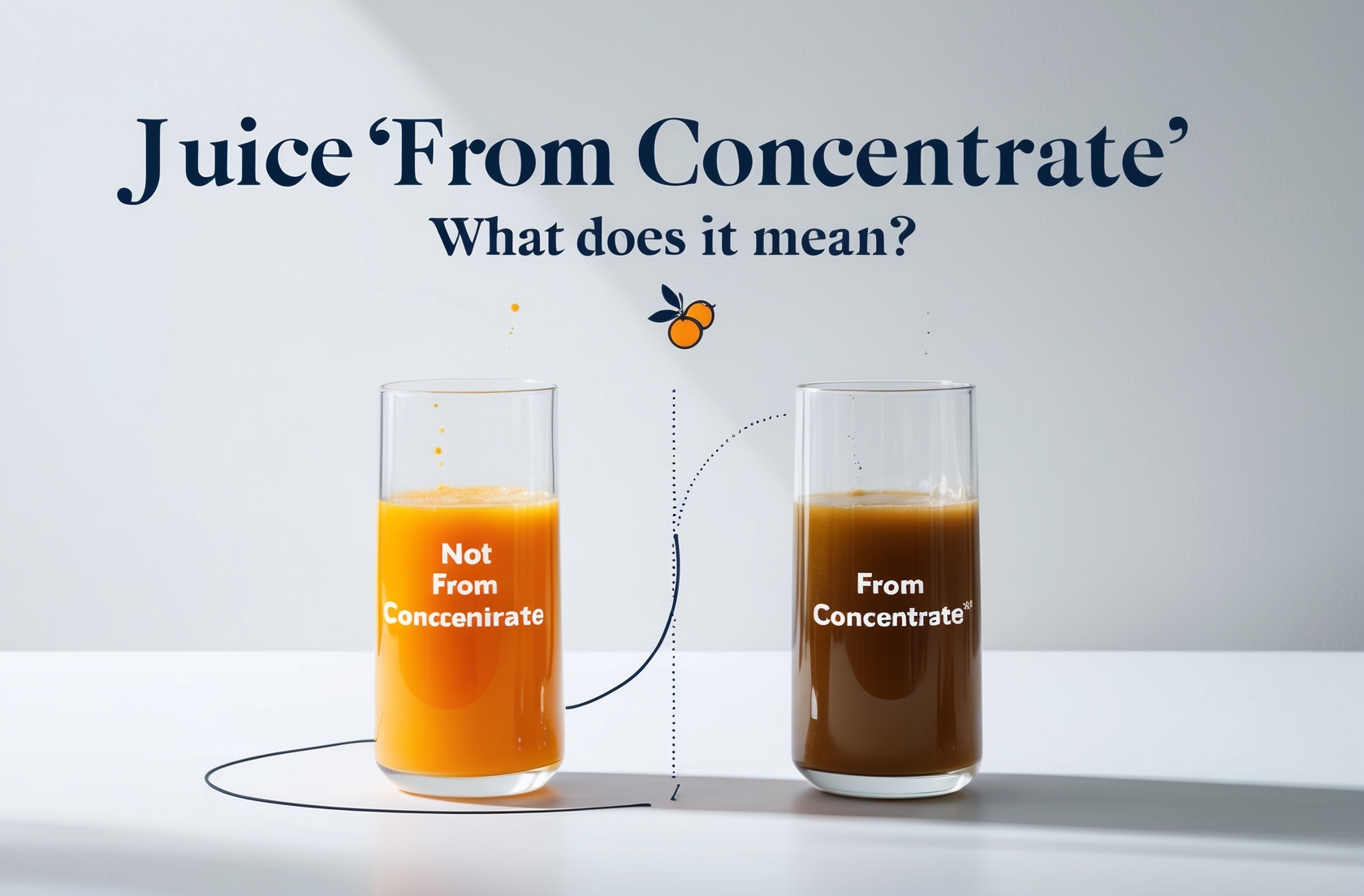
When you flip a juice carton, there’s a world of jargon, ingredients, and origin stories waiting to unfold within those colorful labels. One term that often sparks curiosity is “Not From Concentrate.” Like a tantalizing whisper, it hints at authenticity and quality in a beverage that is often seen as simple and everyday. But what precisely does not from concentrate mean when we talk about juice? Let’s embark on an exploration of this intriguing phrase and its implications in the realm of beverages.
First, understanding the root of the term “concentrate” is essential. Juice concentrate is the result of an intricate process that involves extracting juice from fruits, followed by evaporation to remove excess water. This concentrated juice can sustain its flavor and nutrients while becoming denser—much like distilling a fine essence of a flower to capture its soul in a vial. However, this method, while efficient, often masks the true taste and essence of the fruit.
In contrast, juice labeled as “Not From Concentrate” is akin to a freshly picked fruit, bursting with the vividness of a sun-kissed orchard. This type of juice suggests that the liquid inside the carton has been crafted from whole, fresh fruits that have not undergone the evanescent process of concentration. Instead, the fruits are juiced immediately after they are harvested, retaining much of their original profile, both in flavor and nutritional content. This hints at the practice of preserving the vitality of the fruit, allowing it to speak for itself in an unadulterated form.
Let’s delve deeper into the implications of this distinction. When you see “Not From Concentrate” on a juice label, you are often promised a product that is closer to nature. This distinction elevates the juice into a realm of superior taste, where freshness reigns supreme. It conjures imagery of a summer afternoon where the scent of ripe oranges envelops the air, and one can imagine biting into the fruit, juice running down the chin. It evokes the very essence of a bountiful harvest, captured in your glass.
Besides the sensory experience, there are also considerations related to nutrition. Juice that is not from concentrate is often perceived as healthier. When fresh fruit juice is extracted, it typically retains more vitamins and minerals, many of which can dissipate in the concentration process. Vitamin C, for instance, is notoriously sensitive to heat and light; hence, the intricate dance between processing and preservation is crucial. Drinking juice that has not been concentrated can oftentimes feel like a rejuvenating tonic, imbued with vitality and natural goodness.
Yet, while the distinction between concentrate and not from concentrate sparks a renaissance of flavors, it also brings with it the realities of production and cost. Freshly squeezed juice requires timely harvesting and rapid processing, and logistics come into play—the need for refrigeration, transportation, and higher quality standards can make this option pricier. As consumers, we are often faced with the trade-off between affordability and authenticity. The deeper pockets might seek out that irresistible freshness, while others may settle for the convenience and cost-effectiveness of concentrate options.
Furthermore, the world of juice labeling is not as straightforward as it may appear at first glance. The term “Not From Concentrate” can sometimes serve as a marketing tool that begs investigation. For example, one might assume that this label guarantees 100% pure juice. In reality, some juices labeled as “Not From Concentrate” might still contain added sugars, artificial flavors, or preservatives to enhance the consumer experience. Thus, the savvy consumer should wield their investigative prowess, examining ingredient lists with a discerning eye. The journey through grocery aisles can be likened to traversing a maze, requiring awareness to navigate successfully.
In addition to taste and health attributes, the environment bears witness to the production methods of juice as well. The contrast between from concentrate and not from concentrate production methods reveals a tapestry of environmental impacts. Fresh juice, with its lofty requirements for freshness, may demand more resources in transport and refrigeration. In an age where sustainability reigns supreme, consumers increasingly weigh these considerations when choosing their beverages. This leads us to ponder how our choices manifest in the world around us.
As you stand in the juice aisle, pondering which label to choose, remember that each carton tells a story. The distinction between concentrate and not from concentrate is about more than just water content; it embodies the essence of fruit, human labor, and the balance between nature’s bounty and our thirst. One might choose to savor the more authentic flavors of not from concentrate juice, embarking on a sensory adventure each time they pour a glass. This choice becomes a ritual, a celebration of taste, a daily return to nature’s harvest.
In conclusion, the phrase “Not From Concentrate” resonates with a connotation of purity and freshness. It embodies an authentic experience rooted in the fruit’s natural state, promising a more vibrant, nutrient-rich treat. As consumers, the journey through labels offers a profound reminder of our connection to food, reflecting our values and priorities in the choices we make every day. Next time you indulge in a refreshing glass of juice, take a moment to appreciate not just the flavor but the intricate narrative that lies within each sip.












