
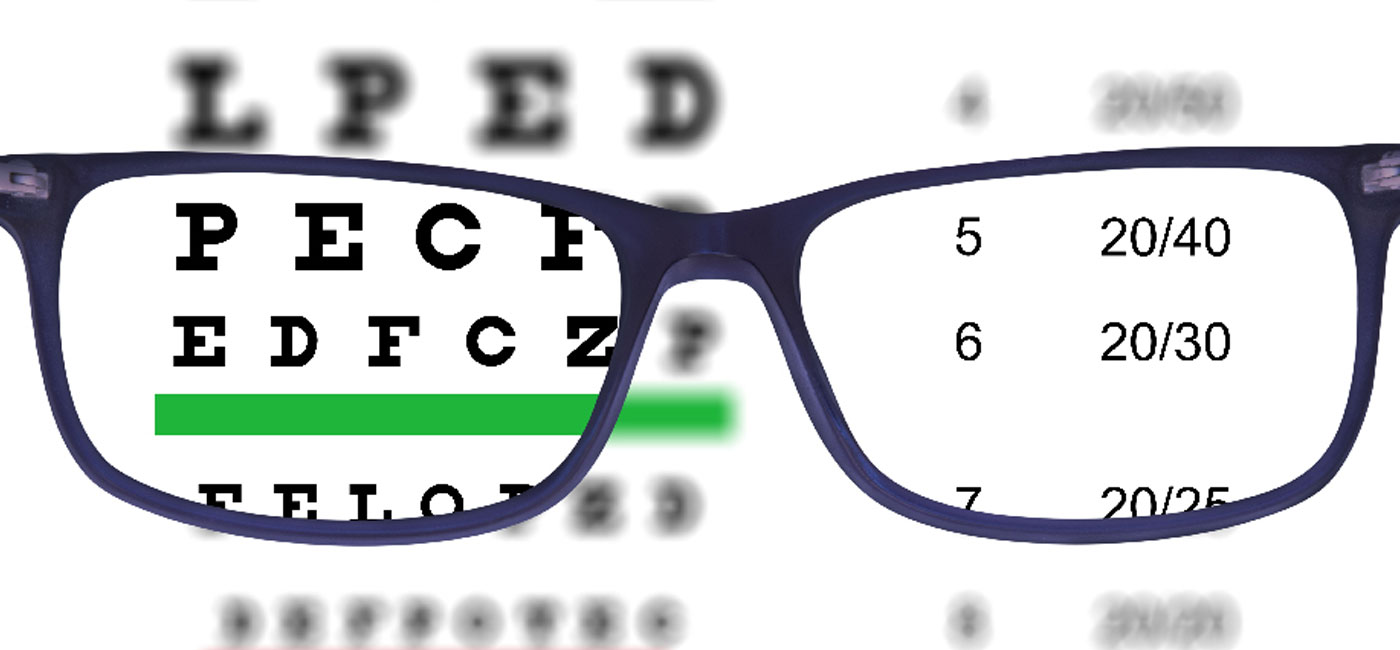
Have you ever gazed up at the night sky, pondering the twinkle of distant stars, only to wonder if your vision could truly discern their beauty? Or perhaps you squint at the small print on a menu, contemplating what it really means to have ‘perfect’ vision? Enter the term ’20/20 -2 vision,’ a classification that can leave many wondering exactly what it signifies. Contrary to the often implied notion of flawless eyesight, this nuanced vision classification reveals a tapestry of visual acuity that invites exploration.
To embark upon this journey, it’s essential to unravel the components of vision measurements. The term ’20/20′ serves as a benchmark, denoting the clarity or sharpness of one’s vision compared to the average standard at a distance of 20 feet. When someone is said to have 20/20 vision, it indicates they can see what an average person sees at that distance. But what about the elusive ‘-2’? What does it impart on our understanding of visual capabilities?
When you see the designation of 20/20 -2, it refers to a slightly less-than-ideal visual acuity. Specifically, -2 signifies that the individual is capable of seeing at 20 feet what an unimpaired person typically sees at 40 feet. Thus, while they can still engage with the world around them, there exists a subtle challenge; distant objects may appear hazy or blurred, requiring corrective measures for the most optimal viewing experience.
So, what implications does this have on daily life? The effect of having 20/20 -2 vision can be quite profound. One could liken it to wearing slightly foggy glasses: you can see shapes and colors, but finer details may remain elusive. This visual condition can affect numerous spheres of life, from interpreting the fine print on legal documents to recognizing familiar faces across a crowded room. Essentially, navigating life with 20/20 -2 vision prompts one to make small adjustments that can have larger implications.
In order to grasp the reality of living with this level of vision, one must consider the various facets that influence visual acuity. For instance, refractive errors such as myopia (nearsightedness) or hyperopia (farsightedness) can contribute to a diminished visual experience. One might find themselves grappling with terms that define their ocular health, ultimately leading to a need for corrective lenses or procedures. The relationship between refractive errors and visual clarity illustrates the complexity of human perception and the spectacular design of the eye.
But why does sharper vision hold such importance in our society? Beyond mere vanity, clearer vision offers a multitude of practical benefits. Picture, if you will, a spirited game of basketball; players depend on acute vision to execute precise passes and make split-second decisions. For professionals such as surgeons or pilots, exceptional eyesight is integral to ensuring safety and efficacy in their duties. So, while 20/20 -2 vision may not be synonymous with perfection, it invites contemplation of how we navigate the visual world.
This leads us to consider the ramifications of visual impairments on an even broader scale. In a world increasingly augmented by technology, where screens dominate our landscapes, one must remain cognizant of how our eyesight interacts with these advancements. Are we inadvertently diminishing our own visual acuity through excessive screen time? The challenge becomes more pronounced when one factors in the emergence of digital eye strain, a modern malady that complicates how we interface with technology while managing existing vision challenges.
As we delve into preventative measures, the importance of regular eye examinations cannot be overstated. Such assessments not only help in diagnosing the extent of vision impairment but also offer insights into potential underlying conditions that could threaten visual health. Armed with a deeper awareness of one’s ocular condition, individuals can take proactive steps—be it through lifestyle adjustments, the adoption of protective eyewear, or seeking advanced vision correction options such as LASIK surgery or specialty contact lenses.
It is also heartening to realize that, in many cases, there is hope for improvement. The burgeoning field of optometry continually provides innovative solutions to assist those who possess 20/20 -2 vision in reclaiming visual clarity. Whether through advancements in lens technology or comprehensive eye care approaches that emphasize holistic health, the options available may indeed enrich one’s quality of life.
In conclusion, as you embark on your quest to understand the connotations of 20/20 -2 vision, consider not just its implications but its significance within the broader context of how we perceive the world. Does your vision define your reality, or does it merely serve as a passageway to experience all that life has to offer? In grappling with these questions, we find that the essence of sight extends beyond mere clarity. Rather, it encompasses how we engage with our surroundings, connect with others, and ultimately discern the beauty in the small wonders of everyday existence.












