
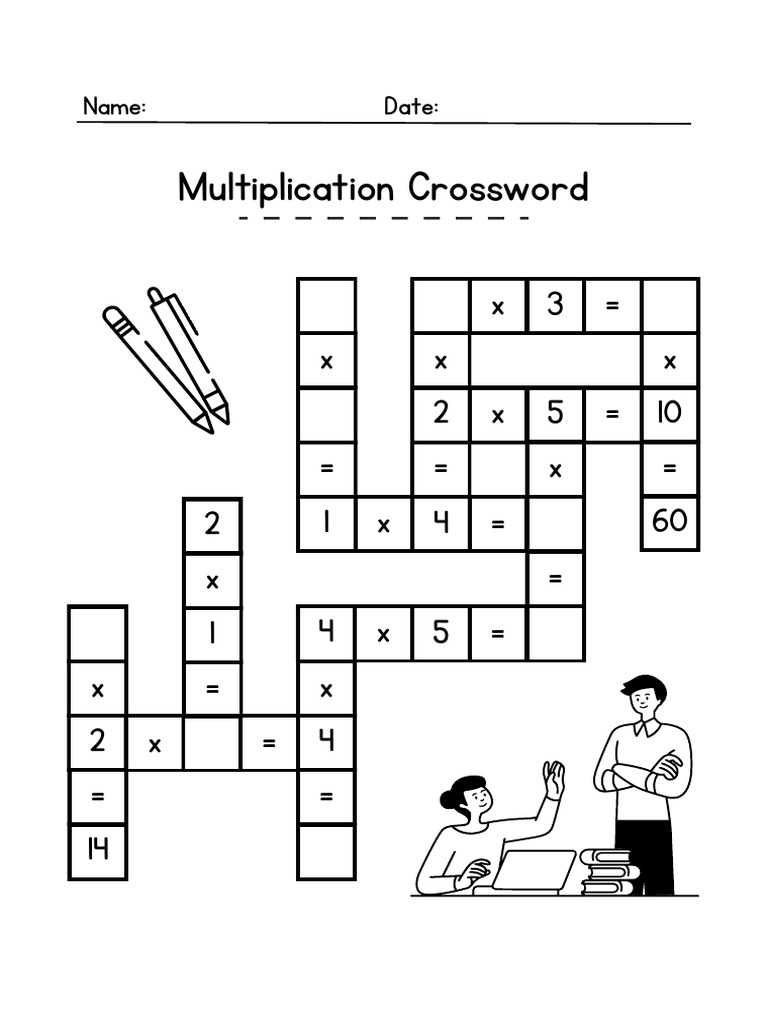
Crossword puzzles have long been a staple in the realm of recreational linguistics, capturing the imaginations of solvers across generations. Among the myriad of clues and terminologies, the phrase “when doubled” often comes into play, presenting a specific type of linguistic challenge that can both intrigue and perplex. In this exploration, we delve into the multifaceted implications of this phrase, examining its various contexts, significance, and the clever ways in which it manifests itself in crossword puzzles.
At its core, “when doubled” generally refers to the manipulation of letters or syllables within a word, providing a thematic twist that testers of language must adeptly navigate. This phrase can encompass a variety of interpretations, ultimately leading to distinct approaches in deciphering clues. Herein, we will cast a light on the primary thematic elements and content types associated with “when doubled” in crossword puzzles.
To understand the phrase’s significance, one must first consider its function within the puzzle. Typically, clues that utilize “when doubled” require the solver to either repeat a letter, word, or phrase to arrive at the correct answer. This repetition may serve as a linguistic ornamentation, transforming otherwise mundane phrases into clever, thought-provoking replies. A classic instance might involve a letter that must be repeated to complete the grid; for example, the clue “Direction when doubled” could lead to the answer “northnorth” if a “n” is doubled.
Moreover, “when doubled” can lead solvers toward homophonic associations or puns. Consider the phrase “A horse’s gait when doubled,” which could yield “trot” transforming into “trot-trot.” Here, the solver is required to think laterally and embrace the playful nature of language. In such cases, the puzzle becomes not only a test of vocabulary but also a game of wits where one’s ingenuity and creative thinking are put to the test.
The presence of “when doubled” extends beyond mere definition; it also introduces a level of wordplay that is integral to crossword construction. This phrase encourages constructors to engage their imaginations, creating clues that embody wit, mystique, and often an element of surprise. An example might be a clue that guides solvers to deduce a seven-letter word whose final three letters are a repeated version of a three-letter component—think “a period of seven days when doubled,” leading solvers to the answer “weekweek.” Such clever constructions enliven the puzzle and stimulate the solver’s cognitive faculties.
In terms of content format, clues involving “when doubled” often intersect with other categories within crossword artistry. Thematic puzzles may feature this phrase spectacularly, forming pivot points for interrelated answers—a clever crossover that enriches the entire puzzle-solving experience. Expect to see a range of constructs, from traditional fill-ins to expansive themes that revolve around doubling, creating a synthetic tapestry of satisfying challenges.
The clues categorized under “when doubled” can also disrupt the linearity of parsing answers due to their inherent complexity. Some puzzles may require solvers to utilize a variety of solving tactics—from anagramming to phonetics—thereby engaging different aspects of their intellect. For instance, consider a scenario where the clue reads “Repeats as a greeting when doubled.” Here, the solver must arrive at “hellohello,” exploring the redundancy for its playful resonance.
Nonetheless, while “when doubled” reflects an electrifying aspect of crossword puzzles, its interpretation can vary significantly depending on the skill level of the solver. For novices, such increased demands may prove daunting, necessitating an attitude of resilience and creativity. Intermediate solvers may relish these clues as opportunities to showcase their developing prowess. Ultimately, seasoned enthusiasts often regard prompts of this nature as a delightful challenge, welcoming the embrace of unusual vocabulary and imaginative associations.
Another interesting layer to appreciate within this category pertains to the contextual clues that often accompany “when doubled.” Puzzles frequently allude to cultural references, idioms, and common vernacular, thereby enriching the interactions between solvers and the puzzles they tackle. For instance, a clue stating “Twirling move when doubled” may direct solvers to integrate the familiar “spin” as part of their answer, leading to “spinspin.” It highlights how the puzzle transforms ordinary speech into a linguistic performance.
Savvy crossword enthusiasts may also notice that clues involving “when doubled” may appear with varying levels of difficulty and obscurity. With each layer of complexity, solvers are urged to employ deductive reasoning or context clues to unlock the intended meaning. What began as a straightforward term can morph into an elaborate riddle, increasing the enjoyment for those adept enough to embrace the challenge.
As crossword puzzles continue to evolve, the incorporation of phrases such as “when doubled” represents just one facet of the intricate tapestry that defines this beloved pastime. The collaborative affair between constructors and solvers engenders a dynamic ecosystem where creativity flourishes, language flourishes, and the joy of discovery unfolds with every clue. Navigating the realm of crossword puzzles invites both reflection and exuberant engagement as individuals find flair in the nuances of language.
Within this linguistic labyrinth, “when doubled” serves as a compelling reminder that language is not just a means of communication, but a canvas for creativity, challenge, and explication of one’s cognitive abilities. Thus, the next time you encounter this phrase in a crossword puzzle, prepare to embrace the intricacies and marvel at how doubling can transform the mundane into the magnificent.












