In the enchanting world of fragrances, the terminology used can often be perplexing for both novices and enthusiasts alike. Among these terms, EDP stands out prominently, but what does it really signify in the context of perfume? This article delves into the nuances of EDP, uncovers its role among various fragrance strengths, and sheds light on the exquisite array of scents available to perfume aficionados.
Understanding Fragrance Concentrations
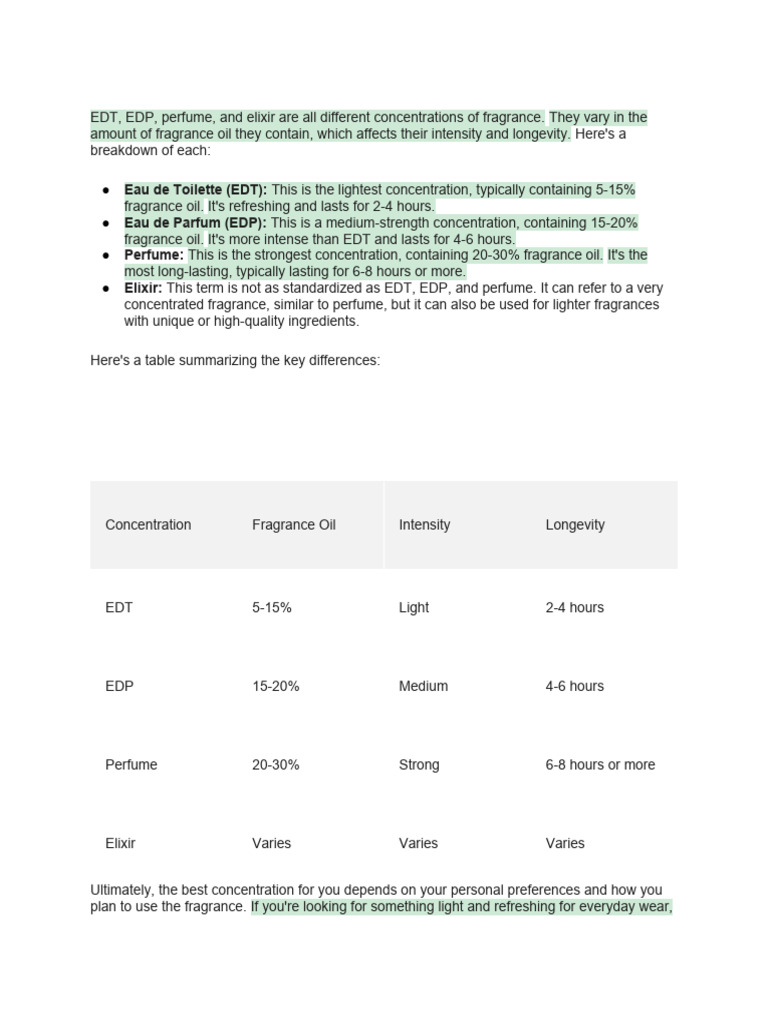
The term EDP, which stands for Eau de Parfum, refers to a specific concentration of fragrance oils in a perfume. Fragrance concentrations play a crucial role in determining the longevity and intensity of a scent. Typically, the distinctions encompass five primary categories: Eau de Cologne, Eau de Toilette, Eau de Parfum, Parfum (or Extrait de Parfum), and Eau Fraîche. Each category possesses its own unique characteristics, which can dramatically influence one’s fragrance experience.
Eau de Cologne: The Lightest Touch
Eau de Cologne, often abbreviated as EDC, boasts a low concentration of fragrance oils—generally around 2% to 5%. This type is famously refreshing, making it a popular choice for warmer climates. The scent profile is typically bright and citrus-forward, evoking feelings of vitality and rejuvenation. However, its ephemeral nature means that it tends to evaporate swiftly, requiring frequent reapplication throughout the day.
Eau de Toilette: A Balanced Choice
Transitioning to Eau de Toilette (EDT), which contains approximately 5% to 15% fragrance oil, one finds a more versatile option. EDTs are celebrated for their balance of vivacious top notes and a moderate depth that lingers longer than colognes. With their ability to captivate and delight, EDTs are suitable for daily wear, appealing particularly to those who enjoy their fragrances without overwhelming intensity.
Eau de Parfum: The Heart of Luxury
Now we arrive at Eau de Parfum (EDP), known for its higher concentration of fragrance oils, typically ranging from 15% to 20%. This potency translates into a more pronounced scent profile, often detailed with rich middle and base notes that unfurl over time. EDPs tend to offer impressive longevity, lasting well into the evening with minimal reapplication. Whether it’s the luxurious amber, inviting florals, or enigmatic woods, an EDP caters to those who desire an immersive olfactory experience.
Parfum: The Aristocracy of Fragrance
At the pinnacle of fragrance concentrations lies Parfum, or Extrait de Parfum, which contains upwards of 20% concentration of fragrance oils. Renowned for its exceptional longevity and intensity, Parfum is a sumptuous choice, often crafted for special occasions where every detail matters. Its complexity can transport the wearer through layers of intricately woven scents, enveloping them in an aura of sophistication without needing frequent touch-ups. It is not just a fragrance; it is an experience.
Eau Fraîche: The Refreshing Alternative
Lastly, we explore Eau Fraîche, a lesser-known category that focuses on a refreshing burst of scent. With an oil concentration remarkably low—generally between 1% and 3%—this variant is characterized by its lightweight nature and invigorating qualities. Often associated with summer, Eau Fraîche offers a fleeting yet delightful experience, perfect for a quick spritz during the hottest days.
Choosing the Right Fragrance Strength
When selecting a fragrance, understanding these distinctions is paramount. Consider your lifestyle, the occasions you are dressing for, or how the environment you’ll be in might interact with the scent. An EDP’s profound scent profile may be ideal for evening outings or events, while an EDT might serve better in everyday situations. Conversely, if opting for a light, refreshing fragrance during a sweltering day, Eau de Cologne or Eau Fraîche may be the wisest choice.
Layering Scents: A Personal Encounter
In the realm of perfumery, layering scents can elevate your fragrance game considerably. By combining an EDP with an EDT or even a body lotion, one can curate a personalized scent that is uniquely flattering. This method not only amplifies the fragrance’s character but enables the wearer to delve deeper into the sensory journey, crafting an enveloping presence that speaks to their identity.
Fragrance Contemplation: An Art Form
Choosing a fragrance transcends mere preference; it becomes an art form, a reflection of personal style and mood. Thus, before making a decision, consider testing the perfume on the skin, where it interacts with one’s natural chemistry and reveals the full spectrum of notes. This way, you can appreciate how an EDP—or any other type—evolves, providing a complete narrative rather than just a fleeting impression.
Conclusion
In summary, the world of perfume is intricate, rife with terminologies and classifications that underscore the artistry of fragrance creation. The distinction between Eau de Parfum and other fragrance concentrations provides invaluable insight into how each option can cater to specific needs and preferences. Whether one seeks to evoke allure, inspire confidence, or simply enjoy a captivating scent, understanding these elements will guide you towards the perfect fragrance that resonates with your essence.