
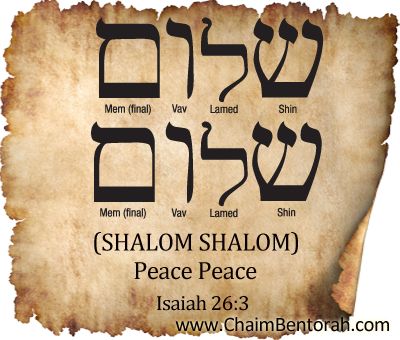
What does it mean when we hear the gentle, resonant phrase *Shalom Shalom*? This seemingly simple combination of two identical Hebrew words invites deeper exploration into both its linguistic nuances and the rich tapestry of its biblical significance. Anyone who has encountered Hebrew culture or language may have a vague understanding of *shalom* as “peace,” but what happens when we double it? Is this just a linguistic embellishment, or does it convey a deeper, layered meaning? As we delve into this exploration, we may stumble upon challenges in interpretation and application, encouraging us to reflect more deeply on the concept of peace.
To embark on our journey, it’s essential to dissect the term *shalom*. Rooted in the Hebrew root *ש-ל-מ* (shin-lamed-mem), the word encapsulates notions of completeness, fulfillment, and well-being. While most translations render it simply as “peace,” doing so might obscure its multifaceted implications. Peace in this context is not merely the absence of conflict; it embodies a positive state of prosperity, harmony, and completeness in relationships and within oneself.
When we reiterate *shalom* as *shalom shalom*, as seen in various biblical passages, we encounter a profound emphasis. This repetition challenges our understanding of the depth of peace that God wants for us. Why would one repeat the term unless there was a heightened state of importance? Drawing upon the biblical narrative, we find that *shalom shalom* is often tied to divine blessings. In Isaiah 57:19, for instance, peace is pronounced through the phrase, suggesting that such utterances convey a special assurance and encouragement for the people receiving it.
Examining the biblical context further, we can appreciate how *shalom* traverses a myriad of applications. Throughout the Old Testament, it appears not only as a greeting but also as a heartfelt wish for general well-being. In Numbers 6:24-26, the priests are instructed to bless the Israelites, saying, “The Lord bless you and keep you; the Lord make his face shine on you and be gracious to you; the Lord turn his face toward you and give you peace,” where *shalom* resonates within a divine framework, suggesting that true peace is ultimately a gift from God.
To solidify our understanding, we must ponder the role of *shalom* within interpersonal relationships. The Hebrew culture deeply values community, emphasizing that one’s well-being is intrinsically linked to the well-being of others. In this light, when we extol someone with *shalom shalom*, we do not merely wish them peace but invoke a profound harmony that extends beyond the self to encompass family, friends, and society. This is a challenge to modern individualism, pushing us to reconsider how our personal peace can impact and elevate the lives of those around us.
As we navigate through the layers of *shalom*, we also recognize its poetic dimensions. The concept of peace serves as a tapestry woven from various threads—justice, mercy, community, and well-being. Each of these aspects enriches our understanding of the ultimate *shalom* desired in our lives and in the world. It invites an introspective query: Are we individually contributing to the fabric of peace around us? The challenge is not just to seek peace for ourselves but to become artisans of peace in our communities.
Turning our attention once more to the biblical narrative, we note how *shalom* appears within messianic prophecies. The prophet Isaiah, for example, speaks of the coming Messiah as the “Prince of Peace” (Isaiah 9:6). In this light, *shalom* not only carries present implications but also anticipates a future where heavenly peace will characterize existence. When Jesus greets his disciples after his resurrection with “Peace be with you” (John 20:19), he is not just offering a mundane greeting; he is imparting a legacy of divine peace ensuring spiritual wholeness, reconciliation, and life eternal.
Now, let us venture further into practical applications of *shalom shalom*. In a world fraught with trials, achieving personal peace can feel daunting. Yet, understanding the essence of *shalom* encourages us to cultivate inner calm amid chaos. Meditation, mindfulness, and community engagements are ways to embody this peace actively. This challenges us anew: How can we each contribute to collective *shalom* in times of upheaval? This question can lead us towards ethical living and proactive healing within our societies.
Moreover, let us consider the implications of *shalom* in contemporary dialogues about conflict resolution. Institutions and leaders who prioritize *shalom* possess the potential to foster meaningful conversations aimed at understanding and reconciliation, actively dismantling divisive barriers. Repeating *shalom* should challenge our approaches, compelling us to transform negotiations into holistic pursuits of harmony.
Ultimately, *shalom shalom* invites a comprehensive journey—one that surpasses basic greetings and delves into a dynamic exploration of peace in all its dimensions. It is both a personal and a communal endeavor, demanding introspection, compassion, and actively pursuing well-being for ourselves and others. The challenge is clear: How can we embody and enact *shalom* in our lives and the lives of those around us? As we engage with these questions, we open the doors to a more profound understanding of what it truly means to live peacefully in an often turbulent world.












