
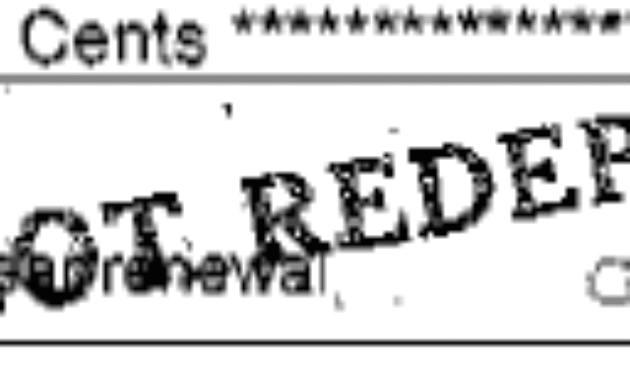
Understanding the world of finance often feels like navigating a dense forest, filled with twisting paths and hidden dangers. One such perilous trail is the concept of a “returned check” marked with the cryptic phrase “refer to maker.” This term can evoke feelings ranging from confusion to alarm, as it bears implications for both the issuer and the recipient of the check. Let us embark on an exploration of this intriguing financial phenomenon, deciphering its meaning, implications, and the broader context of returned checks.
Decoding “Refer to Maker”:
At the heart of the matter lies the phrase itself—“refer to maker.” So, what does it truly signify? When a check is stamped with such a designation, it suggests that the financial institution is unable to process the check as it currently stands. In essence, the bank or credit union is directing the bearer back to the original maker of the check—the individual or entity who issued it. This complication typically arises when there are insufficient funds in the account, discrepancies in the signature, or other irregularities that cast doubts on the check’s validity.
The Ripple Effects:
The ramifications of a returned check can be extensive, rippling through both personal and professional realms. When a check is returned, the recipient is not merely denied the promised funds; they may also incur overdraft fees, experience disruptions in their financial plans, and suffer potential damage to their credit standing. Furthermore, the relationship between the check writer and the recipient may be strained, transforming trust into trepidation as uncertainties loom large over future transactions.
Diving Deeper: Causes of Return:
Understanding the causes behind a check being labeled “refer to maker” necessitates a closer inspection of the common culprits that plague such documents:
- Insufficient Funds: The most typical reason for a check’s return lies in the issuer’s bank account lacking adequate funds to cover the amount written. This revelation can feel akin to a promised feast that turns out to be a mirage in the desert.
- Closed Account: If the check writer has closed their account, the check becomes a mere piece of paper—a relic of a financial relationship that has ceased to exist.
- Signature Mismatch: Banks employ stringent measures to authenticate the identity of account holders. A discrepancy in the signature may lead to skepticism about the check’s legitimacy, prompting the institution to take a cautious stance.
- Alterations or Forgery: If a check appears tampered with or shows signs of forgery, it is not merely returned but also treated as a potential criminal offense. Such a scenario can ensnare the unwitting in a web of legal ramifications.
Implications for the Maker:
For the check maker, receiving a notification that their check has been returned can be disconcerting. The experience often leads to a profound sense of responsibility and a contemplation of one’s financial practices. Depending on the situation, the maker must take diligent steps to rectify the issue—be it depositing additional funds into their account or addressing discrepancies with their bank. The act of writing a check, therefore, transcends beyond a mundane transaction, evolving into a pivotal moment of self-reflection.
A Social Perspective:
Socially, the act of giving or receiving a check is steeped in trust. The phrase “refer to maker” can fracture this trust and sow discord among business partners, friends, and family members alike. Imagine a scenario where a friend extends their hand to help in a moment of need, only to have that gesture backfire as a check returns marked with such a phrase. It signifies not just a financial failure but can also lead to feelings of betrayal. The ripple effect of such occurrences reaches into the fabric of relationships, potentially altering dynamics and leading to long-standing grievances.
Navigating the Aftermath:
Upon receiving a check returned with the dreaded stamp, how should one proceed? The first step lies in communication. Both parties—the issuer and the recipient—must engage in open dialogue to assess the situation and find resolutions. This crucial exchange of information can alleviate misunderstandings and pave the way for rebuilding trust.
Moreover, as a preventative measure, those who frequently issue checks should familiarize themselves with their bank balances and account practices. Utilizing online banking tools and keeping vigilant oversight over one’s finances can avert many pitfalls associated with returned checks. One might say that financial stewardship is akin to tending to a garden; neglect may yield weeds instead of flourishing blooms.
The Tapestry of Modern Payments:
As we progress further into an era dominated by digital transactions, the significance of checks may wane. However, their legacy persists in discussions surrounding financial literacy and responsibility. The phrase “refer to maker” serves as a reminder that the art of check-writing demands vigilance, integrity, and a continual commitment to maintaining one’s financial obligations.
Ultimately, the labyrinthine world of finance may present a multitude of challenges. Yet, understanding the implications of a returned check marked “refer to maker” empowers individuals to navigate this terrain with clarity. By cultivating diligent practices and fostering open lines of communication, both the makers and recipients of checks can endeavor toward a harmonious financial existence, so that all parties emerge unscathed on the other side of the transaction’s tumultuous waters.












